Tulsa is a city built on rivers, rolling green parks, and tree-lined neighborhoods that make it a genuinely beautiful place to live. That same lush, humid environment, however, makes Tulsa one of the more challenging cities in Oklahoma when it comes to keeping pests out of homes and businesses. Termites, ants, roaches, rodents, spiders, mosquitoes, moles, fleas, and ticks all find Tulsa’s climate hospitable, and most of them are far more determined than the average homeowner gives them credit for. This guide walks through what actually draws pests to Tulsa properties, the warning signs that mean it’s time to call an exterminator instead of reaching for another can of store-bought spray, what a professional exterminator visit really involves, and how to choose a pest control company you can trust with your home or business.
Why Tulsa’s Climate Creates Year-Round Pest Problems
Tulsa sits in a humid subtropical climate zone, which means hot, sticky summers, mild winters that rarely stay cold for long, and heavy seasonal rainfall, especially in spring. For homeowners, that combination is the ideal recipe for pest pressure that never fully lets up. Cold snaps in Oklahoma are usually short-lived, which means insect populations rarely get knocked back the way they would in a region with a longer, harder winter. Termites and ants stay active in the soil even during cooler months, mosquitoes return as soon as standing water starts to collect in spring, and rodents look for warm, dry shelter the moment temperatures drop, often finding it inside garages, attics, and crawl spaces.
Heavy spring rain is its own trigger event. Termite colonies release winged swarmers, called alates, specifically after warm rain showers, which is why so many Tulsa homeowners suddenly notice a cloud of small flying insects near a porch light or window in April or May. Moisture buildup around foundations, gutters, and crawl spaces also creates the damp wood and softened soil that termites, ants, and roaches are drawn to. None of this is a flaw in how a home is built; it’s simply a feature of living in northeastern Oklahoma, and it’s why ongoing pest prevention matters more here than it might in a drier climate.
Signs You Need to Call a Professional Exterminator
Many pest infestations stay hidden until they’ve already done significant damage. Knowing the early warning signs can be the difference between a quick treatment and a costly repair. It’s time to call an exterminator if you notice any of the following:
- Small piles of what look like coffee grounds or sawdust near windowsills, vents, or doorways, which are often termite droppings, known as frass.
- Discarded insect wings collecting near doors, windows, or light fixtures after a rain, a strong sign of a termite swarm.
- Sagging floors, ceilings, or door frames that suddenly feel uneven, which can indicate structural wood damage from termites.
- Live insects seen repeatedly during the day, since many pests like roaches and rodents are naturally more active at night and only appear in daylight when a population has grown large.
- Scratching, scurrying, or scratching sounds inside walls or the attic, especially in the evening.
- Greasy smudge marks along baseboards or in corners, which are often left behind by rodents traveling the same paths repeatedly.
- Mounds of loose dirt or raised tunnels across an otherwise healthy lawn, a sign of mole or gopher activity.
- Persistent ant trails in the kitchen or bathroom that return within days of being cleaned up.
- Mosquito bites accumulating even during short periods outdoors, which often points to a nearby breeding source like standing water.
- A musty or damp odor in crawl spaces or basements, which can attract pests and also indicate the kind of moisture buildup that draws termites and roaches.
If any of these sound familiar, it’s worth scheduling an inspection rather than waiting to see whether the problem gets worse on its own. Most pest populations grow exponentially, not gradually, and a small issue today can become a significant infestation within a matter of weeks.
Common Pests That Require a Tulsa Exterminator
Not every pest problem requires the same approach. Here’s a closer look at the pests Tulsa homeowners and business owners run into most often, and what makes each one worth professional attention.
Termites
Termites are, without question, the most financially destructive pest in Oklahoma. Nationally, termites cause an estimated five billion dollars in property damage every year, more than tornadoes, fires, and earthquakes combined, and almost none of that damage is covered by standard homeowners insurance. A termite colony can include hundreds of thousands of individuals, organized into workers, soldiers, and reproductives, all working to find and consume wood sources, including the wooden framing inside an occupied home. Because termites operate inside walls, foundations, and crawl spaces, most homeowners don’t realize they have an infestation until the damage is already extensive. Effective termite control depends on eliminating the entire colony, including the queen, rather than just killing the individual termites a homeowner happens to see. Bait systems that allow termites to carry a slow-acting treatment back to the colony tend to be far more effective at full colony elimination than surface sprays or DIY foam treatments, which often leave the colony itself untouched.
Ants
Seeing a few ants outside is normal almost anywhere in Oklahoma, but ants that have established an indoor trail are a different problem entirely. Different ant species require different treatment approaches; a sugar ant infestation in a kitchen pantry calls for a different strategy than carpenter ants nesting in damp wood near a bathroom or laundry room. Carpenter ants in particular can cause structural damage similar to termites, since they tunnel through wood to build their nests, even though they don’t eat the wood itself. Identifying the species correctly is the first step toward a treatment that actually eliminates the colony rather than just killing the ants visible on the counter that day.
Cockroaches
Cockroaches are among the most resilient pests on the planet, and Tulsa’s warm, humid summers give them plenty of opportunity to thrive. Beyond the obvious discomfort of finding them in a kitchen or bathroom, roaches can spread bacteria and trigger allergies and asthma symptoms, particularly in children. German cockroaches, the most common indoor species, reproduce quickly and tend to hide in tight, warm spaces like behind appliances and inside cabinet voids, which makes a thorough professional treatment far more effective than surface-level spraying.
Rodents
Mice and rats are persistent, adaptable, and surprisingly small entry points are all they need. A mouse can fit through a gap roughly the width of a pencil, and a rat can squeeze through an opening slightly larger than a quarter. Once inside, rodents chew through wiring, insulation, and stored belongings, and they carry health risks ranging from salmonella to hantavirus. Rodent problems tend to spike in Tulsa as temperatures drop in fall, when mice and rats actively search for warm shelter, making garages, attics, and crawl spaces common entry points. A proper rodent control plan involves not just removing the current population but identifying and sealing the entry points that let them in to begin with.
Spiders
Most spiders found around Tulsa homes are harmless, even if they’re unsettling to find in a closet or garage corner. The exceptions matter, though. Oklahoma is home to both black widow and brown recluse spiders, and a bite from either can require medical attention. Spider populations tend to spike in late summer and early fall as they mature and search for mates, which is why so many homeowners notice an uptick in web activity around September. Spider control typically targets the insect populations spiders feed on as much as the spiders themselves, since reducing the food source naturally reduces the spider population over time.
Mosquitoes
Beyond the itchy bites, mosquitoes are a genuine public health concern, since they can carry West Nile virus and other mosquito-borne illnesses. Tulsa’s humidity and frequent rain create plenty of standing water, whether in clogged gutters, plant saucers, old tires, or low spots in the yard, all of which are ideal mosquito breeding grounds. Effective mosquito control involves identifying and treating breeding sites directly, not just fogging the yard occasionally, since a single breeding site can produce hundreds of new mosquitoes within a week.
Moles and Gophers
Moles and gophers don’t pose a health risk the way insects and rodents do, but they can quietly destroy a lawn or garden over time. Moles tunnel just below the surface searching for grubs and earthworms, leaving raised ridges and soft spots across the yard, while gophers create more visible mounds and can damage plant roots directly. Because these animals live almost entirely underground, effective control requires understanding their tunnel systems rather than simply treating the surface of the lawn.
Fleas and Ticks
Fleas and ticks are most often introduced to a property by pets, wildlife, or even secondhand furniture, and once established, flea populations in particular can multiply rapidly indoors. Ticks carry their own set of health risks, including Lyme disease and other tick-borne illnesses, and tend to be most active in tall grass, wooded edges, and brushy areas common around many Tulsa-area properties. Treating fleas and ticks effectively usually requires addressing both the yard, where the population often originates, and the inside of the home, where flea eggs and larvae can persist in carpet and bedding.
What to Expect From a Professional Exterminator Visit
A first visit from a professional exterminator typically follows a consistent process, regardless of which pest brought you to the point of picking up the phone.
- Inspection: A thorough walkthrough of the property, inside and out, including crawl spaces, attics, and the foundation perimeter, to identify the pest species, the extent of the problem, and likely entry points.
- Diagnosis and explanation: A good technician will explain exactly what they found, why it’s happening, and what treatment options make sense for the specific situation, rather than applying a one-size-fits-all spray.
- Customized treatment plan: Treatment recommendations should reflect the property itself, its construction, surrounding landscape, and the specific pest involved, since a termite colony, a mouse problem, and a mosquito issue all call for very different approaches.
- Treatment application: Depending on the pest, this might involve targeted baiting, perimeter treatments, exclusion work to seal entry points, or interior spot treatments in problem areas.
- Follow-up and monitoring: Many pest problems require more than one visit to fully resolve, and ongoing monitoring helps confirm the treatment worked and catches any returning activity early.
Homeowners should also expect clear communication about safety, particularly around children and pets. Reputable treatments are designed to target the pest, not the household, and a trustworthy exterminator will walk through exactly what precautions, if any, need to be taken during and after treatment.

DIY Pest Control vs. Hiring a Professional Exterminator
Store-bought sprays and traps have their place for small, isolated issues, like a single wasp nest or an occasional ant on the counter. They tend to fall short, however, when a pest has already established a colony or breeding population inside or around a home. A few reasons professional treatment consistently outperforms DIY methods for established infestations:
- Many pests, especially termites and ants, live in colonies with sophisticated communication systems. Killing the individuals a homeowner can see often does nothing to the colony itself, which can include a queen producing new members far faster than surface spraying can keep up with.
- Correct species identification matters. A treatment that works on one type of ant or roach may be completely ineffective against another, and misidentifying the pest is one of the most common reasons DIY treatments fail.
- Professional-grade products and application equipment are typically more effective and longer-lasting than consumer versions sold at hardware stores, and they’re applied with an understanding of where pests actually nest and travel, not just where they’re seen.
- Repeated DIY treatment can become more expensive over time than a single professional visit, especially when an infestation keeps returning because the root cause was never addressed.
- Termite damage in particular is rarely covered by homeowners insurance, which makes prevention significantly cheaper than the eventual cost of structural repairs.
None of this means homeowners shouldn’t take basic preventative steps themselves, things like sealing obvious entry points, removing standing water, and keeping woodpiles away from the foundation all help. But once there are clear signs of an established infestation, a professional exterminator visit tends to resolve the issue faster, more completely, and often more affordably than months of repeated DIY attempts.
Termite Control: Why Professional Treatment Matters Most
Of every pest covered in this guide, termites deserve the most serious attention, simply because of how much financial damage they can cause before anyone notices a problem. Modern termite bait systems work by offering termites something more appealing than the wood in your home, without triggering the colony’s natural danger response. Worker termites carry the bait back to the colony and share it with the rest of the population, including the queen, which means the entire colony can eventually be eliminated rather than just the individual termites encountered on the surface. This approach also tends to be far less disruptive than older liquid trenching methods, since it doesn’t require digging trenches around the entire foundation or introducing large volumes of chemical treatment into the surrounding soil and landscaping.
Because termite damage develops slowly and silently, annual termite inspections are one of the most valuable things a Tulsa homeowner can schedule, even if there are no visible signs of activity yet. Catching a colony early, before it has caused structural damage, is dramatically less expensive and less stressful than dealing with the aftermath of an infestation that went unnoticed for a year or more.
Residential Pest Control Services
For most homeowners, the most cost-effective approach isn’t a single one-time treatment but an ongoing preventative pest control program. A typical program starts with an initial treatment to address any existing pest activity, followed by treatments every other month to maintain a protective barrier around the home throughout the year. This kind of bi-monthly schedule lines up well with Tulsa’s climate, since it accounts for the way pest activity shifts with the seasons, from spring termite swarms and mosquito breeding to fall rodent intrusion. Preventative programs typically cover the most common household pests, including ants, spiders, roaches, and rodents, and allow for additional visits between scheduled treatments if new activity shows up.
Commercial Pest Control Services
Businesses face many of the same pest pressures as homeowners, with higher stakes attached. A restaurant with a rodent or roach problem risks health code violations and customer trust. A hotel with a bed bug issue risks negative reviews that can follow the business for years. A warehouse with an unresolved pest problem risks damaged inventory and equipment. Commercial pest control typically starts with a detailed inspection of the entire space, identifying entry points and pest pressure specific to that type of business, followed by a tailored treatment plan, ongoing monitoring, and documentation that can support health inspections, lease requirements, or insurance needs. Industries with particularly specific pest control needs include restaurants and food service, hotels and apartment complexes, warehouses and distribution centers, and medical or care facilities, each of which has different sanitation standards and different pest pressure points.
A Season-by-Season Pest Guide for Tulsa Homeowners
Pest activity in Tulsa doesn’t stay constant throughout the year. Understanding how the seasons shift pest behavior makes it easier to know what to watch for and when to act.
Spring
Spring is the busiest season for pest activity in Tulsa, largely because of the combination of warming temperatures and frequent rain. Termite swarms peak in spring, often appearing within a day or two of a heavy rainfall as winged termites leave the colony to start new ones nearby. Ants become more active as the soil warms, often moving indoors in search of food and moisture. Mosquito populations also begin building as soon as standing water starts collecting in yards, gutters, and low-lying areas. Spring is the ideal time to schedule a termite inspection, since catching swarm activity early can prevent a new colony from establishing itself near the foundation.
Summer
Summer heat pushes many pests to seek out cooler, shaded, or moist environments, which often means they end up closer to a home’s foundation, crawl space, or landscaping. Mosquitoes reach their peak during summer, particularly after rain, and cockroach activity tends to increase as well, since roaches thrive in warm, humid conditions. Ant colonies are typically fully active by summer, and homeowners often notice the largest trails of the year during this stretch. This is also when outdoor pests like ticks and fleas are most active in tall grass and wooded areas, making yard maintenance and pet protection especially important.
Fall
As temperatures begin to drop, many pests start looking for warm shelter, and that search frequently leads them indoors. Rodent activity rises sharply in fall, as mice and rats seek out garages, attics, and crawl spaces ahead of colder weather. Spiders also become more visible in fall, since late summer and early autumn is when many species reach maturity and become more active while searching for mates. Fall is a good time to inspect and seal potential entry points around the foundation, utility lines, and rooflines before rodents have a chance to settle in for winter.
Winter
Oklahoma winters are mild compared to much of the country, which means pest activity slows down but rarely stops completely. Termite colonies remain active underground even in cooler months, since soil temperatures stay relatively stable below the frost line. Rodents that found their way indoors in fall often remain active through winter, since the warmth and food sources inside a home give them little reason to leave. Periodic indoor inspections during winter can catch rodent activity early, before populations grow large enough to cause significant damage to wiring, insulation, or stored belongings.
How to Choose the Right Exterminator in Tulsa
Not every pest control company offers the same level of service, and a few key factors separate a reliable, long-term solution from a quick fix that doesn’t last.
- Experience and stability: A company with decades of operating history and technicians who have stayed in their roles for years brings a depth of local pest knowledge that newer or high-turnover companies simply can’t match.
- Proper licensing and training: Pest control technicians should be properly licensed and trained, particularly for more complex treatments like termite colony elimination.
- Clear guarantees: A company confident in its work will stand behind it. Look for clear guarantees on treatment effectiveness, especially for termite control, where the financial stakes are highest.
- Environmentally responsible methods: Modern pest control doesn’t have to mean heavy, widespread chemical use. Bait-based termite systems and targeted treatments can be just as effective while creating far less impact on a property’s pets, landscaping, and surrounding environment.
- Local reputation: Local reviews tend to reveal far more than a polished website ever could, particularly when the same technicians are mentioned repeatedly by name across multiple reviews, a strong sign of consistent, trustworthy service.
- Family ownership and community roots: Locally owned companies tend to have a longer-term stake in their reputation within the community than a national franchise location managed from out of state.


What Makes Emtec Pest Control a Trusted Tulsa Exterminator
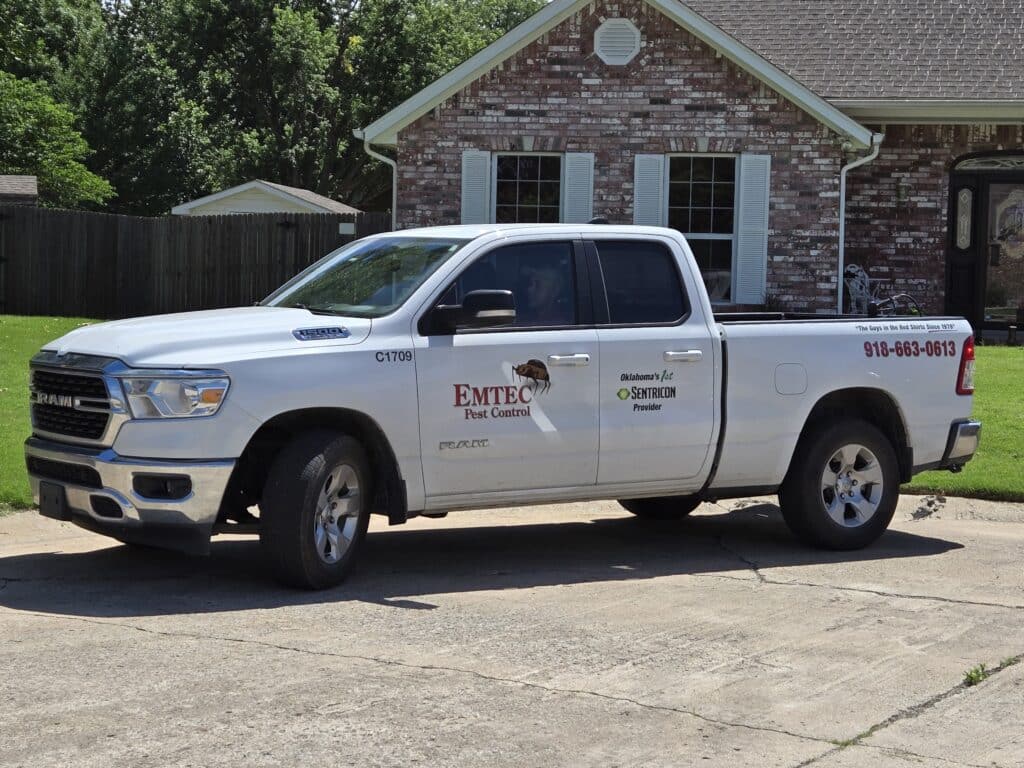
Emtec Pest Control has served Tulsa families and businesses since 1979, which makes it one of the longest-running, family-owned pest control companies in the region. Known locally as “the guys in the red shirts,” Emtec’s technicians average more than 15 years of experience with the company, representing well over 200 years of combined hands-on pest control knowledge across the team. That kind of consistency means homeowners are far more likely to be served by the same trusted technician visit after visit, rather than a rotating cast of unfamiliar faces.
Emtec was the first company in Oklahoma authorized to provide the Sentricon® Colony Elimination System, and remains the only company in the region to back that system with a money-back guarantee. The Sentricon system has also received the Presidential Green Chemistry Award, reflecting its effectiveness without the heavy chemical footprint of older termite treatment methods. Beyond termite control, Emtec provides residential and commercial treatment for ants, roaches, rodents, spiders, mosquitoes, moles and gophers, and fleas and ticks, along with a preventative pest control program designed to keep homes protected year-round through every Oklahoma season.
Pest Control and Exterminator Services Across the Tulsa Metro
Emtec Pest Control provides exterminator services not just in Tulsa but throughout the surrounding communities, including Bixby, Broken Arrow, Jenks, Owasso, Sand Springs, Sapulpa, and Stillwater, as well as Edmond and Oklahoma City. Whether the property is a historic home near downtown Tulsa, new construction in a growing Broken Arrow neighborhood, or a lake property dealing with persistent mole activity, local pest pressure varies block by block, and an experienced local exterminator brings knowledge of those patterns that a generic, one-size-fits-all approach simply can’t offer.
Frequently Asked Questions About Exterminator Services in Tulsa
How often should I have an exterminator come to my home?
For ongoing prevention, a bi-monthly treatment schedule works well for most Tulsa homes, covering the seasonal shifts in pest activity throughout the year. Termite inspections are generally recommended annually, even without visible signs of activity.
Are professional pest treatments safe for pets and children?
Modern, professionally applied treatments are designed to target specific pests while minimizing risk to people and pets. A trustworthy exterminator will always explain any precautions needed before, during, and after treatment.
How soon will I see results after an exterminator visit?
Many homeowners notice a reduction in pest activity within the first few weeks, though full resolution for larger infestations, particularly termites, can take longer depending on the size of the colony and the treatment method used.
Is termite damage covered by homeowners insurance?
Typically, no. Termite damage is rarely covered by standard homeowners insurance policies, which is part of why preventative termite treatment is considered such a worthwhile investment for Tulsa homeowners.
Can I just treat the pests I can see myself?
For minor, isolated issues, store-bought products can help. Once a pest population is established, especially with social insects like ants and termites, professional treatment that addresses the entire colony is almost always more effective and more cost-efficient over time.
What’s the difference between pest control and termite control?
General pest control typically covers common household pests like ants, spiders, roaches, and rodents on a recurring schedule. Termite control is a separate, specialized service, usually involving bait systems designed specifically to locate and eliminate termite colonies.

Schedule a Free Pest Inspection
Whether it’s a single ant trail on the kitchen counter, a swarm of termites after a spring rain, or a lawn full of mole tunnels, catching a pest problem early almost always makes it easier and less expensive to resolve. Emtec Pest Control offers free, no-obligation inspections for homeowners and business owners across Tulsa and the surrounding communities, with experienced local technicians ready to assess the property, explain exactly what’s going on, and recommend the right course of action. Call Emtec Pest Control in Tulsa at (918) 663-0613 or visit emtecpestcontrol.com to schedule an inspection today.
At Emtec Pest Control, we are committed to safe and responsible pest control. We understand that your family’s safety is your number one priority, so we make it our priority, too. If you have any other questions about any of these pests or pest control for your home or business, contact your Oklahoma pest control experts at Emtec Pest Control by calling us or by filling out our online contact form. Our service areas in Northeast Oklahoma include Bixby, Broken Arrow, Catoosa, Owasso, Jenks, Sand Springs, Sapulpa, Skiatook, Stillwater, Tulsa and the surrounding areas. In Central Oklahoma, we service Edmond, Moore, Oklahoma City, Yukon and the surrounding areas. You can also connect with us on social media for more helpful pest control tips and information. We are on Facebook.-
Posted In:
Tags:
Recent Articles
 July 29, 2026
 July 17, 2026
 June 19, 2026
 April 22, 2026


