
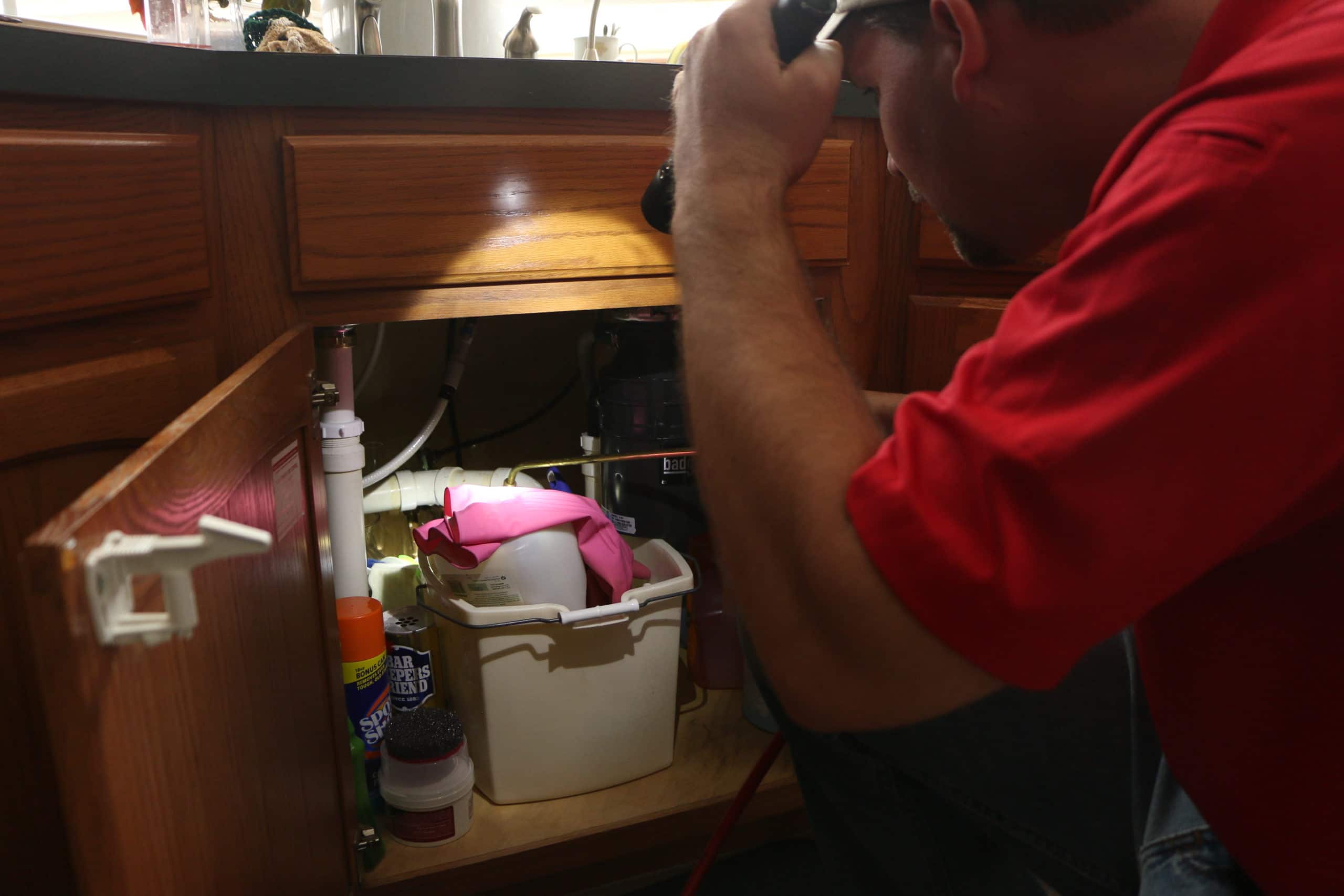

Mice get into houses through gaps as small as 1/4 inch, about the width of a pencil. They climb, squeeze and chew their way in around pipes and wires, under doors, through foundation cracks, vents and openings along the roof. The way to keep them out is to find those gaps and close them with materials mice cannot chew through, and to make the house less inviting at the same time.
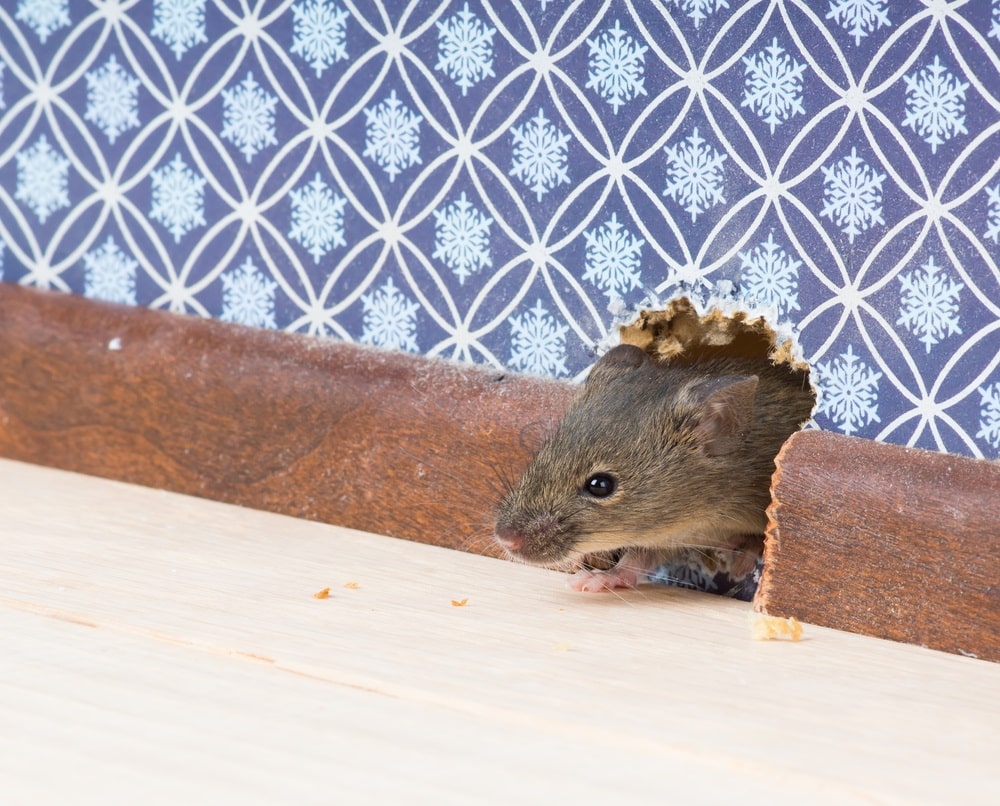
How small a gap can a mouse use?
Smaller than most people expect. The CDC puts it at about 1/4 inch, and OSU Extension describes it as narrower than a dime. If a mouse can fit its head through, the rest follows. Mice are also good climbers, which is why holes high on a wall, under the eaves or where a roofline meets a wall still get used. Rats need a bit more room, roughly 1/2 inch, but they can widen a gap by chewing.
Where mice get into Oklahoma homes
Outside
- Between the foundation and the ground, and cracks in the foundation or slab
- Holes where electrical, plumbing, cable and gas lines enter the house
- Around doors and windows, especially without weather stripping or door sweeps
- Garage door seals and corners
- Attic, crawl space and dryer vents without screens
- The roof: rafters, gables, eaves and soffits, and gaps around the chimney
Inside
- Inside, under and behind kitchen cabinets
- Around pipes under sinks and behind the washing machine
- Around pipes to the water heater and furnace
- Behind the stove and refrigerator
- Around the fireplace
- Closet floors and corners, and wherever the floor meets the wall
- Floor drains and floor vents
These are the CDC’s checklists. Droppings and dark rub marks near a gap are a good sign it is in use.
Why mice come in
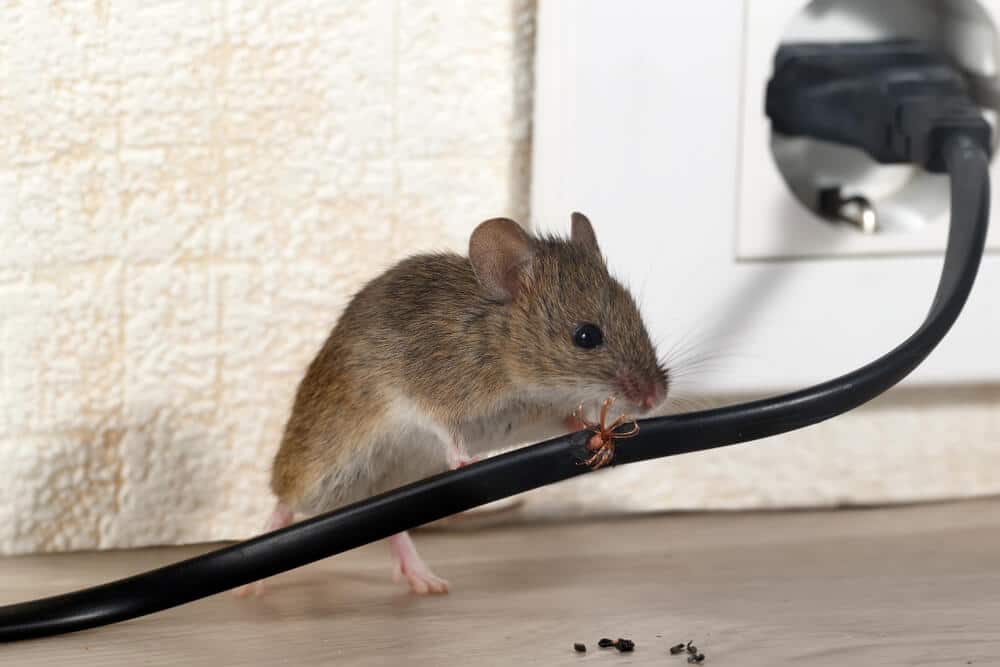
Food, water, warmth and a quiet place to nest. Mice live near people all year, OSU Extension notes, but they move closer to buildings as the weather turns cool, so fall is when most homeowners first notice them. Once inside they nest in wall voids, attics, cabinets and stored boxes, and they chew constantly: on food packaging, insulation, drywall and electrical wiring.
How to seal mice out
- Small holes: pack them with steel wool, then caulk over it to hold it in place.
- Larger holes: cover them with hardware cloth, metal sheeting, lath screen or cement, cut to fit around pipes.
- Doors: add door sweeps and replace worn weather stripping. Check that the garage door seals all the way across.
- Vents: screen attic, crawl space and foundation vents with 1/4-inch hardware cloth.
- Foundation: caulk the gap between the foundation and the ground, and use metal flashing at the base of the house where needed.
- Outbuildings: seal sheds and garages too, so they do not become a staging area next to the house.
Avoid relying on caulk or spray foam alone. The CDC notes they are usually not enough on their own, because rodents chew through soft materials.
Make the house less inviting
- Store pantry food, pet food and bird seed in sealed metal, glass or heavy plastic containers.
- Do not leave pet food out overnight, and keep trash in bins with tight lids.
- Fix leaks under sinks and at outdoor faucets.
- Clear clutter and cardboard from garages, attics and basements; use lidded plastic bins.
- Store firewood away from the house and off the ground.
- Trim shrubs, vines and tree limbs back from the walls and roof, and pick up fallen fruit, nuts and spilled bird seed.

Fall rodent-proofing checklist
- Walk the outside of the house and look low (foundation, utility lines, garage) and high (eaves, vents, chimney).
- Close every gap you can fit a pencil into.
- Replace worn door sweeps and weather stripping.
- Move firewood and stored items away from the walls.
- Look for droppings in the garage, attic, pantry and under sinks.
- If you find signs of mice inside, set traps the same day.
Already have mice inside?
Sealing keeps new mice out but traps the current ones in. Seal and trap together, and keep trapping for at least a week after the last catch. Our guide on how to get rid of rodents covers trapping, baits and how to clean up droppings safely, and the Oklahoma rodent ID guide helps you tell a house mouse from a deer mouse or a rat.
Mouse exterminator for Oklahoma homes
Finding every gap is the hard part of keeping mice out, and it is where Emtec Pest Control starts. We have been rodent-proofing homes and businesses across Green Country and Oklahoma City since 1979: we inspect the house from the foundation to the roofline, seal entry points with materials rodents cannot chew through, and trap or bait the mice already inside. We are the mouse exterminator for Tulsa, Broken Arrow, Owasso, Jenks, Bixby, Sand Springs, Sapulpa, Stillwater, Oklahoma City, Edmond and nearby towns. See our rodent control service or contact us to schedule an inspection.
Frequently Asked Questions
How small a hole can a mouse get through?
About 1/4 inch, roughly the width of a pencil, according to the CDC. OSU Extension puts it as narrower than a dime. A young rat can use an opening about 1/2 inch wide.
What should I use to seal mice out?
Steel wool packed into small holes and held in place with caulk, and hardware cloth, metal sheeting, lath screen or cement over larger openings. The CDC notes that caulk or spray foam alone is usually not enough, because rodents chew through it.
Why do mice come inside in the fall?
Mice live near people year-round, but as it cools they move closer to buildings looking for warmth, food and a protected place to nest before winter, OSU Extension explains. A warm house with a gap at the foundation is an easy choice.
Will sealing holes get rid of the mice already inside?
No. Sealing keeps new mice out, but the ones inside need to be trapped. Seal and trap at the same time, and keep trapping for at least a week after the last catch. Our guide to getting rid of rodents covers trapping step by step.
Do mice come in through the garage?
Often. Worn or gapped garage door seals, the corners of the door and holes where pipes and wires pass from the garage into the house are some of the most common ways in. Check them every fall.