
The spiders living in your Oklahoma home are almost always harmless house spiders: cellar spiders, cobweb spiders and the southern house spider, plus the odd wolf spider or jumping spider that wandered in. Oklahoma State University Extension names only two spiders in the state as dangerous to people, the brown recluse and the black widow. This guide covers the spiders you are most likely to meet indoors, how to tell them from those two, and what actually keeps them down.
House spiders are not outdoor spiders that moved in
A common belief is that spiders come indoors when the weather cools. Arachnologists at the Burke Museum at the University of Washington call that a myth. The spiders that live in houses are mostly different species from the ones in your yard, and they are adapted to life indoors. By the museum's estimate, fewer than 5% of the spiders found indoors have ever been outside.
So why do you suddenly see more of them in late summer and fall? The ones crossing the floor are mostly adult males that have left their webs to look for a mate. OSU Extension adds that many spiders are simply bigger and easier to notice late in the season, and that fall is when we dig out decorations and stored boxes where they have been living all along.
The house spiders you will see most
Cellar spiders
Thin, pale spiders with very long legs and a small body, hanging upside down in loose, messy webs in basement corners, closets, garages and ceilings. They vibrate rapidly in the web when disturbed. People often call them daddy longlegs, though that name also belongs to harvestmen, which are not spiders at all. Cellar spiders are harmless and even eat other spiders.
Cobweb spiders
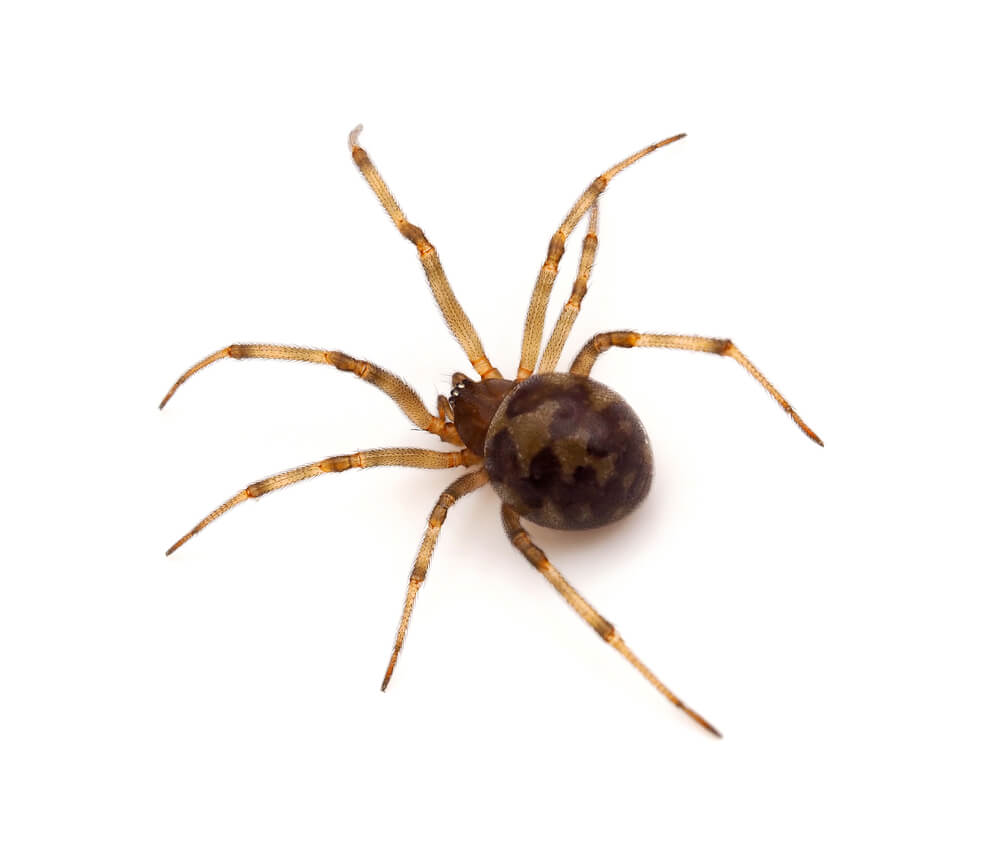
The small, round-bellied spiders behind the dusty, tangled webs in window corners and under furniture. The triangulate cobweb spider, also called the triangulate combfoot, is about a quarter of an inch long with a zigzag pattern of triangles on its back. It was introduced from Europe long ago and is now at home in buildings across the U.S. It is a nuisance, not a threat, and it eats ants, ticks and other spiders.
Southern house spider
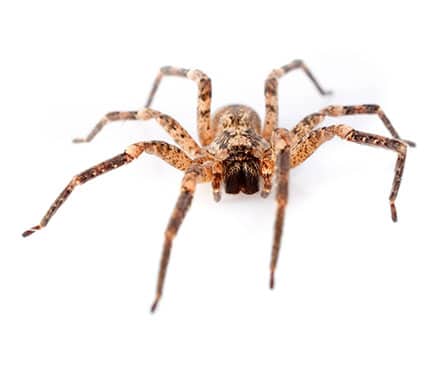
This is the spider most often mistaken for a brown recluse in Oklahoma. Males are tan with long legs and roam at night looking for females. Females are dark and velvety and stay in flat, woolly webs that spread out from cracks in brick, siding, window frames and outbuildings. They are harmless. The quickest way to tell a male from a recluse is the violin: a recluse has a dark violin shape behind its eyes, and a southern house spider does not.
Spiders that wander in
Wolf spiders
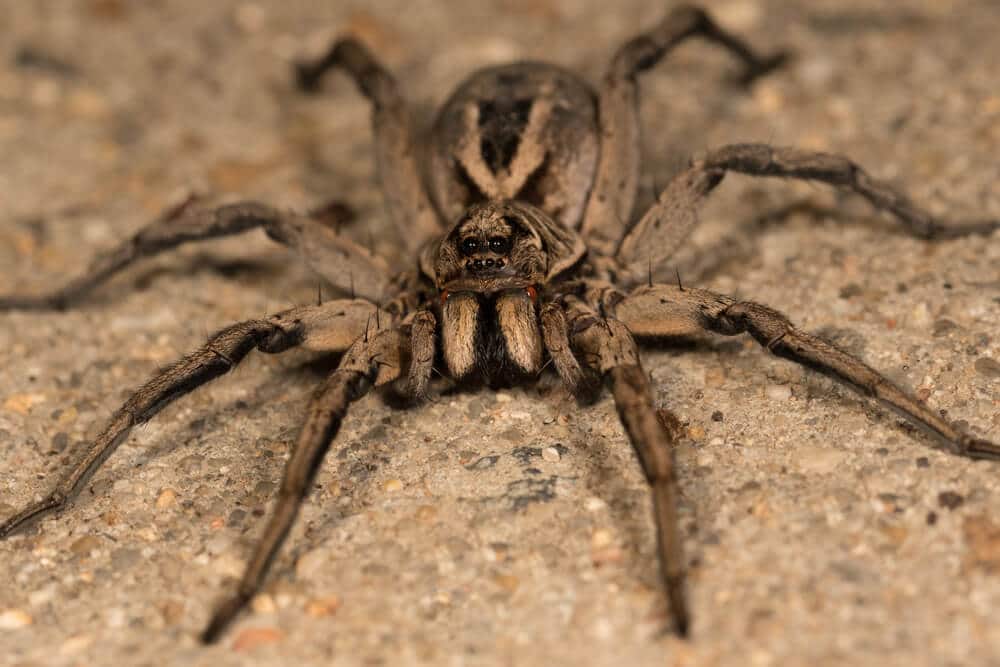
The big, hairy, fast spiders that run across the garage or kitchen floor at night. They are brown or gray with a pattern of lines in their fur and do not build webs. They live outdoors and come in chasing insects. OSU Extension lists wolf spiders as no hazard to people. Trap one under a cup and carry it outside.
The bold jumping spider: Oklahoma's most familiar spider
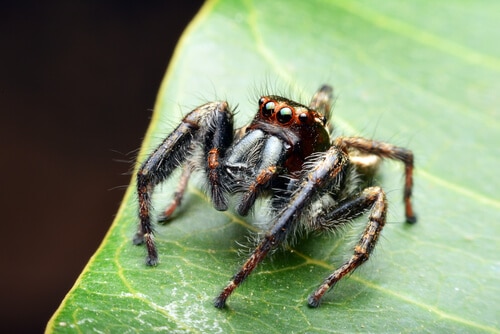
If there is one spider every Oklahoman has met, it is the bold jumping spider. It is the most common jumping spider in North America, and it shows up on mailboxes, fences, patio furniture and window frames, sometimes indoors.
- How to recognize it: black and fuzzy, with a white triangle spot on the abdomen (orange on young spiders), white bands on the legs, and mouthparts that shine metallic green or blue.
- Those eyes: it has eight eyes, but the two big ones in front give it sharp, forward-facing vision. That is why it turns to look at you.
- How it hunts: it does not catch food in a web. It stalks insects in daylight and pounces, attaching a silk safety line before each jump in case it misses.
- Is it dangerous? No. It bites only if squeezed, and a bite causes at most a small itchy bump that fades in a day or two.
Bold jumping spiders eat caterpillars, flies and other pests, so they are worth leaving alone in the garden.
Garden spiders
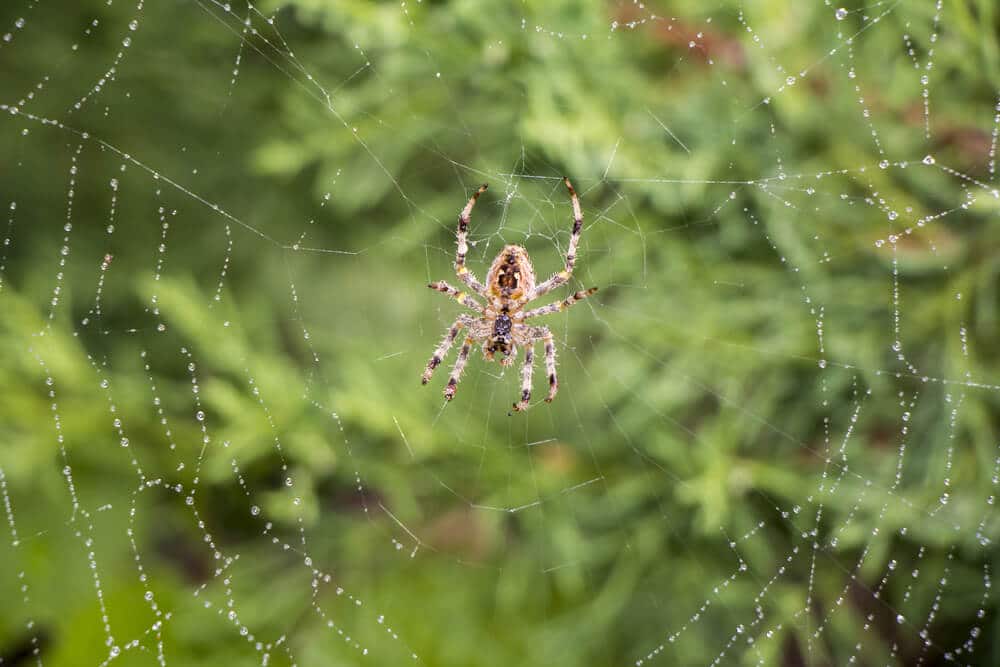
The black and yellow garden spider (genus Argiope) builds big round webs on porches, eaves, shrubs and light posts. It stays outside and is harmless. If the webs are in your way, knock them down and the spider will usually rebuild somewhere else.
The two that are not harmless
Both of Oklahoma's dangerous spiders can live in houses, so these are the ones worth learning.
Brown recluse
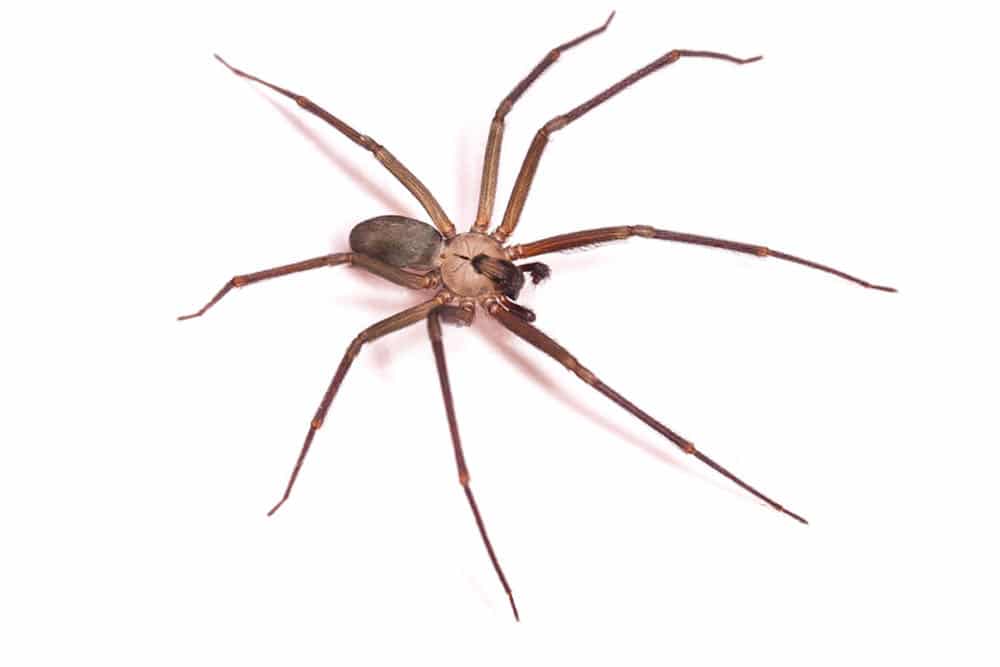
Light tan to dark brown, about half an inch long, with long thin legs, a dark violin shape behind the eyes, and six eyes instead of eight. It hides in closets, boxes, shoes and clothing left on the floor, attics and the backs of furniture, and comes out at night. Bites happen when the spider is pressed against skin. Its venom can damage skin tissue, so anyone who may have been bitten should see a doctor. More in our brown recluse guide.
Black widow
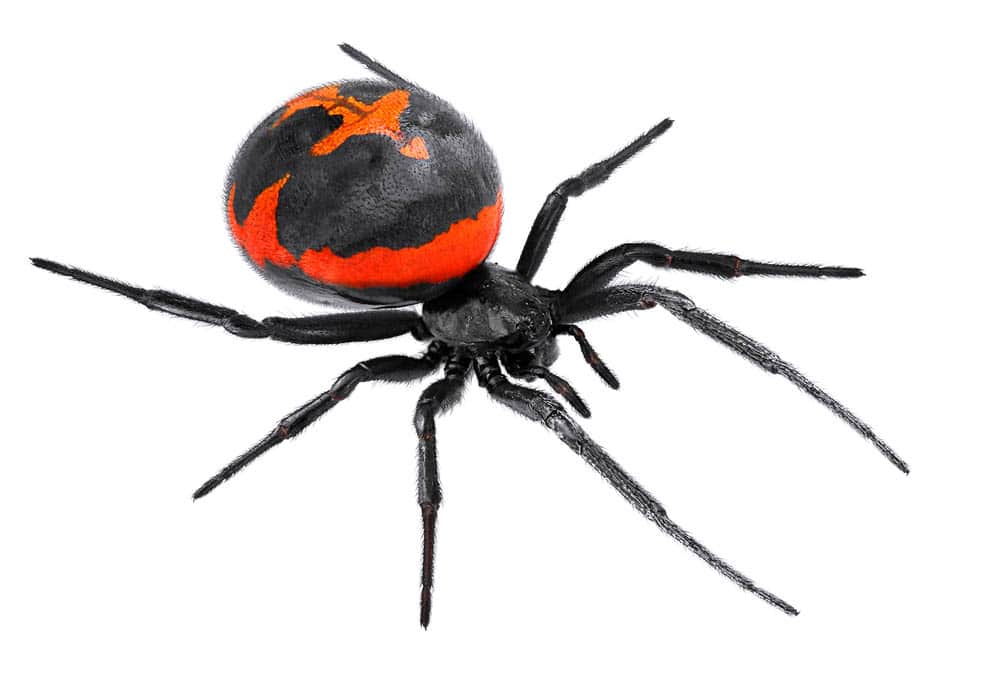
Glossy black with a round belly and a red hourglass underneath. Widows prefer garages, sheds, crawlspaces, woodpiles and the underside of outdoor furniture to living rooms, but they are found indoors too. The venom affects the nerves and can cause severe pain, cramping and nausea. See our black widow guide.
Not sure which one you have? Our Oklahoma spider ID guide has photos of 32 species.
How to keep house spiders down
- Vacuum webs, spiders and egg sacs in corners, closets, under furniture and in rooms you rarely use.
- Store things in sealed plastic bins instead of cardboard boxes, especially in closets, garages and attics.
- Seal cracks around doors, windows, siding and utility lines, and repair window screens.
- Reduce the insects they eat. Fewer flies, crickets and roaches means fewer spiders. That is where preventative pest control helps.
- Set sticky traps along baseboards. OSU Extension recommends them, and they show you what kind of spider you have.
For more, see how to get rid of spiders.
When to call an exterminator
A few cellar spiders and an occasional wolf spider are normal. If you are finding brown recluses or black widows indoors, or spiders keep turning up in the same rooms no matter how often you clean, it is time for a professional. Emtec Pest Control has been the spider exterminator Oklahoma homeowners call since 1979. We inspect the house, identify what you have, treat the places spiders hide, remove webs and egg sacs, and take care of the insects drawing them in. See our spider control service, find your area on our Tulsa or Oklahoma City pages, or contact us to schedule an inspection.
Frequently Asked Questions
What is the most common spider in Oklahoma?
Nobody keeps an official count, but the bold jumping spider is the one Oklahomans notice most outdoors, on fences, mailboxes and porches. Indoors, cellar spiders and cobweb spiders are the most common residents.
Are house spiders in Oklahoma poisonous?
Common house spiders are not dangerous to people. In Oklahoma, only the brown recluse and the black widow are considered dangerous, and both can live indoors, so it is worth learning what they look like.
Do spiders come inside in the fall to get warm?
Mostly no. Spider researchers at the Burke Museum report that very few spiders found indoors have ever been outside. The spiders you notice in late summer and fall are mostly adult males that have left their webs to look for mates.
Should I put house spiders outside?
Indoor species are adapted to life in buildings and usually do poorly outdoors. If you do not want them, removing webs and cutting down the insects they eat works better than relocating them one at a time.