
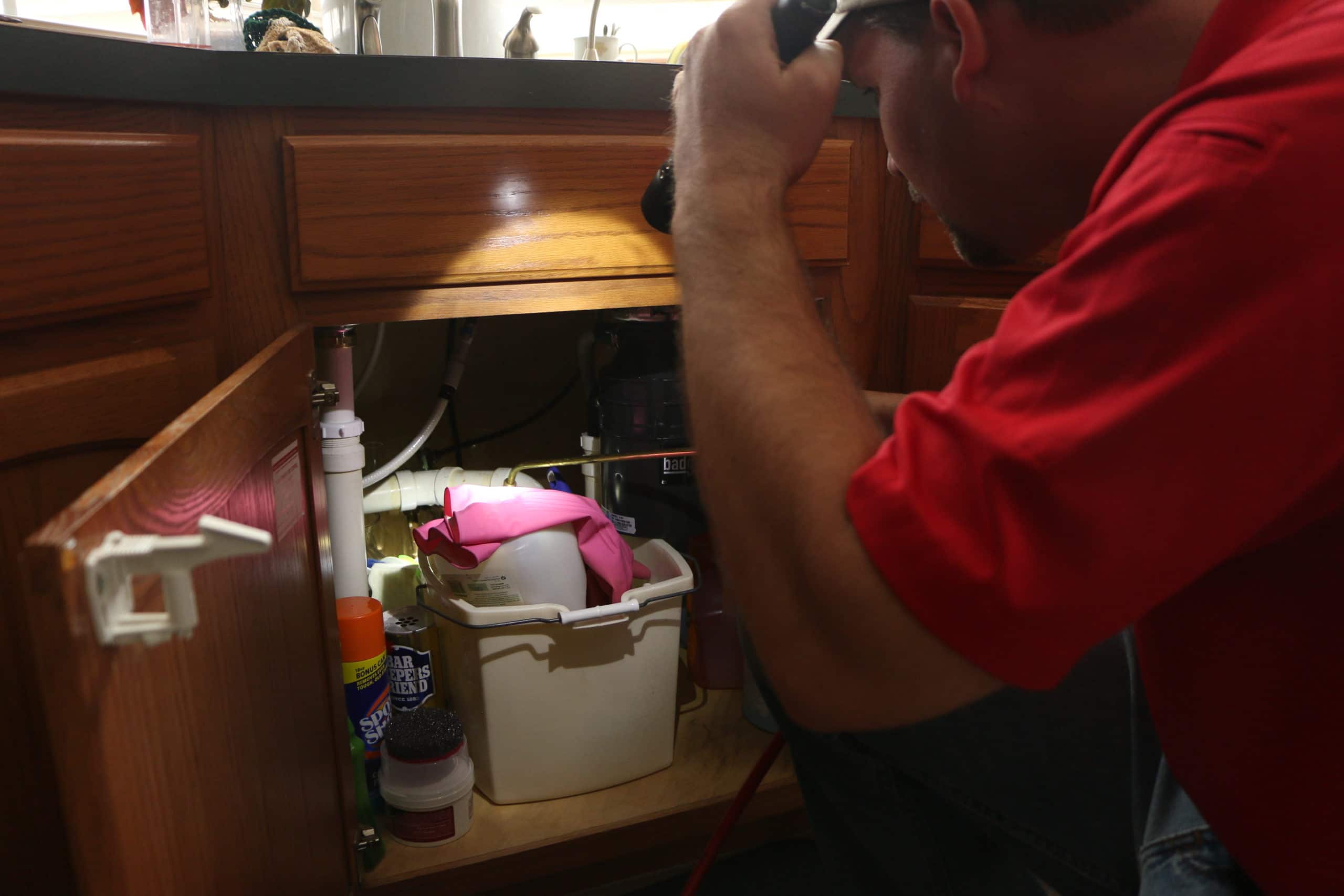
Brown recluses are common in Oklahoma homes, and they are one of only two spiders in the state that Oklahoma State University Extension considers dangerous to people. They are shy and bite only when pressed against skin, but their venom can damage tissue around a bite. This guide covers how to identify one, what a bite really looks like, what to do about it, and how to get recluses out of your house.
Think you have been bitten? See a doctor, and bring the spider in a sealed jar if you can. Call 911 for a severe reaction. Poison Help is free at 1-800-222-1222. This article is general information, not medical advice.
Oklahoma is brown recluse country
The brown recluse (Loxosceles reclusa) lives in about 20 states across the south-central and midwestern U.S., and UC Riverside entomologists report the highest numbers around Kansas, Oklahoma and Missouri. They stay hidden during the day and come out at night, so many people live with them for a long time without knowing.
How to identify a brown recluse
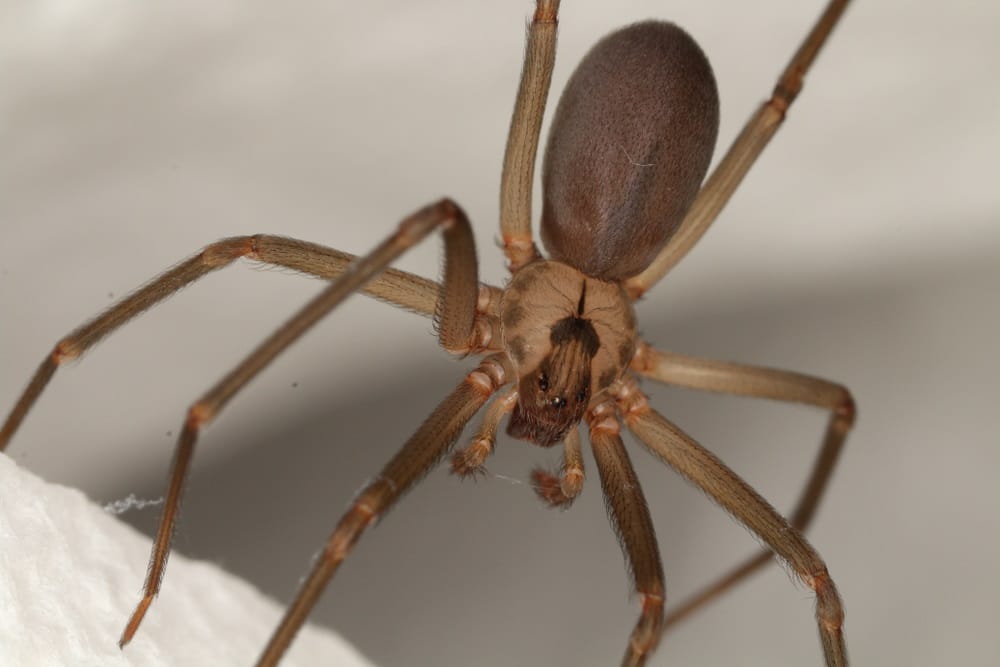
OSU Extension describes the brown recluse this way:
- Size: about half an inch of body.
- Color: light tan to dark brown, all one color. No stripes, bands or spots on the legs or abdomen.
- The violin: a dark violin shape on the front part of the body, behind the eyes, with the neck of the violin pointing back toward the abdomen. It can be faint on young spiders.
- Eyes: six, arranged in three pairs in a semicircle. Most spiders have eight. This is the most reliable sign if you can see it safely.
- Legs: long and thin, covered in short, fine dark hairs.
The spider most often mistaken for a recluse in Oklahoma is the male southern house spider, which is tan and long-legged but has no violin and eight eyes. Wolf spiders, which are hairy and patterned, are another common mix-up. Our Oklahoma spider ID guide has photos of both.
Where brown recluses hide
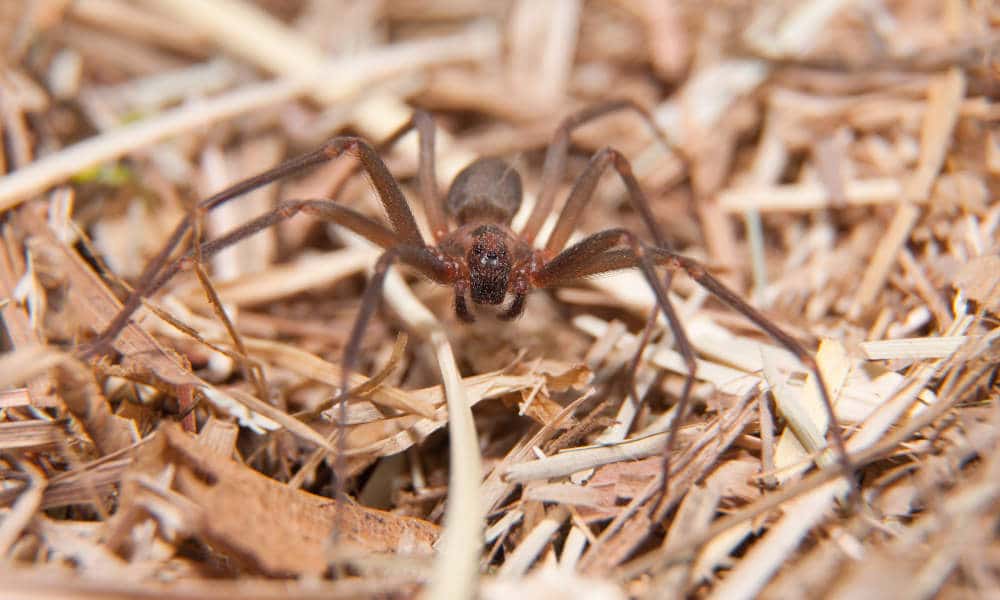
"Recluse" fits. They look for dry, dark, undisturbed places. OSU Extension lists bathrooms, bedrooms, closets, basements, attics, the undersides of furniture, and shoes and clothing. Outdoors they live under rocks and bark and in barns, sheds and garages. In our inspections we also find them in cardboard storage boxes, behind baseboards and in wall voids.
What attracts them
Brown recluses hunt crickets, cockroaches, silverfish and other small insects. A home with a steady supply of those, and plenty of clutter to hide in, can support a large population. Cutting back the other pests and the clutter is the foundation of controlling recluses.
Brown recluse bites: what is real and what is not
Bites usually happen when someone puts on a shoe or piece of clothing a recluse has crawled into, rolls over on one in bed, or reaches into a stored box. According to the CDC and OSU Extension:
- The bite stings at first or is not felt at all, then becomes painful over the next several hours.
- A small white blister may form, with redness and swelling around it.
- In some cases the venom destroys skin tissue (necrosis), leaving an open sore that can take six to eight weeks to heal.
- Some people also have fever, chills, rash, muscle or joint pain, nausea or vomiting.
Most bites never get that far and heal on their own. There is no antivenom, so doctors treat the wound and the symptoms. Children, older adults and people with weakened health should be seen quickly.
Many "recluse bites" are not recluse bites
UC Riverside researchers report that about 40 medical conditions are mistaken for brown recluse bites, including several serious bacterial skin infections. Their tip: a true recluse wound tends to be flat and bluish, whitish or purple in the center, while a wound that is red, raised and lasts for months is likely something else. That is one more reason to have a doctor look at any wound that is spreading, oozing or getting worse.
First aid for a suspected brown recluse bite
- Stay calm and, if you can do it safely, catch the spider in a jar or take a photo.
- Wash the bite with soap and water.
- Put a cold, damp cloth or ice on it, and raise the limb if you can.
- Do not cut the bite or try to remove venom.
- See a doctor, especially if pain grows, a blister or dark area forms, or you develop fever, rash or nausea.
Is it a recluse or a black widow bite?
A recluse bite shows its damage at the skin: a painful spot, a blister, sometimes a sore. A black widow bite often leaves little to see, but brings spreading pain and muscle cramps within hours. Any bite followed by swelling of the face or mouth, trouble swallowing or trouble breathing is an allergic emergency. Call 911.
How to get rid of brown recluse spiders
Brown recluses are one of the hardest spiders to control. They hide deep in walls and clutter, and OSU Extension recommends hiring a pest control firm, noting that control often takes more than one treatment. What helps most:
- Sticky traps along baseboards, behind furniture and in closets. OSU Extension recommends them; they catch recluses and show where they are active.
- Declutter. Get boxes, clothes and shoes off the floor. Move stored items into sealed plastic bins.
- Shake out shoes, clothes, towels and bedding that have been sitting, and pull beds away from the wall so bedding does not touch the floor.
- Seal cracks, gaps around pipes and wiring, and openings around doors and windows.
- Reduce their food by controlling crickets, roaches and other insects.
Store-bought sprays kill the spider they hit but rarely reach the ones living inside walls and attics. For more on what does and does not work, see how to get rid of spiders.
Brown recluse exterminator in Oklahoma
Emtec Pest Control has been removing brown recluses from homes and businesses across Green Country and Oklahoma City since 1979. We start with an inspection to find where they are living and what they are feeding on, then treat the cracks, crevices, voids and other harborage where recluses hide, remove webs and egg sacs, and target the insects that draw them in. Because recluse control often takes more than one treatment, we tell you up front what your home needs. We are the brown recluse exterminator for Tulsa, Broken Arrow, Owasso, Jenks, Sand Springs, Sapulpa, Stillwater, Oklahoma City, Edmond and nearby towns. See our spider control service or contact us to schedule an inspection.
Frequently Asked Questions
Are brown recluses common in Oklahoma?
Yes. Brown recluses live in about 20 states, and the highest numbers are found around Kansas, Oklahoma and Missouri, according to UC Riverside entomologists. Oklahoma State University Extension names the brown recluse as one of the only two spiders in the state considered dangerous to people.
What does a brown recluse bite look like?
Often a small, stinging red spot that becomes painful, sometimes with a white blister. A true recluse wound tends to be flat and bluish, whitish or purple in the center rather than red and raised. Many wounds blamed on recluses are actually infections or other conditions, which is why a doctor should look at it.
Is there an antivenom for brown recluse bites?
No. Oklahoma State University Extension notes there is no specific antivenom. Doctors treat the wound and the symptoms.
Can you get rid of brown recluses yourself?
You can reduce them with sticky traps, decluttering and sealing, but they are hard to eliminate. OSU Extension recommends a pest control firm and notes that control often takes more than one treatment.
What attracts brown recluses to a house?
Food and hiding places. Recluses eat crickets, roaches, silverfish and other insects, and they hide in clutter, cardboard boxes, closets, attics and wall voids.