
The ants you are most likely to find in an Oklahoma home are odorous house ants, little black ants, pavement ants, pharaoh ants, acrobat ants and carpenter ants. Outdoors, the list adds harvester ants, field ants, big-headed ants, yellow citronella ants and, mainly in the southern half of the state, red imported fire ants. Most of them are a nuisance and nothing more. Two groups deserve more attention: carpenter ants, which hollow out damp or damaged wood, and the stinging ants, fire ants and harvester ants. This guide shows how to tell them apart, which ones bite or sting, and what to do about each.
Oklahoma ants at a glance
| Ant | Size | Color | Where you see it | Bites or stings? |
|---|---|---|---|---|
| Odorous house ant | About 1/8 inch | Brown to black | Kitchens, bathrooms, near water pipes; soil under objects outside | No |
| Little black ant | About 1/16 inch | Shiny black | Lawns, under stones and bricks; wall voids and under carpet indoors | Too small to matter |
| Pavement ant | About 1/8 inch | Dark brown to black | Sidewalk and slab cracks, small piles of sand by the foundation | Has a stinger, rarely a problem |
| Pharaoh ant | About 1/16 inch | Yellow to reddish brown | Warm, hidden spots indoors, all year | No |
| Acrobat ant | Small | Light brown to brownish black | Stumps, logs, door and window frames, insulation | Can bite; minor |
| Carpenter ant | 1/4 to 1/2 inch | Black, or black and dull red | Damp or damaged wood, trees, firewood | Bites if handled |
| Red imported fire ant | 1/8 to 1/4 inch | Dark reddish brown | Mounds in sunny lawns, pastures and parks | Yes, painful stings |
| Harvester ant | Large | Red | A single hole in a bare, cleared circle of ground | Yes, a powerful sting |
| Citronella (yellow) ant | About 1/6 inch | Light yellow to reddish brown | Underground; swarms in late summer | No |
How to identify an ant
Three things narrow it down quickly. First, size, and whether every ant in the trail is the same size. Carpenter ants come in several sizes in one colony, while pharaoh, little black and acrobat ant workers are all about the same. Second, color. Third, where you found them and what they were eating, because sweets, grease and protein draw different species.
If the ants have wings, make sure they are ants and not termites. Oklahoma State University Extension gives three tells: ants have a thin, pinched waist and termites do not; ants have elbowed antennae while termite antennae are straight; and an ant's hind wings are smaller than its front wings, while all four termite wings are about the same size. Our ants vs termites guide has side-by-side photos.
Identify an Oklahoma ant by color
| What you saw | Most likely |
|---|---|
| Big black ants, several sizes, indoors or on trees | Carpenter ant |
| Red and black ants, large | Carpenter ant (some are black and dull red) or a field ant |
| Red ants on a dirt mound in the lawn, swarming when disturbed | Fire ant |
| Big red ants around a bare circle of ground | Harvester ant |
| Tiny red or yellow ants indoors | Pharaoh ant |
| Tiny shiny black ants | Little black ant |
| Small brown ants on the counter, smell bad when crushed | Odorous house ant |
| Small dark ants and sand piles along the slab or driveway | Pavement ant |
| Brown ants that raise their rear end over their back | Acrobat ant |
| Yellow ants with smoky wings coming up in late summer, lemony smell | Citronella ant |
Ants that come indoors
Odorous house ant
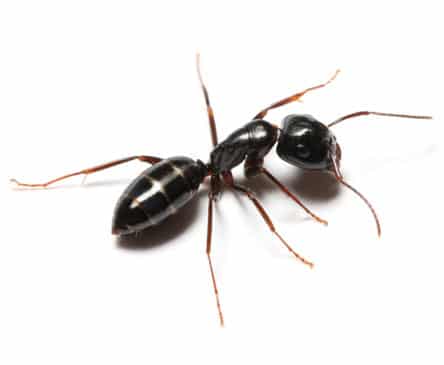
Odorous house ants are among the most common ants trailing across Oklahoma kitchen counters. Workers are about 1/8 inch long and brown to black. Crush one and you will notice the smell that gives them their name, usually described as rotten coconut. They feed on sweets, especially honeydew from aphids outdoors, and also take meat and grease. Outside, they nest in soil under almost anything: stones, logs, landscape blocks and fallen limbs. Indoors, they nest in wall voids and around water pipes and water heaters, which is why they often turn up in kitchens and bathrooms after a rain. Because the nest is hidden, sprays on the trail do little. Baits that the workers carry home work far better.
Little black ant
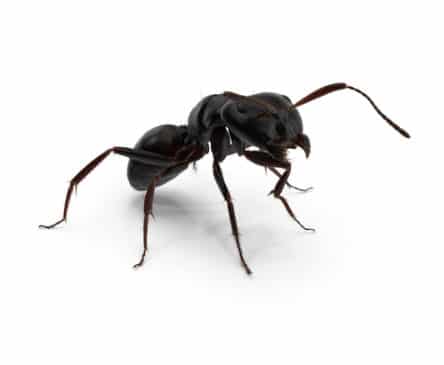
Little black ants are tiny, about 1/16 inch, and shiny black. They nest in open soil in lawns and under stones, bricks and wood outdoors, and in wall voids, masonry, woodwork and under carpets indoors. Workers hunt other insects and collect honeydew. They do have a stinger, but they are too small to bother people. Look for their thin trails running from a crack in the foundation or a baseboard to food.
Pavement ant
Pavement ants are about 1/10 to 1/8 inch long and dark brown to black, with fine parallel grooves on the head and the middle section of the body. Penn State Extension notes most colonies live under sidewalks, building slabs and large rocks, and the tell is small piles of sand along a slab crack or the top of a foundation wall, where the ants dump soil from the nest. They eat almost anything: sweets, grease, dead insects and seeds. Swarmers usually appear in spring but can come out in a heated building in winter.
Pharaoh ant
Pharaoh ants are tiny, about 1/16 inch, and golden yellow to reddish brown. They live almost entirely indoors in heated buildings, in wall voids, cabinets, behind baseboards and near warm appliances. A single infestation can include many nests and many queens. Two things make them different from other house ants. First, they are a known problem in hospitals, where Ohio State University Extension says they can carry germs on their bodies and contaminate sterile supplies. Second, repellent sprays and bug bombs make them worse by scattering the colony into new nests, a process called budding. They are controlled with baits placed throughout the building, and that can take months.
Acrobat ant
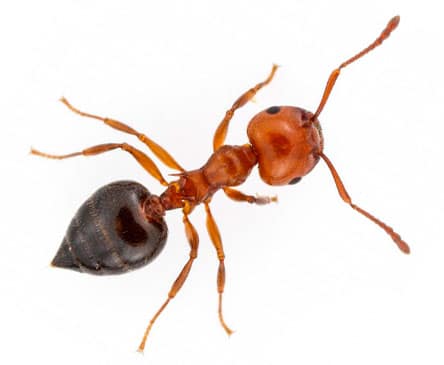
Acrobat ants are small, light brown to brownish black ants with a heart-shaped abdomen when you look down on them. When disturbed, they raise that abdomen up over their back, the acrobatic pose that gives them their name. Outdoors they nest in decaying stumps, fallen trees and limbs. Indoors they move into voids around door and window frames and into insulation, often where wood has been damaged by moisture. They can bite, but it is minor.
Carpenter ant
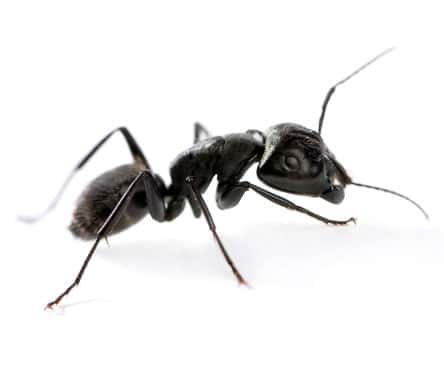
Carpenter ants are the biggest ants most Oklahomans see. Workers range from about 1/4 to 1/2 inch and come in several sizes in the same colony. They can be solid black, black and dull red, or reddish orange, and in profile the middle of the body is evenly rounded. They do not eat wood. They carve smooth tunnels in damp, soft or decaying wood to nest, pushing out piles of wood shavings. The main colony usually lives outdoors in a tree, stump or woodpile, and a nest inside the house is usually tied to a leak. They bite if handled. Read more in our carpenter ant guide.
Ants in the yard
Red imported fire ant
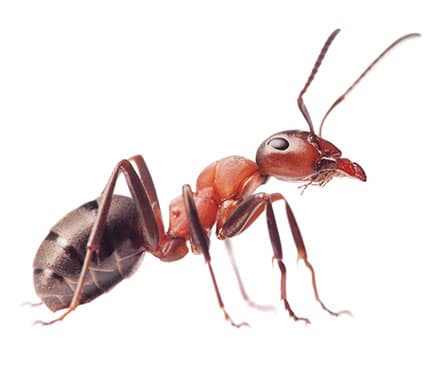
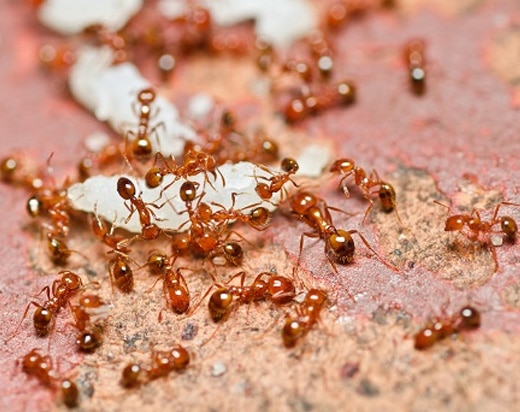
Red imported fire ants are an invasive species from South America. Workers are about 1/8 to 1/4 inch and dark reddish brown, in mixed sizes. Oklahoma State University reports widespread, active infestations along the southern and southeastern counties, from Love County east to McCurtain County, and 21 counties are under federal fire ant quarantine. Smaller, isolated infestations have turned up as far north as Tulsa and Payne counties, usually in towns. Fire ants also look a lot like the native southern fire ant, and OSU notes the two are hard to tell apart.
They build dirt mounds in open, sunny ground: lawns, parks, pastures and fields. In clay soil a mound can reach about a foot high, and in sandy soil mounds are flatter and easy to miss. Disturb one and the workers pour out, grip the skin with their jaws and sting repeatedly. The stings burn and, a day or two later, leave white pustules. See ant bites and stings for first aid.
Harvester ant
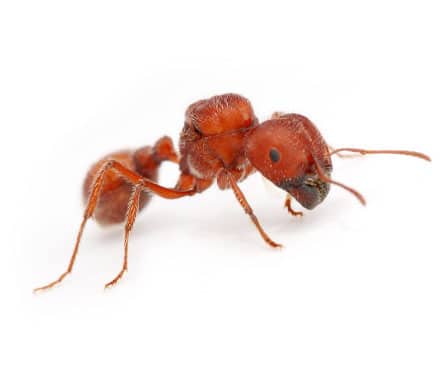
Harvester ants are large red ants that clear a bare, circular patch of ground around a single nest opening. Texas A&M entomologists put the typical cleared area at about 12 feet across, though it ranges from 3 to 35 feet. Workers collect and store seeds as their main food. They have a powerful sting, and Texas A&M notes that people playing in lawns and city parks are the ones most often stung.
Field ants
Field ants belong to the genus Formica, a large group that includes mound-building and thatching ants. They are medium to large, black, brown, red, or red and black, and are often mistaken for carpenter ants. They nest in soil in sunny, open areas, sometimes building visible mounds, and rarely set up colonies inside a house. They will bite if the nest is disturbed.
Big-headed ants
Big-headed ants get their name from the soldiers, which have heads far too large for their bodies. The smaller workers look like ordinary small brown ants. They nest in soil near foundations, under stones and in mulch, and forage indoors for protein and grease, but they seldom nest inside.
Citronella (yellow) ants
If yellowish ants with smoky wings come pouring out of a crack or a basement wall in mid to late summer, you are probably looking at citronella ants, not termites. Penn State Extension says they are frequently mistaken for termites when they swarm into homes. Workers are about 1/6 inch, light yellow to reddish brown, and give off a lemon or citronella smell when crushed. They live underground and feed on honeydew from aphids and mealybugs on plant roots. They do not nest in the house, damage wood or get into food, so they are a nuisance only. Older posts on this site called them yellow meadow ants, which is a European species.
Are the ants inside different from the ants outside?
Partly. A few species, like pharaoh ants, live almost entirely inside heated buildings. Most of the ants you find indoors, though, are the same species that live in your yard: odorous house ants, little black ants, pavement ants, acrobat ants and carpenter ants all nest outdoors and move in when they find food, water or a sheltered nest site. That is why sealing gaps and fixing leaks matters as much as treating the trail on the counter. Ants that forage indoors are drawn to sugar, grease and moisture, while many outdoor ants feed mostly on other insects, seeds and honeydew.

What ants do in winter
Ants are cold-blooded, so as Oklahoma cools off in the fall they slow down and pull back into the nest, deeper in the soil, under rocks or inside logs and bark. The colony lives on food stored and fat built up during the fall and huddles around the queen. On warm winter days you may see a few foragers. In spring, scouts find food and lay scent trails that bring the rest of the colony, which is why ants seem to show up all at once in March and April. Ants nesting inside a heated home, such as pharaoh ants or carpenter ants in a damp wall, can stay active all winter.

Our post on starting ant control in March explains how to get ahead of the spring rush.
Are ants good for anything?
Outdoors, yes. Ant tunnels loosen and aerate soil and let water soak in. Ants carry food and waste underground, which recycles nutrients, and many plants rely on ants to carry and bury their seeds. Many ants also prey on other insects. That is why the goal is not to wipe out every ant on the property. It is to keep them out of the house and away from the places where people and pets get stung.
When to call an ant exterminator
- You see large black ants indoors, especially winged ones in spring, or piles of wood shavings. That points to carpenter ants.
- Tiny yellow or red ants are spreading through the house after you sprayed. That points to pharaoh ants.
- Fire ant mounds are near the house, a play area or a garden.
- Ant trails keep coming back no matter how much you clean.
Ant control from Emtec Pest Control
Getting rid of ants starts with knowing which ant you have, because the right bait, the right nest treatment and the right repairs are different for each one. Since 1979, Emtec Pest Control has been the ant exterminator for homes and businesses in Tulsa, Broken Arrow, Owasso, Jenks, Bixby, Sand Springs, Sapulpa, Stillwater, Oklahoma City and Edmond. Our technicians identify the species, find where the ants are nesting and getting in, and treat the colony instead of just the trail. Learn about our ant control service and preventative pest control, or contact us to schedule an inspection.
Frequently Asked Questions
What is the most common ant in Oklahoma homes?
The odorous house ant is one of the most common ants trailing across Oklahoma kitchens. It is small, about 1/8 inch, brown to black, and smells like rotten coconut when crushed. Little black ants and pavement ants are close behind.
Are there fire ants in Oklahoma?
Yes. Oklahoma State University reports widespread, active red imported fire ant infestations in the southern and southeastern counties, and 21 counties are under a federal fire ant quarantine. Smaller, isolated infestations have been found as far north as Tulsa and Payne counties, usually in cities.
What are the big black ants in Oklahoma?
Large black ants, especially ones that come in several sizes in the same trail, are usually carpenter ants. Workers run from about 1/4 to 1/2 inch long and can be solid black or black and dull red. Seeing them indoors, especially winged ones in spring, is worth an inspection because they nest in damp or damaged wood.
What are the little red ants in my house?
Tiny yellow to reddish-brown ants indoors, about 1/16 inch long, are often pharaoh ants. They nest in warm, hidden spots inside walls and cabinets. Do not spray them: repellent sprays can make the colony split into new colonies. Baits work much better.
Where do ants go in the winter?
Outdoor colonies slow down and wait out the cold deep in the soil, under rocks or inside logs and bark. Ants that have nested inside a heated building, such as pharaoh ants or a carpenter ant nest by a leak, can stay active all winter.
Sources
- Ants (school IPM brochure) (opens in new tab)
- Red Imported Fire Ant, Solenopsis invicta (opens in new tab)
- Safeguard against imported fire ants when selling hay (opens in new tab)
- Urban Pests: Ants (opens in new tab)
- Pavement Ant (opens in new tab)
- Citronella Ants (opens in new tab)
- Pharaoh Ant (HYG-2136) (opens in new tab)