
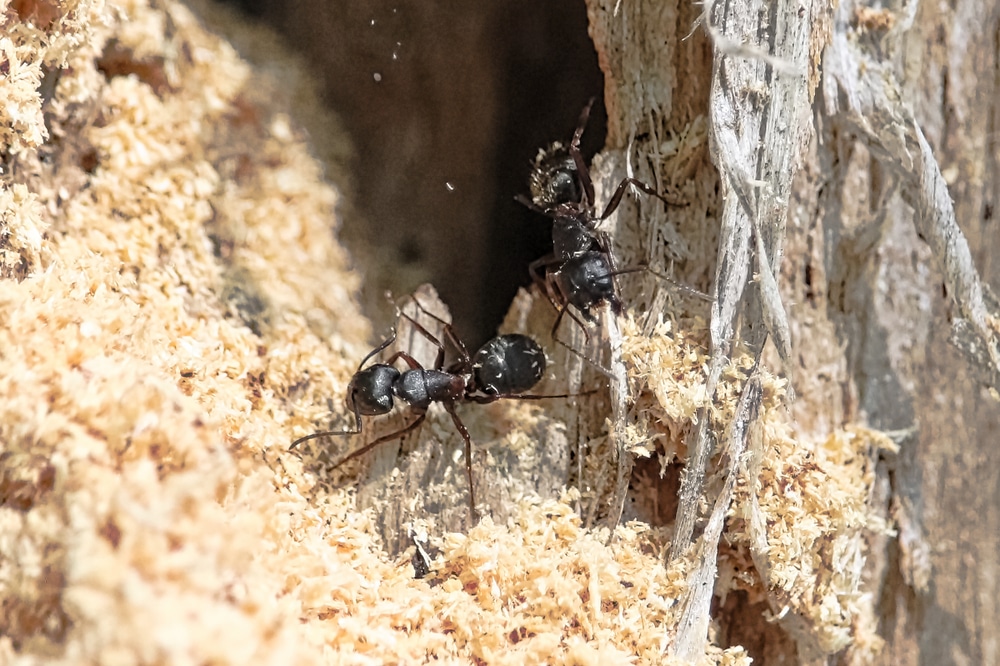
Carpenter ants are large ants that tunnel into damp, soft or damaged wood to build their nests. They do not eat the wood the way termites do, but they hollow it out, and a colony left alone for years can weaken window frames, sill plates, porch framing and other wood that has been wet for a long time. They are often mistaken for ordinary big ants or for termites, and either mistake leads to the wrong treatment. Here is how to recognize them, what their damage looks like and how to stop them.
How to identify a carpenter ant
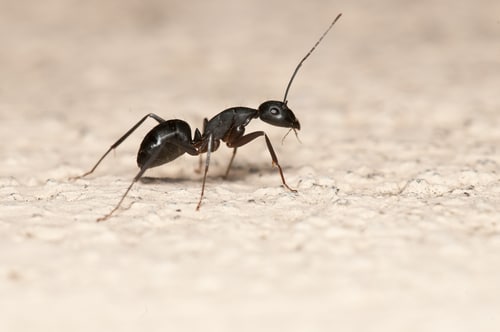
- Size: big for an ant. Workers run from about 1/4 to 1/2 inch, and you will see different sizes in the same trail. Winged reproductives and queens are larger still.
- Color: solid dull black, black and dull red, or reddish orange, depending on the species.
- Shape: one node (bump) at the waist, and an evenly rounded back when you look at the middle section from the side.
- Behavior: they travel in trails along tree limbs, fences, wires and pipes that touch the house.
Field ants can look similar but nest in the soil. If you are not sure, a technician can tell them apart in a few seconds.
Carpenter ants vs termites
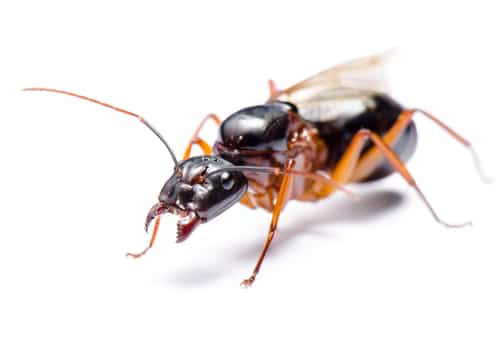
Winged carpenter ants and termite swarmers both show up indoors in spring, and both mean wood is involved, so it pays to know which you have.
| Carpenter ant | Termite | |
|---|---|---|
| Waist | Thin and pinched | Thick, no waist |
| Antennae | Elbowed | Straight |
| Wings | Hind wings smaller than front wings | All four wings about the same size |
| Wood | Smooth, clean tunnels; shavings pushed out | Wood eaten; tunnels packed with soil; mud tubes on foundations |
Our ants vs termites guide has photos, and signs of termite damage covers what termites leave behind.
Signs of carpenter ants in your house
- Wood shavings. Small piles of fine sawdust under baseboards, window sills, door frames or in the attic are the classic sign. The ants push it out of the nest as they dig.
- Winged ants indoors in spring. University of Kentucky entomologists say large numbers of winged adults inside are the clearest sign the nest is in the house. Carpenter ants mate and swarm in late spring.
- Big ants in the kitchen or bathroom, especially in several sizes, often at night or in early spring.
- Damp or damaged wood that sounds hollow when tapped, near a leak, gutter or plumbing line.
How much damage do carpenter ants do?
It varies. Carpenter ants prefer wood that is already wet, soft or decaying, and they mostly stay there. A young colony does little. But colonies grow and add satellite nests, and given enough time the tunneling can be significant to the structure. Texas A&M entomologists note that the parent colony usually lives outdoors, while indoor nests are typically satellite colonies tied to water leaks. That makes carpenter ants a moisture warning as much as an ant problem: where you find them, you will usually find wood that has been wet for a long time.
How to prevent carpenter ants
- Fix leaks and moisture. Repair plumbing and roof leaks, clean gutters and downspouts, and improve attic and crawl space ventilation.
- Replace wet or rotting wood around windows, doors, decks, porches and fascia boards, and keep exposed wood painted or sealed.
- Trim trees and shrubs so branches do not touch the roof or siding. Ants use them as bridges.
- Seal openings around utility lines, pipes and wires, and caulk cracks in the siding and foundation.
- Move firewood and lumber away from the house and off the ground, and remove old stumps near the foundation.
- Avoid wood-to-soil contact in decks, steps and landscaping.
How carpenter ants are controlled
The key, according to both Texas A&M and the University of Kentucky, is finding the nests: the parent colony and every satellite. Spraying ants you see on the counter does not reach them. A thorough job usually includes:
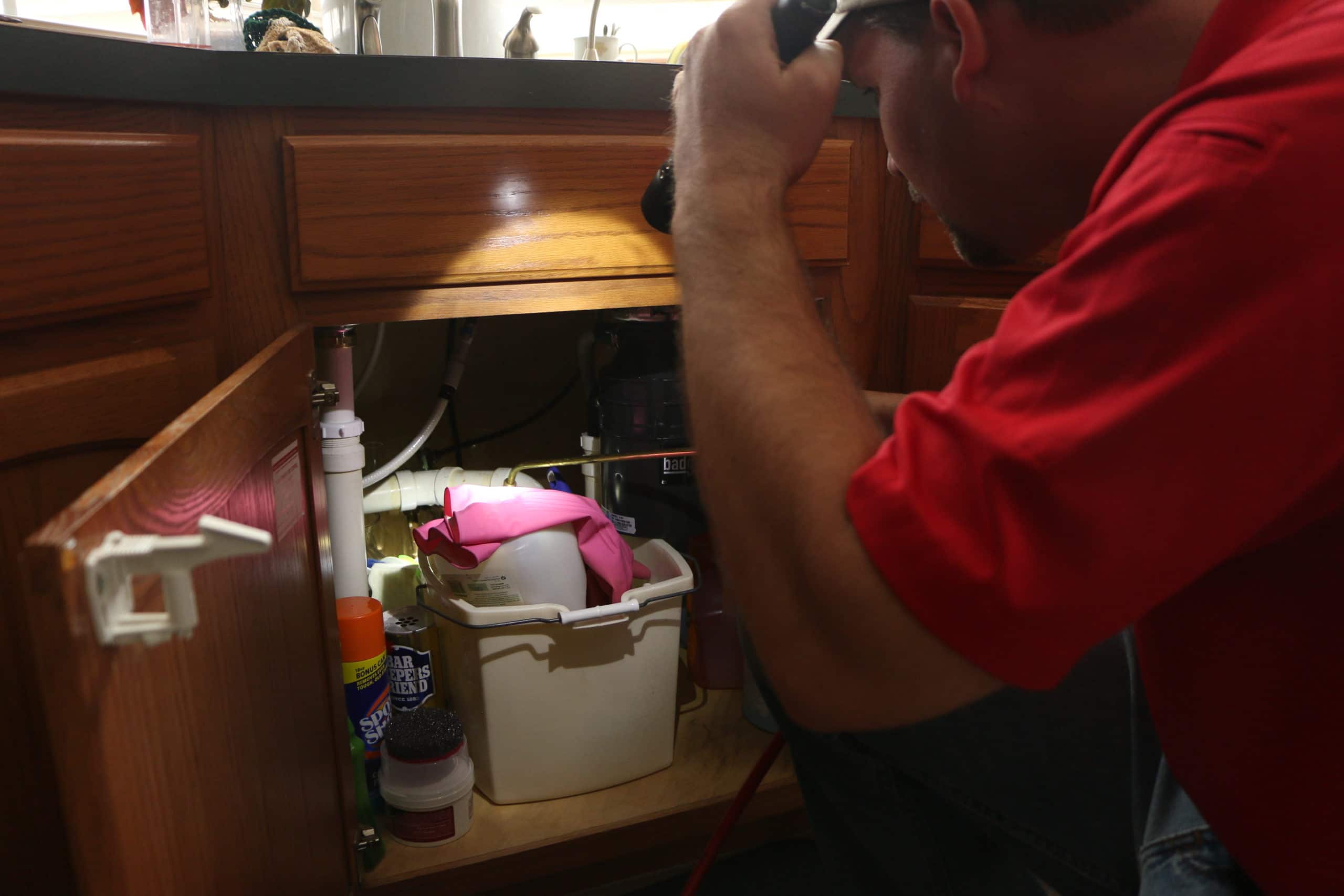
- Inspection inside and out to follow trails, find nest sites and find the moisture problem feeding them.
- Direct nest treatment, such as dusts applied into wall voids and galleries through small holes.
- Baits placed along trails. Slow-acting baits let workers carry the bait back and share it with the colony.
- Exterior treatment of outdoor colonies and the foundation to keep foragers from coming back.
- Repairs: fixing leaks and replacing damaged wood so the area stops attracting ants.
Store-bought sprays and termite products do not solve a carpenter ant problem, and nests inside walls are hard to reach without the right equipment.
Carpenter ant exterminator in the Tulsa and OKC areas
If you are seeing large ants indoors, winged ants in spring or piles of sawdust, it is time to call a carpenter ant exterminator. Since 1979, Emtec Pest Control has helped homeowners in Tulsa, Broken Arrow, Owasso, Jenks, Bixby, Sand Springs, Sapulpa, Stillwater, Oklahoma City and Edmond find and remove carpenter ant colonies. We identify whether you have carpenter ants or termites, track down the nests and treat them directly. See our ant control service, the Oklahoma ant ID guide, or contact us to schedule an inspection.
Frequently Asked Questions
Do carpenter ants eat wood?
No. Carpenter ants chew tunnels in wood to make room for the nest and push the shavings out, but they do not digest it. They eat other insects, honeydew from aphids, and sweets and meats from your kitchen. Termites are the insects that actually eat wood.
Is one carpenter ant in the house a problem?
Not always. Workers forage a long way from the nest, and a few in spring can be scouts from a colony outdoors. Large numbers inside, wood shavings, or winged carpenter ants coming out indoors in spring all point to a nest in the house and are worth an inspection.
Do carpenter ants bite?
Yes, they can bite if you pick one up or disturb the nest, and the big workers have strong jaws. The bite stings for a moment, but carpenter ants are not a health threat.
Which is worse, carpenter ants or termites?
Termites usually do more damage because they eat the wood and their colonies can be huge. Carpenter ant damage tends to be slower and stays in wood that was already wet or decayed, but over years it can be significant. Both call for a professional inspection.
Where do carpenter ants nest in a house?
Anywhere wood stays wet: around leaking windows and doors, under bathroom and kitchen floors, in roof edges with leaking gutters, in porch and deck framing, and in hollow doors or wall voids. The main colony is often outside in a tree, stump or woodpile.