

The rodents Oklahoma homeowners run into fall into four groups: mice, rats, squirrels and pocket gophers. Inside the house it is almost always the house mouse. Deer mice and white-footed mice come in from wooded and rural areas and matter most for health. Rats are larger and leave bigger droppings and burrows. Squirrels move into attics, and gophers stay in the yard. This guide shows how to tell them apart and what each one means for your home.
Oklahoma rodents at a glance
| Rodent | Size (with tail) | Key marks | Where you find it |
|---|---|---|---|
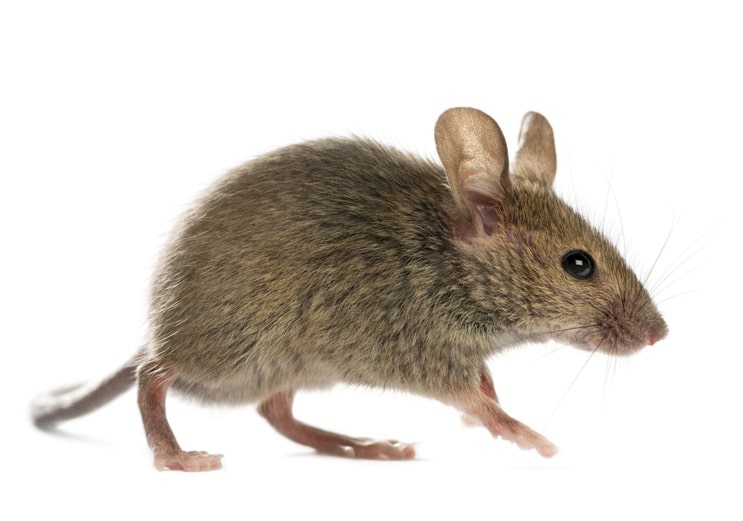
| House mouse | 5–7 in. | Gray-brown, big ears, small black eyes, nearly hairless tail, musky odor | Kitchens, walls, cabinets, garages, year-round |
| Deer and white-footed mice | 3–4 in. body, tail about as long | Brown back, white belly and feet, sharply two-toned tail, large eyes and ears | Homes near woods and fields, sheds, cabins, barns |
| Norway rat | Body 7–12 in. plus a 6–9 in. tail | Heavy, coarse brown to gray fur, tail shorter than the body | Burrows near foundations, crawl spaces, basements, garbage |
| Roof rat | Similar length, slimmer | Dark and sleek, long tail, a climber | Attics, trees, barns and grain storage |
| Tree squirrels | 17–27 in. | Bushy tail; gray, rusty-orange or (flying squirrel) small with a gliding skin flap | Attics, eaves, soffits; active by day except flying squirrels |
| Pocket gophers | Stocky, medium-sized | Long front claws, fur-lined cheek pouches, yellow front teeth, short tail | Underground; fan-shaped dirt mounds in lawns |
Mice
House mouse
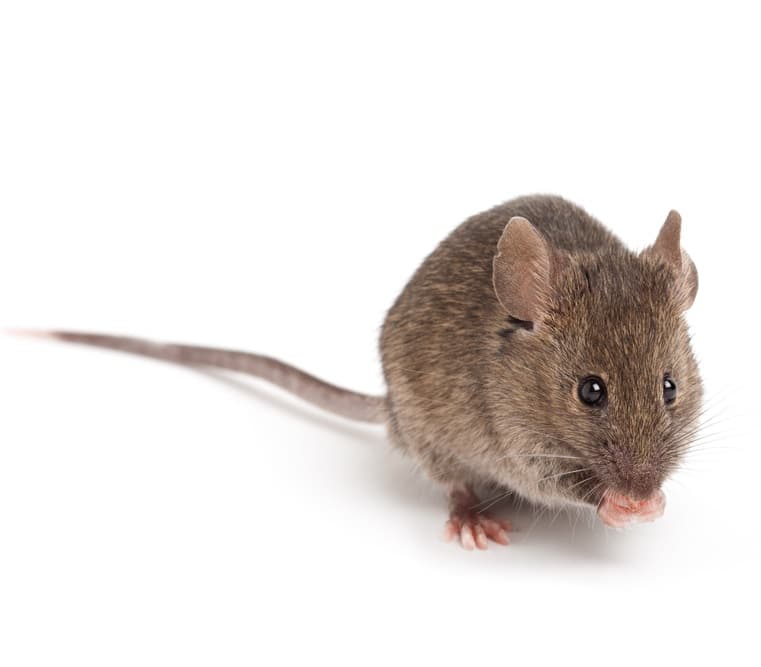
The house mouse is the rodent behind most indoor infestations in Oklahoma. OSU describes a small grayish mouse about 5 to 7 inches long including the tail, under an ounce, with relatively large ears and small black eyes. It climbs most surfaces, fits through gaps narrower than a dime, and nibbles on seeds, grains and pantry food. House mice are mostly active at night and leave droppings about 1/8 to 1/4 inch long, gnaw marks, a musky smell and nests of shredded paper or fabric.
They breed fast: a female can have up to ten litters a year of three to six young, and young mice can breed at six to ten weeks old, according to OSU. House mice are not native; they arrived in North America with settlers and live wherever people do.
Deer mice and white-footed mice
These native “field mice” are the ones to take seriously. Both are about 3 to 4 inches long plus a tail about as long as the body, with a brown back, white feet and belly, and a sharply two-toned tail, according to the Internet Center for Wildlife Damage Management. Compared with a house mouse they have bigger eyes and ears and lack the mousy odor. Telling deer mice from white-footed mice apart is hard even for experts.
They live in woods, fields and fencerows and come into homes, sheds, garages, cabins and barns near that habitat, especially in fall and winter. The deer mouse is the main U.S. carrier of Sin Nombre virus, the hantavirus behind most cases of hantavirus pulmonary syndrome, and white-footed mice carry a related virus, the CDC reports.
Found deer mice or white-footed mice? Do not sweep or vacuum their droppings or nests. Air the space out for 30 minutes, wear gloves, and soak droppings with disinfectant or a bleach solution before wiping them up. See a doctor promptly for fever, muscle aches or shortness of breath in the weeks after rodent exposure, and call 911 for trouble breathing. Poison Help is free at 1-800-222-1222. This article is general information, not medical advice.
Harvest mice and other field mice
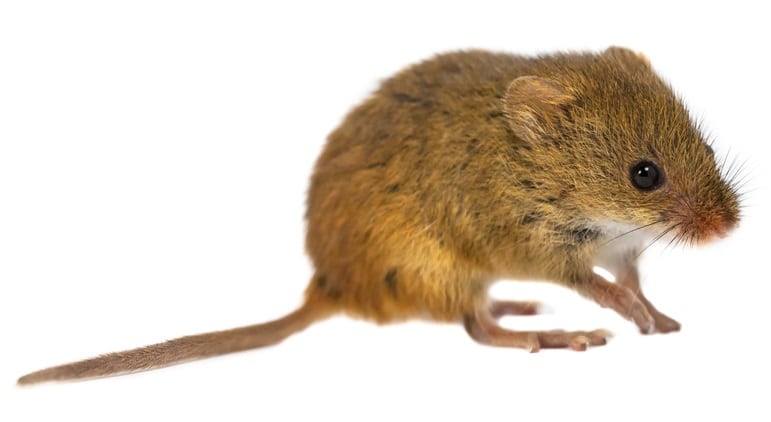
Oklahoma’s grasslands, brushy edges and rocky hills are home to several small native mice that rarely come indoors: harvest mice, which build ball-shaped grass nests above the ground; the big-eared pinyon mouse of rocky, juniper country; the cotton mouse and golden mouse of woods and thickets; and the northern grasshopper mouse, an unusual insect-eating mouse of open country. You are most likely to meet them in a barn, a shed or a pile of stored hay or feed. If one turns up in the house, treat its droppings the same way as deer mouse droppings.
Rats
Norway rat
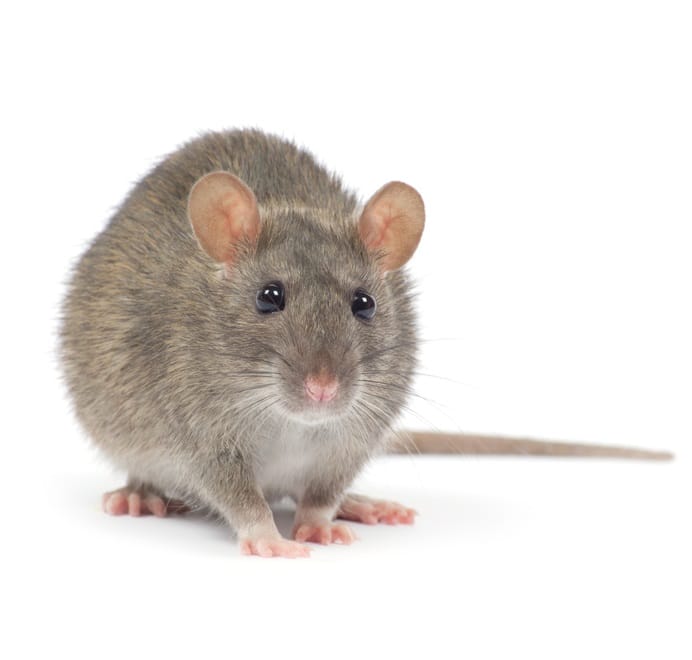
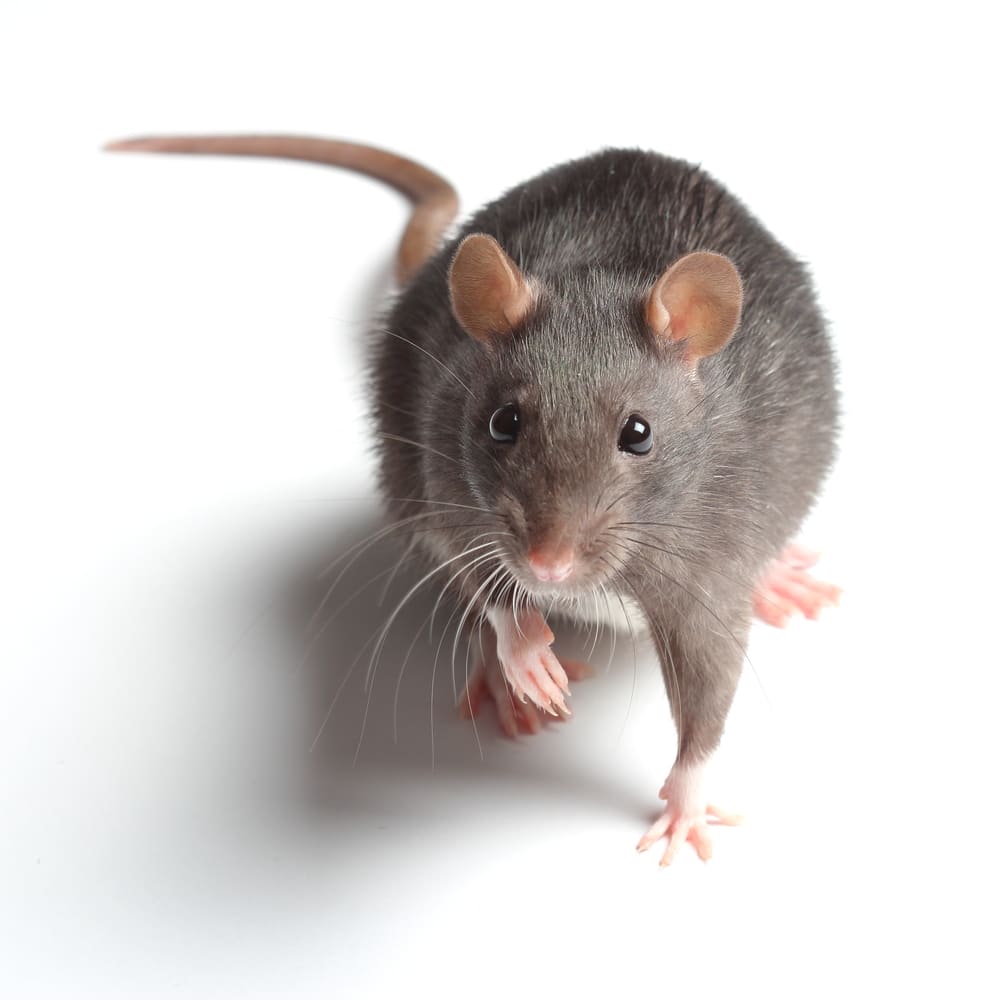
The Norway rat, also called the brown rat, is a heavy, burrowing rat. University of Nebraska Extension describes a body 7 to 12 inches long, up to about a pound, with coarse reddish-brown to gray or black fur and a scaly tail of 6 to 9 inches, shorter than the body. Norway rats dig burrows along foundations, under slabs, woodpiles and dense shrubs, with entrances 2 to 3 inches wide and smooth, worn ground around them. Their droppings are about 3/4 inch long, and they can get through any opening larger than about 1/2 inch. Females have four to six litters a year of six to twelve young.
Roof rat
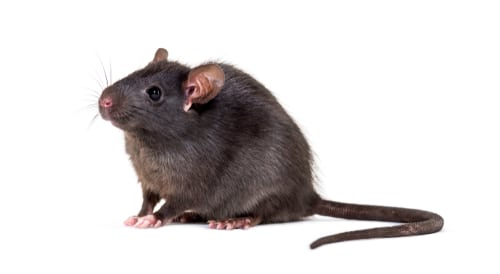
The roof rat, or black rat, is slimmer than the Norway rat, with a long tail and dark, smoother fur, and it climbs rather than digs. It nests high: in attics, trees, vines and the upper parts of buildings. Roof rats are well established in parts of Oklahoma. A study in the Proceedings of the Oklahoma Academy of Science found them to be the predominant rat in southwestern Oklahoma, mostly in barns, grain bins, outbuildings and grain storage, while Norway rats were nearly absent there.
Woodrats (pack rats)
The native eastern woodrat is dark brown with a sparsely haired, two-toned tail, University of Nebraska Extension notes, and lives mainly along rivers and streams. Woodrats build large stick nests in brush and rocks and sometimes in rural sheds and outbuildings, but they are not the rats that infest town homes.
Mouse or young rat?
A young rat has a large head and feet for its body, while a mouse has a small head, small feet and big ears. Droppings settle most cases: about 1/8 to 1/4 inch for a house mouse, about 3/4 inch for a Norway rat.
Squirrels
Fox squirrel
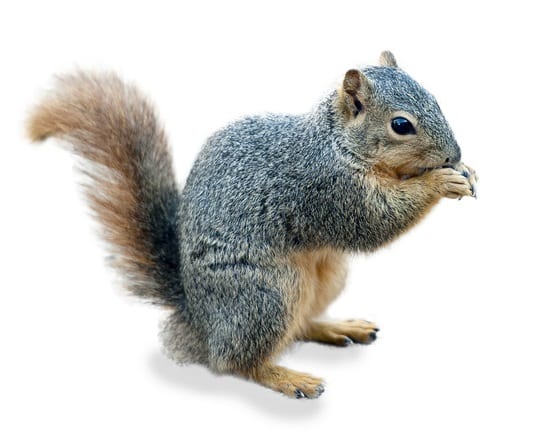
The fox squirrel is the larger of Oklahoma’s two tree squirrels: about 18 to 27 inches long and 1 1/2 to 2 1/2 pounds, with salt-and-pepper fur washed in yellow or orange, pale yellow to orange underparts and orange-tipped tail hairs, according to OSU. It is native and found across the state except the Panhandle.
Eastern gray squirrel
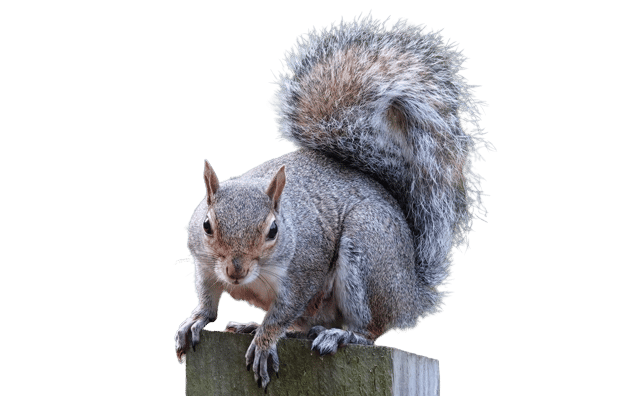
The gray squirrel is a little smaller, about 17 to 20 inches and 1 to 1 1/2 pounds, gray to brownish-gray with a white belly and white-tipped tail hairs. In Oklahoma it lives only east of the 97th meridian, the eastern part of the state that includes the Tulsa area.
Flying squirrel
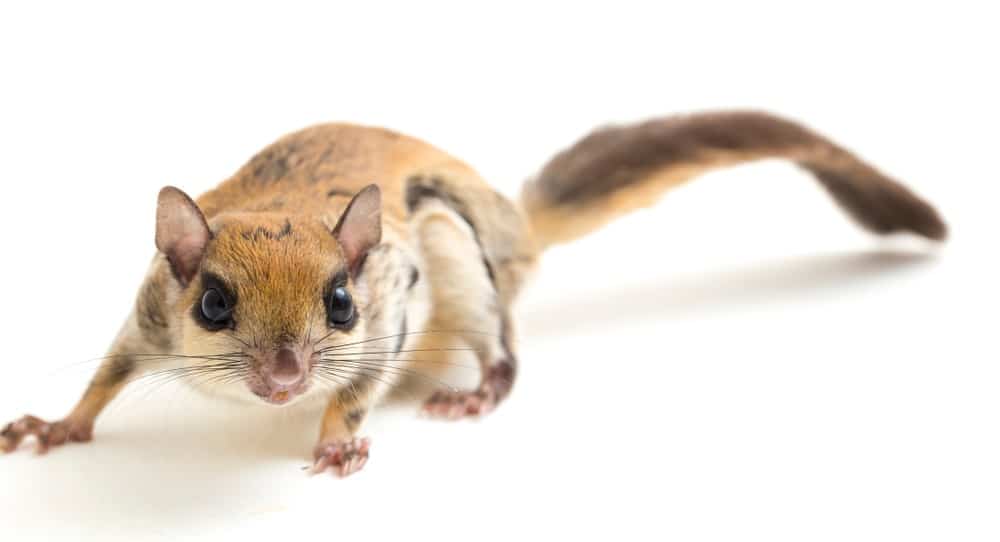
Flying squirrels are small, night-active squirrels with a fold of skin between the front and back legs that lets them glide from tree to tree. Penn State Extension notes they are small enough to live in attics, closets and between walls.
Squirrels in the attic
Tree squirrels chew openings under eaves and at the gutter line to reach nest sites, and they chew insulation and the coating on wires, which can create a fire risk. Gray and fox squirrels have young in late winter or spring, and often again in late summer. Never seal an opening until you know no squirrels, young included, are still inside; trapped squirrels chew their way out somewhere else. If you hear thumping and running overhead during the day, it is more likely squirrels than mice.
Pocket gophers
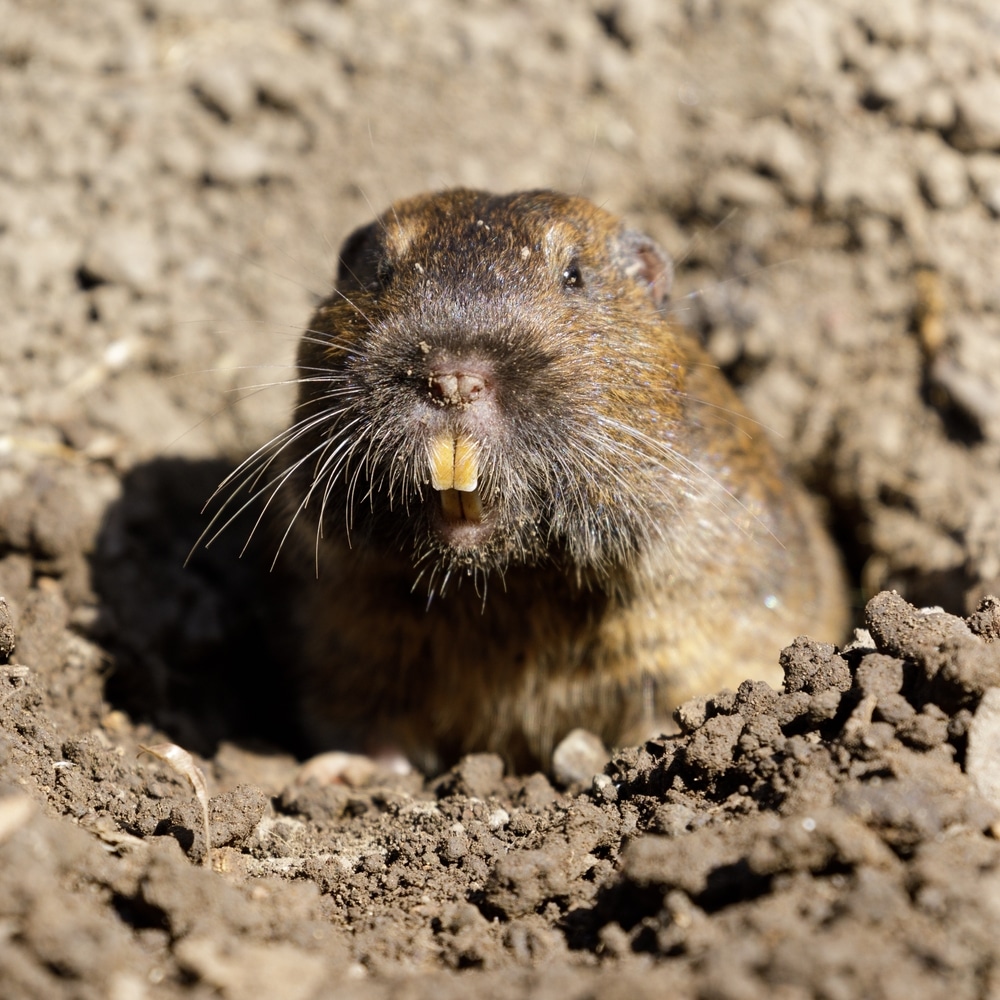
Two pocket gophers live in Oklahoma, OSU Extension reports: the plains pocket gopher across most of the state, and the Mexican pocket gopher in the Panhandle. A pocket gopher is a stocky digger with a broad head, small eyes and ears, yellowish chisel-like front teeth, long claws on the front feet, a short tail, and deep fur-lined cheek pouches it uses to carry food.
You will rarely see one. You will see the mounds: fan-shaped piles of soil 18 to 24 inches across with a plugged hole on one side, at the ends of short side tunnels. One gopher can make up to 200 mounds a year, mostly in spring. Gophers eat roots, bulbs and tubers, and they damage lawns, gardens, young trees and buried cables and irrigation lines.
Gopher or mole?
Moles are not rodents. A mole has no cheek pouches or outer ears, a slender pointed snout, tiny teeth and broad, paddle-like front feet. If you see raised ridges across the lawn, think mole; fan-shaped mounds with a plugged hole, think gopher. See moles vs. gophers and how to get rid of moles and gophers, or our mole and gopher control service.
Which rodent is in my house?
| What you found | Most likely |
|---|---|
| Rice-sized droppings in the pantry or under the sink | House mouse |
| Droppings and nests in a shed, cabin or garage near woods | Deer or white-footed mice: clean up carefully |
| Droppings about 3/4 inch, burrows along the foundation | Norway rat |
| Scurrying in the attic at night, droppings on rafters | Mice or roof rats |
| Thumping and rolling in the attic during the day, chewed eaves | Tree squirrels |
| Fan-shaped dirt mounds in the lawn | Pocket gopher |
| A shed snake skin in the attic | A rat snake following rodents: see snakes in the attic |
Once you know what you have, our guides on how mice get into houses and how to get rid of rodents cover sealing, trapping and safe cleanup. More pest guides are on our pest guides page.
Rodent exterminator for Oklahoma homes
Not sure what is in your walls or attic? Emtec Pest Control has been identifying and getting rid of rodents in homes and businesses across Green Country and Oklahoma City since 1979. We inspect for droppings, gnaw marks and entry points, tell you what you are dealing with, and build the plan around it: sealing and trapping or baiting for mice and rats, and the right approach for gophers in the yard. We are the rodent exterminator for Tulsa, Broken Arrow, Owasso, Jenks, Bixby, Sand Springs, Sapulpa, Stillwater, Oklahoma City, Edmond and nearby towns. See our rodent control service or contact us to schedule an inspection.
Frequently Asked Questions
What is the most common rodent in Oklahoma homes?
The house mouse. It lives alongside people year-round and moves closer to buildings as the weather cools, OSU Extension says. It is a small gray mouse, about 5 to 7 inches long including the tail.
How can I tell a mouse from a young rat?
Look at the head, feet and droppings. A young rat has a larger head and feet for its body than a mouse. House mouse droppings are about 1/8 to 1/4 inch long, while Norway rat droppings are about 3/4 inch.
Which rodents carry hantavirus in Oklahoma?
In the United States, the deer mouse is the main carrier of the hantavirus that causes most cases, and white-footed mice, cotton rats and rice rats carry related viruses, according to the CDC. Treat any wild mouse and its droppings as possibly infected.
Are there gophers in Oklahoma?
Yes. Two pocket gophers live in Oklahoma: the plains pocket gopher across most of the state and the Mexican pocket gopher in the Panhandle, according to OSU Extension. They leave fan-shaped dirt mounds in lawns and fields.
Are fox squirrels native to Oklahoma?
Yes. Both the fox squirrel and the eastern gray squirrel are native. OSU Extension notes fox squirrels are found across the state except the Panhandle, and gray squirrels only in the eastern part, east of the 97th meridian.
Sources
- House Mouse (Oklahoma School IPM) (opens in new tab)
- Controlling Pocket Gophers (NREM-9001) (opens in new tab)
- Gray and Fox Squirrels (L-271) (opens in new tab)
- Deer and White-footed Mice (opens in new tab)
- Controlling Rats (G1737) (opens in new tab)
- The Status of Rattus rattus and Rattus norvegicus in Southwestern Oklahoma (opens in new tab)
- Hantavirus Pulmonary Syndrome: Updated Recommendations for Risk Reduction (MMWR) (opens in new tab)
- Tree Squirrels (opens in new tab)