

The way to get rid of moles and gophers is to trap them. Oklahoma State University Extension names trapping as the practical choice for lawns, and wildlife specialists in Missouri and Nebraska call it the most effective control for moles. The catch is that moles and pocket gophers are different animals that dig different tunnels and need different traps, so the first step is knowing which one is tearing up your yard. This guide covers how to tell them apart, how to trap each one, how to protect plants, and which popular remedies you can skip.
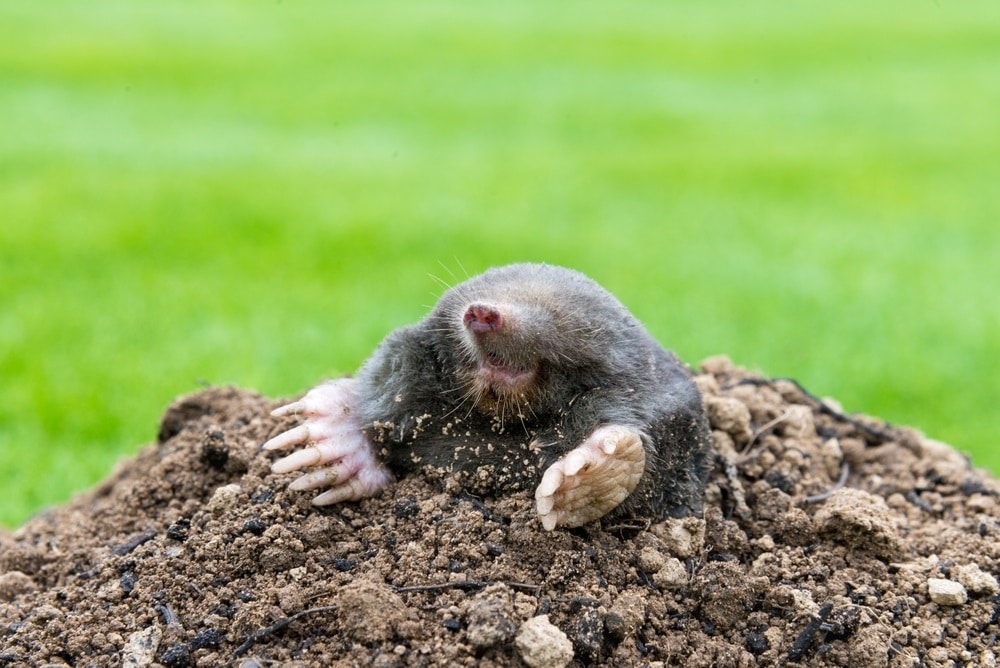
Step one: is it a mole or a gopher?
Look at the soil before you buy anything. A trap made for moles usually will not catch a gopher, and the reverse is true too, according to the University of Missouri.
| What you see | Mole | Pocket gopher |
|---|---|---|
| Raised ridges across the lawn | Yes, the main sign | No |
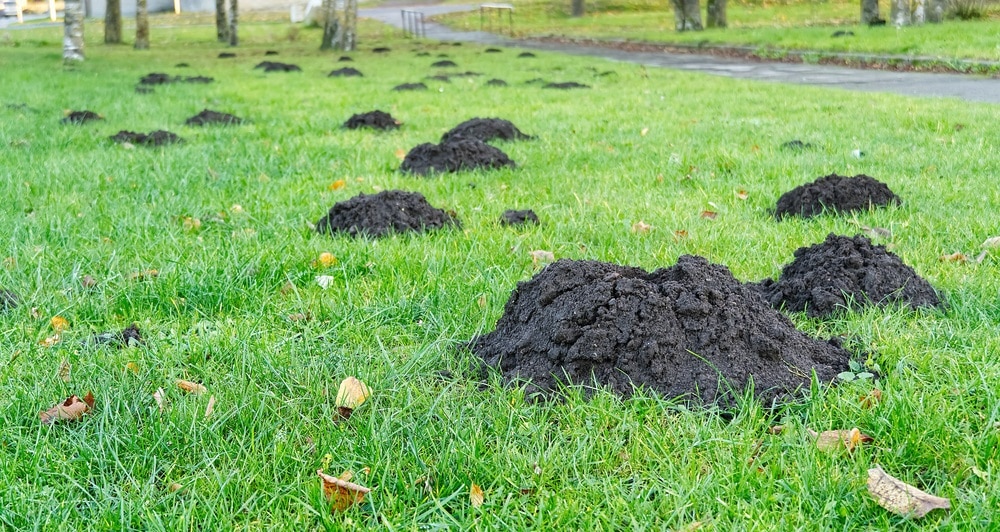
| Mound shape | Small, round, volcano-shaped, coarse clods | Fan or crescent shaped, fine soil, plugged hole off to one side |
| Number of mounds | A few | Many, often in a line |
| Plants eaten | Rarely; roots get pushed around | Yes: roots, bulbs, garden plants |
If plants are being chewed but there are no mounds, only narrow runways and small holes, you may have voles instead (more on them below). Our moles vs. gophers guide has a full side-by-side comparison, and the Oklahoma Rodent ID Guide covers gophers alongside mice, rats and squirrels.
Why moles and gophers like your lawn
A well-kept yard is good habitat, and the reasons are simple: moist soil and food.
- Moles follow earthworms and insects. The eastern mole, Oklahoma’s only mole, eats earthworms, white grubs and other soil insects and prefers moist, loose soil. University of Missouri Extension notes that moles favor moist sandy loam and generally avoid heavy, dry clay, and Nebraska Extension adds that they like shaded areas where the soil stays cool and moist near the surface. A watered lawn brings worms up, and the moles follow.
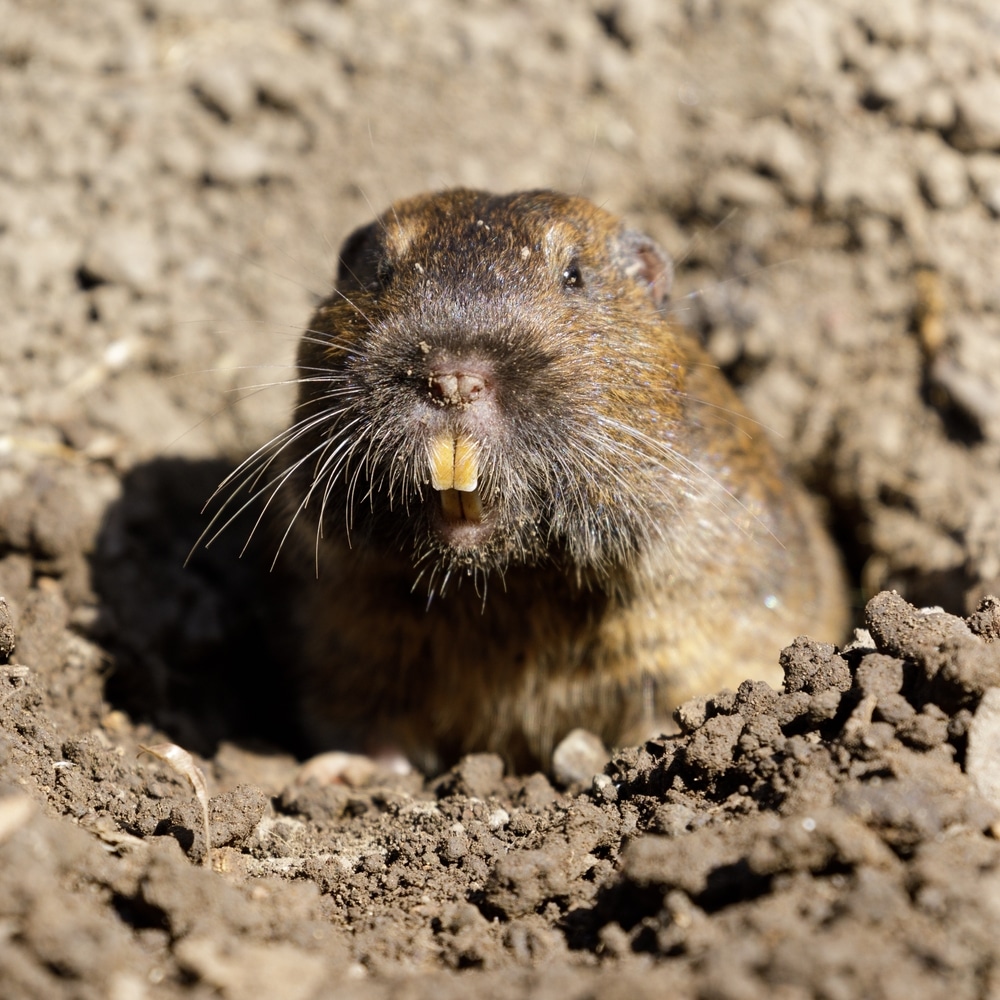
- Gophers follow roots. Pocket gophers eat roots, tubers, bulbs and grasses, and OSU lists lawns and flowerbeds among their habitats. University of California specialists point out that irrigated lawns and gardens offer good digging conditions all year.
Cutting back on overwatering and packing the soil with a lawn roller can make a yard a little less inviting to moles, according to the University of Missouri, but no change in lawn care will move an established mole or gopher out on its own.
When to act
Spring and fall are the best times in Oklahoma. OSU says gopher control works best then, when gophers are most active near the surface, and Nebraska Extension says the same for moles, especially after rains. In the heat of summer and the cold of winter, both animals work deeper and are harder to catch. Fresh mounds and newly raised ridges tell you an animal is active right now, so start as soon as you see them.
How to get rid of moles
- Find an active runway. Moles dig two kinds of tunnels: shallow feeding tunnels, some used only once, and main travel runs used again and again. Look for straight ridges, runs that connect two mounds, and runs that follow a sidewalk, driveway or fence line. Skip twisting, wandering ridges, and never set a trap on a molehill.
- Test it. Press down a short section of the ridge with your foot. If it has been pushed back up within 24 hours, the tunnel is active and worth trapping. If you cannot find active runs, Nebraska Extension suggests rolling the lawn flat and trapping wherever new ridges appear.
- Set the right trap. Mole traps come in harpoon, scissor-jaw and choker-loop styles. All of them spring when the mole pushes up the flattened soil under the trigger, so the trap is set from above without opening the whole tunnel. Follow the trap’s directions closely.
- Use several traps and mark them. Nebraska Extension recommends at least three. Flag each one so no one steps on it or runs it over with the mower.
- Move traps that are not working. If a trap has not caught a mole in two or three days, move it to another active run.
Moles are solitary, and a yard rarely holds more than a few. Missouri Extension notes that once moles are removed, a yard can stay mole-free for years, though in areas with excellent habitat new moles may move into the empty tunnels.
How to get rid of gophers
- Pick the freshest mound. Look for the small circular depression on one side, where the gopher plugged its hole from below. OSU suggests tramping all the mounds flat first, so the new ones stand out on your next visit.
- Probe for the main tunnel. The main tunnel runs off to the side of the mound, not under it. Push a metal probe into the ground about 4 to 10 inches from the base of the mound on the plugged side, or between two fresh mounds. When the probe suddenly drops an inch or two, you have found the tunnel.
- Set two traps facing opposite directions. Dig down to the tunnel, clear it with as little disturbance as you can, and set one trap in each direction with the jaws facing out. Pincher-style and box traps are the common types. Wire or tie each trap to a stake.
- Block the light. Cover the opening with a dirt clod or grass so light does not shine into the tunnel.
- Check often and move traps. OSU recommends checking traps morning and evening. If nothing is caught in a day or two, probe again and move the set.
OSU notes that pocket gophers are not protected by federal or Oklahoma law, so homeowners may trap them. One gopher can push up as many as 200 mounds in a year, mostly in spring, so a single animal can make a yard look like it has dozens.
What about baits?
OSU lists toxic bait and trapping as the two most practical gopher controls, with baits making the most sense over large, heavily infested areas and traps the better fit for a lawn. Gopher bait has to go underground, into the main tunnel, and the opening has to be closed afterward. OSU and the University of California both warn that bait left on the surface does not work and can poison pets and wildlife. Always read and follow the label.
For moles, the University of Missouri calls most baits questionable, because many are made of grain, seeds or nuts, and moles do not eat those. Worm-shaped and gel baits made for moles are sold, but Missouri and Nebraska both say research comparing them to trapping is limited.
Protecting plants, beds and sprinkler lines
- Wire baskets and buried mesh for gophers. Line planting holes for shrubs and young trees with wire baskets. To protect a bed, bury hardware cloth or 1/4 to 1/2 inch mesh at least 18 inches deep (OSU). The University of California recommends going 2 feet deep, bending an extra 6 inches outward at the bottom, and leaving a foot above ground.
- Raised beds. Lay mesh wire under the soil of a raised bed before filling it.
- Gravel around lines. A 6 to 8 inch layer of coarse gravel around sprinkler lines and buried cables keeps gophers from chewing them.
- Mole barriers. Nebraska Extension says barriers only make sense for small, high-value areas: aluminum sheeting or 1/4 inch hardware cloth buried 24 to 30 inches deep, with 6 inches above ground.
Will killing grubs get rid of moles?
Usually not, and this is the most common and most expensive mistake. Moles eat grubs, but they also eat earthworms, and Iowa State Extension says earthworms are their main meal. Grub insecticides do not kill earthworms. Iowa State calls the idea that an insecticide will cure a mole problem "the great landscape lie," and Nebraska Extension warns that moles may dig even more for a few weeks while they search for other food. The University of Missouri adds that a grub-free lawn can still have moles if other food is around.
If you do have grubs, treat them because they are damaging the grass, not because of moles. Missouri Extension puts the best timing for grub insecticides at mid-June to mid-July and says spring grub treatments are not justified.
Remedies that don’t work
These come up again and again, and extension specialists have tested or reviewed most of them:
- Chewing gum in the tunnels. Listed as ineffective by Missouri, Nebraska, Arkansas and California extension services.
- Sonic spikes, vibrating stakes, windmills and pinwheels. Iowa State says sonic, ultrasonic and electromagnetic devices do not work, and University of California specialists say gophers get used to the noise and vibration.
- Castor oil and castor bean plants. Nebraska Extension found castor oil products have only minor effectiveness on moles, and Iowa State says early good results did not hold up in later testing. For gophers, the University of California says no repellent has proven effective. Castor bean and gopher purge plants have no research support and are poisonous.
- Things stuffed in the tunnels: broken glass, razor blades, rose branches, bleach, petroleum products, lye, human hair, cat litter and kerosene. Missouri and Nebraska list all of them as unproven. We found no research supporting human or predator urine either.
- Smoke and gas cartridges. Moles and gophers quickly seal off their tunnels from gas and smoke, and their tunnel systems are too long and porous for gas to work well.
- Flooding. Gophers easily handle normal watering, according to the University of California, and Nebraska lists flooding among mole remedies that fail.
- Cats and dogs. Predators rarely remove every animal, and Nebraska Extension does not recommend relying on pets because they can damage turf and harm other wildlife.
Could it be voles?
Oklahoma also has prairie voles and woodland voles, small, short-tailed rodents that eat plants. According to Nebraska Extension, voles often travel through mole tunnels to reach bulbs and roots, so their damage gets blamed on moles. Signs of voles are surface runways about 1 to 2 inches wide with the grass clipped close, small holes without mounds, and bark gnawed at the base of young trees and shrubs. Mole and gopher traps will not catch them. Mouse snap traps set across the runways do, and keeping grass and weeds mowed around plantings helps. Our guide on getting rid of rodents covers mice and rats around the yard.
When to call a professional
- You have set traps for a week and still have fresh mounds or ridges.
- You are not sure whether you have moles, gophers or voles.
- Gophers are killing shrubs or trees or chewing sprinkler lines.
- The yard is large, or new animals keep moving in from a field or wooded lot next door.
- You would rather not handle traps or baits around children and pets.
Mole and gopher exterminator for Oklahoma yards
Emtec Pest Control has served Oklahoma homeowners since 1979, and moles and gophers are part of the job. As an exterminator that works on yards as well as homes, we start by confirming which animal you have, then map the active tunnels, set and flag traps in the runs that are being used, and come back to check and reset them until the activity stops. We will also point out where wire baskets or barriers would protect the plants you care about most. We serve Tulsa, Broken Arrow, Owasso, Jenks, Bixby, Sand Springs, Sapulpa, Stillwater, Oklahoma City and Edmond. See our mole and gopher control service or contact us to schedule an inspection.
Frequently Asked Questions
What is the fastest way to get rid of moles?
Trapping in an active runway. Flatten a short stretch of a straight surface ridge with your foot, and if it is raised again within a day, set a mole trap there. Use at least three traps and move any trap that has not caught a mole in two or three days. Repellents, gadgets and home remedies are slower at best and usually do nothing.
Does Juicy Fruit gum kill gophers or moles?
No. Extension services in Missouri, Nebraska, Arkansas and California all list chewing gum in tunnels as a remedy that does not work. Traps are the method that does.
Will killing grubs get rid of moles?
Usually not. Earthworms are a big part of a mole’s diet, and grub insecticides do not kill earthworms. Iowa State calls the grub-killer cure for moles "the great landscape lie." Moles may even dig more for a few weeks while they hunt for other food. Treat grubs only when you have grubs, at the right time of year.
Do smoke bombs or gas cartridges work on gophers?
Usually not. Gophers seal off their tunnels when they sense smoke or gas, and both moles and gophers have long, porous tunnel systems that let gas escape. University of California and Iowa State specialists rate smoke and gas cartridges as rarely effective.
When is the best time to trap moles and gophers in Oklahoma?
Spring and fall, when both animals dig close to the surface and new mounds and ridges are easy to spot. Trapping after a rain, or after watering a dry lawn, helps because moles tunnel near the surface in moist soil.
Sources
- Controlling Pocket Gophers (NREM-9001) (opens in new tab)
- Frequently Asked Questions for Wildlife Damage and Disease (NREM-9026) (opens in new tab)
- Controlling Eastern Moles (G9440) (opens in new tab)
- Moles and Their Control (G1538) (opens in new tab)
- Moles in the Lawn, Control (opens in new tab)
- Pest Notes: Pocket Gophers (Publication 7433) (opens in new tab)
- Controlling Pocket Gophers in Arkansas (FSA9114) (opens in new tab)
- Controlling Vole Damage (G887) (opens in new tab)