
Oklahoma State University Extension lists five pest cockroaches in the state: the German, American, oriental, brown-banded and smokybrown cockroach. The one that matters most is the German cockroach, a small, light brown roach with two dark stripes behind its head that lives and breeds indoors, usually in kitchens and bathrooms. The bigger roaches people call palmetto bugs or waterbugs are mostly American, smokybrown or oriental cockroaches that live outside and come in looking for food, water or shelter. This guide shows how to tell them apart and what each one means for your home.
Oklahoma cockroaches at a glance
| Cockroach | Size | Look for | Where it lives |
|---|---|---|---|
| German | About 1/2 to 5/8 inch | Light brown; two dark stripes behind the head | Indoors: kitchens, bathrooms, appliances |
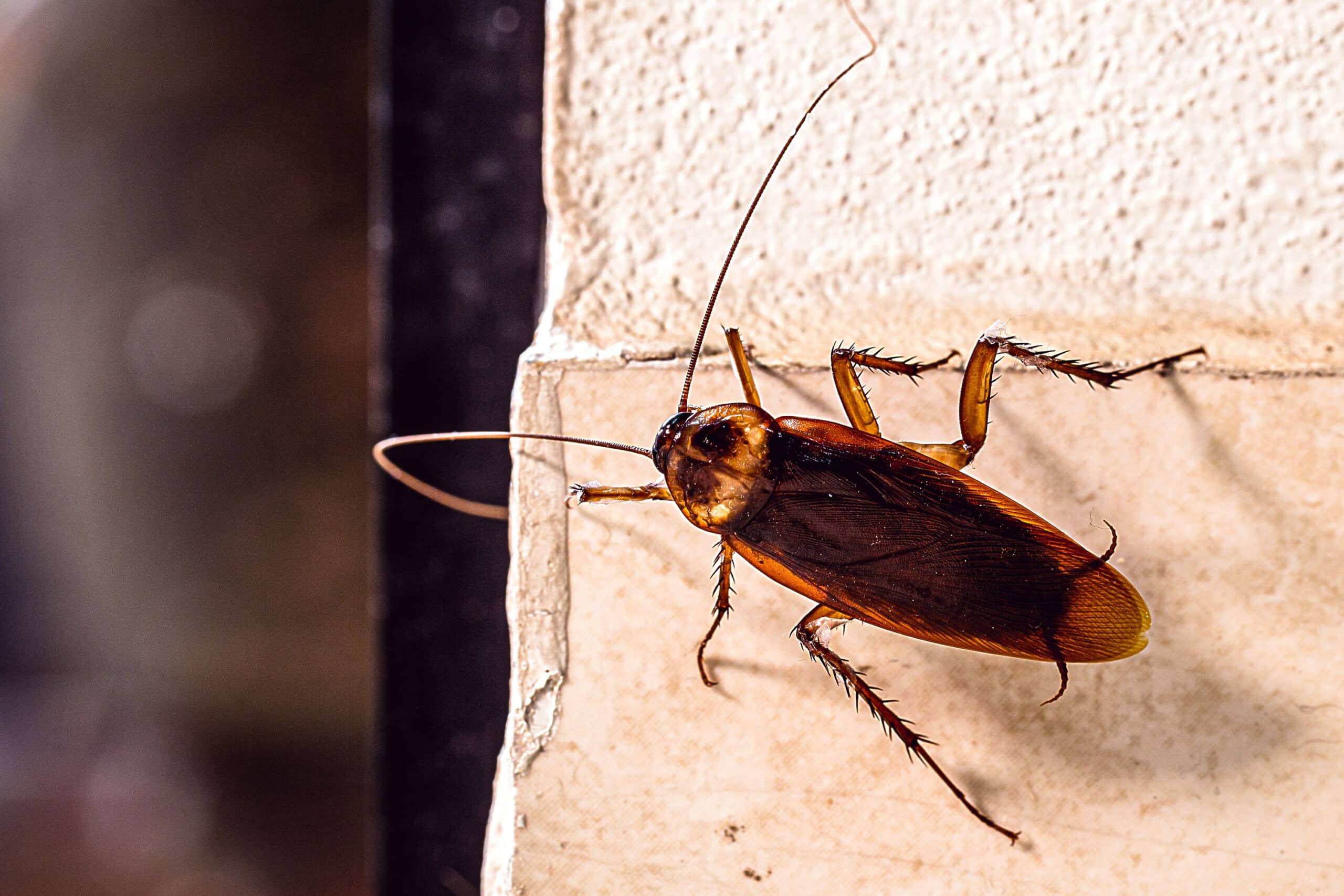
| American (palmetto bug) | About 1.5 to 2 inches | Reddish brown; pale band around the shield behind the head; flies | Sewers, basements, crawl spaces, commercial kitchens |
| Oriental | About 1 inch | Shiny dark brown to black; short wings, can't fly | Damp basements, crawl spaces, drains, ground level |
| Brown-banded | About 1/2 to 5/8 inch | Two light bands across the wings or body | Rooms away from the kitchen; high on walls, in furniture and electronics |
| Smokybrown | Up to about 1.5 inches | Shiny, evenly dark brown to mahogany; flies to lights | Outdoors: mulch, woodpiles, gutters, attics |
| Wood cockroach | Up to about 1 inch | Brown, often with pale edges; males fly to porch lights | Outdoors; wanders in but dies within days |
German cockroach
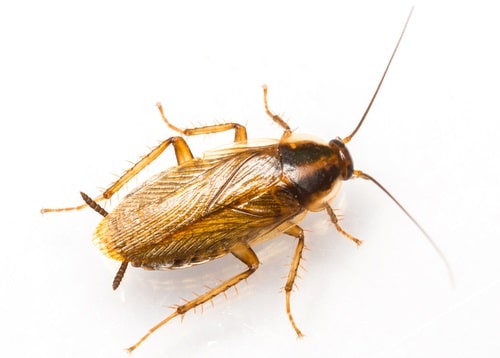
The German cockroach (Blattella germanica) is the most common cockroach in and around homes, apartments, supermarkets and restaurants, according to OSU Extension. Adults are about 5/8 inch long, light to medium brown, with two dark stripes running lengthwise on the shield behind the head. They have full wings but don't fly.
- Where they hide: warm, humid cracks near food and water: under sinks, behind and under the refrigerator, stove and dishwasher, inside cabinets and in wall voids. Texas A&M AgriLife says they spend about three quarters of their lives in cracks just 1/32 to 3/16 inch wide.
- How fast they breed: OSU says each egg case holds about 30 to 40 eggs, the female carries it until it is almost ready to hatch, and the whole life cycle takes about three months. They breed year-round indoors.
- Indoors only: Texas A&M notes they don't live outdoors. They arrive in grocery bags, boxes, used appliances and furniture, or move between apartments through walls and plumbing.
German cockroaches are the hardest roach to get rid of. See German cockroaches: Tulsa's worst pest?
American cockroach (palmetto bug)
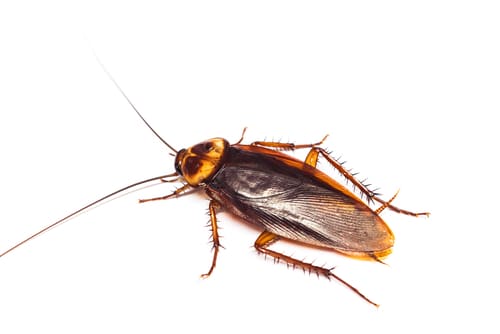
The American cockroach (Periplaneta americana) is the largest roach you're likely to see, about 1.5 to 2 inches long. It is reddish brown with a pale, yellowish band around the edge of the shield behind its head, and both males and females can fly (Texas A&M AgriLife). OSU Extension says it is common in sewer systems and basements and around restaurants, grocery stores and bakeries, and that alleys and yards can be heavily infested in summer.
In homes, American cockroaches usually come up from drains, crawl spaces and sewer lines or wander in from outside. Read more in palmetto bug: a closer look at the American cockroach.
Oriental cockroach
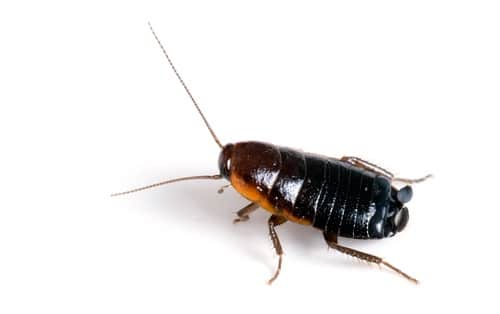
The oriental cockroach (Blatta orientalis) is about an inch long and dark brown to black, often shiny. Its wings are short (shorter still on females), and it can't fly. OSU Extension describes it as most common in dark, damp basements, traveling through sewer pipes and climbing water pipes, and notes that it is slower and less wary than other roaches. Texas A&M adds that it prefers cool, ground-level spots such as crawl spaces and wet areas.
Brown-banded cockroach
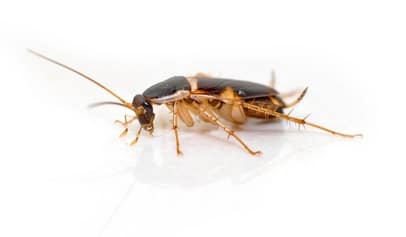
The brown-banded cockroach (Supella longipalpa) is about the size of a German cockroach, around 5/8 inch, but has two light, yellowish bands across its wings instead of stripes behind the head. The University of Kentucky notes a dark, bell-shaped mark behind the head as well.
What sets it apart is where it lives. OSU Extension says brown-banded roaches need less moisture than German roaches, so they turn up outside kitchens and bathrooms: on ceilings and high on walls, behind picture frames, near refrigerator and appliance motors, in light switches, closets and furniture. They glue their egg cases to furniture and other objects, so they spread easily in furniture moves. OSU says they are found mostly in homes, apartments, hotels and hospitals.
Smokybrown cockroach
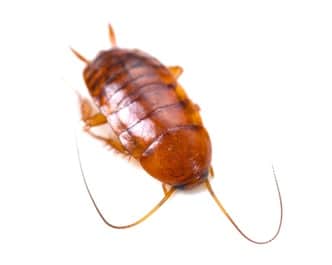
The smokybrown cockroach (Periplaneta fuliginosa) is a cousin of the American cockroach, up to about 1.5 inches long and a shiny, uniform dark brown to mahogany with no pale band. OSU Extension says it lives in leaf litter and in or near shrubs, trees and woodpiles, and also in garages, crawl spaces, attics, gutters and on roofs. It flies well and is often drawn to lights at night, which is how it ends up indoors. Texas A&M notes young smokybrown nymphs are black with white bands and white-tipped antennae.
Wood cockroaches: the ones that don't move in
Wood cockroaches live outdoors in leaf litter, under logs and in other damp spots with decaying plant material. Penn State Extension describes males up to an inch long, light brown to nearly black, sometimes with cream-colored edges on the wings and the shield behind the head; males fly and are attracted to lights. They come inside by accident, through gaps or on firewood, but Penn State says they die within a few days because they dry out, and they don't reproduce indoors. Sealing gaps, adding door sweeps, storing firewood outside and turning off porch lights is enough; Penn State says pesticides aren't needed for them.
Look-alikes and other roaches you may read about
- Asian and field cockroaches look almost exactly like German cockroaches. Texas A&M says they may be found outdoors in parts of Texas. A German-looking roach that flies to lights outdoors could be one of these; we have not found an Oklahoma source documenting them, so we don't list them as Oklahoma species.
- Turkestan cockroaches are spreading in the Southwest, especially West Texas, according to Texas A&M. They are outdoor roaches that resemble oriental cockroaches.
- Beetles such as ground beetles are often mistaken for roaches. Beetles have hard wing covers that meet in a straight line down the back; cockroaches have long, whip-like antennae and flat, oval bodies.
Which roach is a real problem?
The species tells you a lot about what you're dealing with:
- German or brown-banded: these breed indoors. Seeing them means a population inside the house, and it will grow until treated. Texas A&M notes daytime sightings usually mean a large population.
- American, oriental or smokybrown: these mostly breed outside, in sewers, crawl spaces, mulch and woodpiles, and come in through drains, gaps and doors. One now and then is usually a wanderer; several, or roaches in a basement or crawl space, point to a nearby source that can be found and treated.
- Wood cockroaches: a nuisance only. They don't survive indoors.
Other signs to look for are droppings that look like crushed black pepper or coffee grounds, egg cases and a musty smell. See how to get rid of cockroaches for signs, nests and treatment, and do cockroaches bite? for the health side.
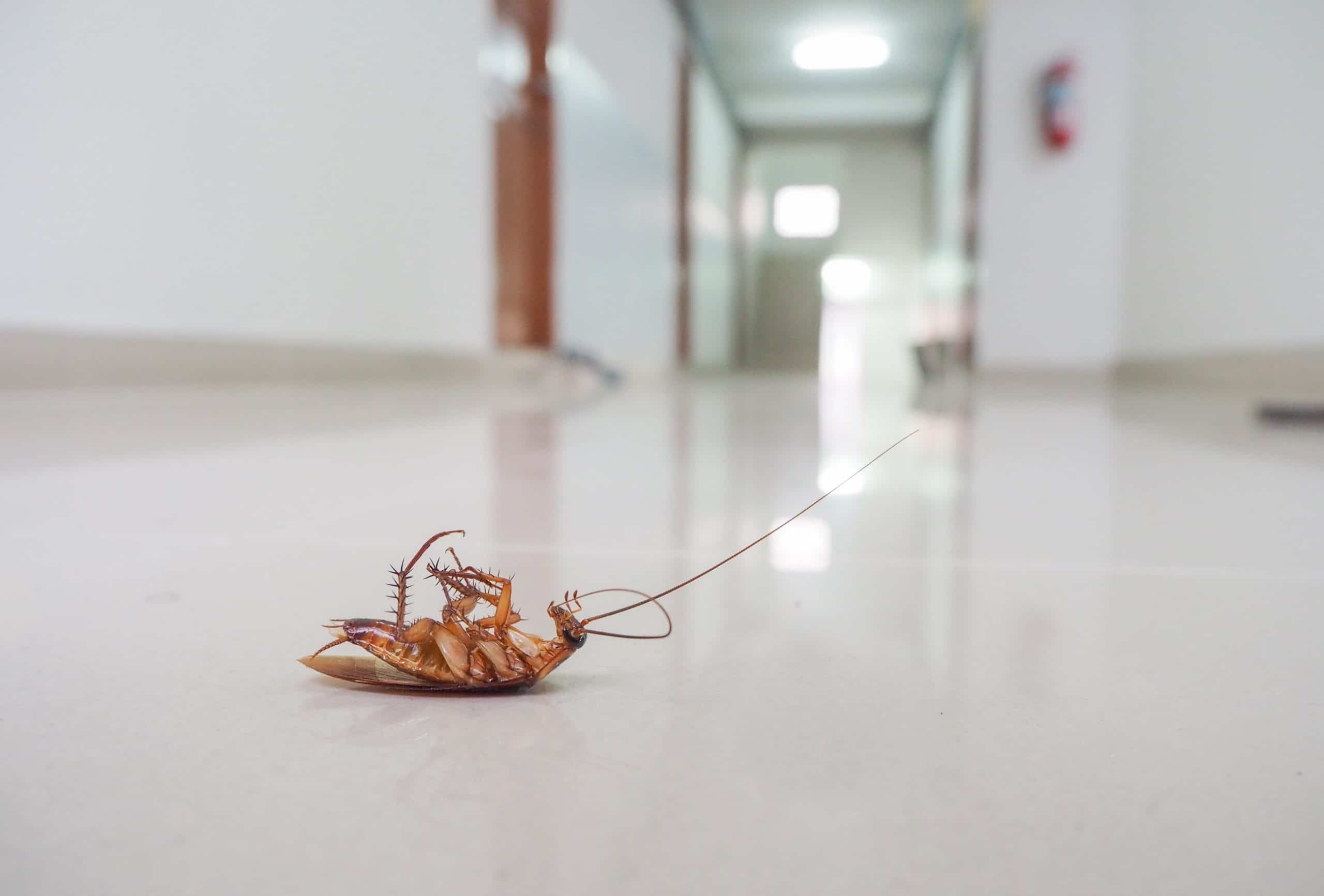
Cockroach exterminator in Oklahoma
Emtec Pest Control has been identifying and getting rid of cockroaches in Oklahoma homes and businesses since 1979. A technician will identify the species, find where the roaches are hiding and breeding, and treat those spots directly, along with the entry points that let outdoor roaches in. If you need a roach exterminator in Tulsa, Broken Arrow, Owasso, Jenks, Bixby, Sand Springs, Sapulpa, Stillwater, Oklahoma City, Edmond or nearby towns, see our roach control service or contact us.
Frequently Asked Questions
What kind of cockroaches are in Oklahoma?
Oklahoma State University Extension lists five pest cockroaches: the German, American, oriental, brown-banded and smokybrown cockroach. Wood cockroaches from outdoors also wander into homes sometimes, but they can't survive long indoors.
What is the most common cockroach in Oklahoma homes?
The German cockroach. OSU Extension calls it the most common cockroach in and around homes, apartments and restaurants. It is about 5/8 inch long, light to medium brown, with two dark stripes behind the head, and it lives indoors year-round.
What are the big cockroaches in Oklahoma?
Usually American cockroaches, also called palmetto bugs or waterbugs. They are about 1.5 inches long and reddish brown, with a pale band around the shield behind the head. Smokybrown cockroaches are nearly as big but evenly dark brown, and oriental cockroaches are about an inch long and nearly black.
Do cockroaches fly in Oklahoma?
Some do. American and smokybrown cockroaches can fly, and smokybrowns are often drawn to lights at night. German cockroaches have full wings but don't fly, and oriental cockroaches have short wings and can't fly. Male wood cockroaches fly to porch lights.
If I see one cockroach, are there more?
With German cockroaches, almost certainly. They hide in cracks during the day, so one in the open usually means more out of sight, and Texas A&M notes daytime sightings often mean a large population. A single large roach that wandered in from outside, like an American or wood cockroach, is less likely to mean an infestation.
Sources
- German Cockroach (Digital Diagnostics) (opens in new tab)
- American Cockroach (Digital Diagnostics) (opens in new tab)
- Oriental Cockroach (Digital Diagnostics) (opens in new tab)
- Brownbanded Cockroach (Digital Diagnostics) (opens in new tab)
- Smokybrown Cockroach (Digital Diagnostics) (opens in new tab)
- Cockroach Biology and Management (ENTO-037) (opens in new tab)
- Cockroach Elimination in Homes and Apartments (ENTFACT-614) (opens in new tab)
- Wood Cockroaches (opens in new tab)