
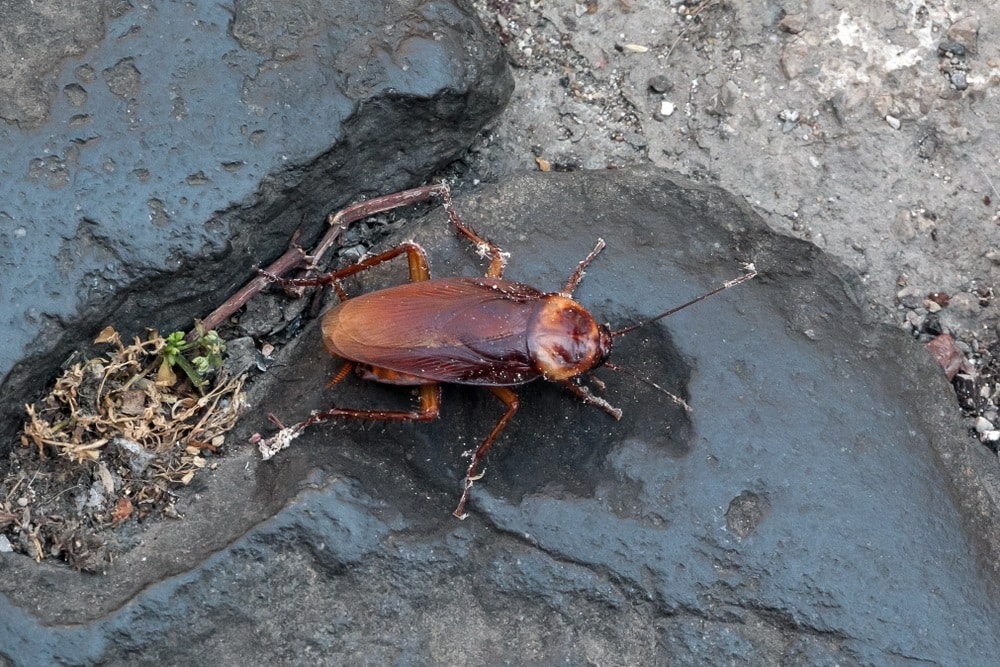
A palmetto bug is an American cockroach (Periplaneta americana), the big, reddish-brown roach about 1.5 to 2 inches long that can fly. The nickname is used across the South, and these roaches are common in Oklahoma too, mostly in sewers, drains, basements, crawl spaces and the yard. When one shows up in your kitchen or bathroom, it usually came up a drain or in through a gap. Here is how to recognize a palmetto bug, where they come from and how to keep them out.
What a palmetto bug looks like
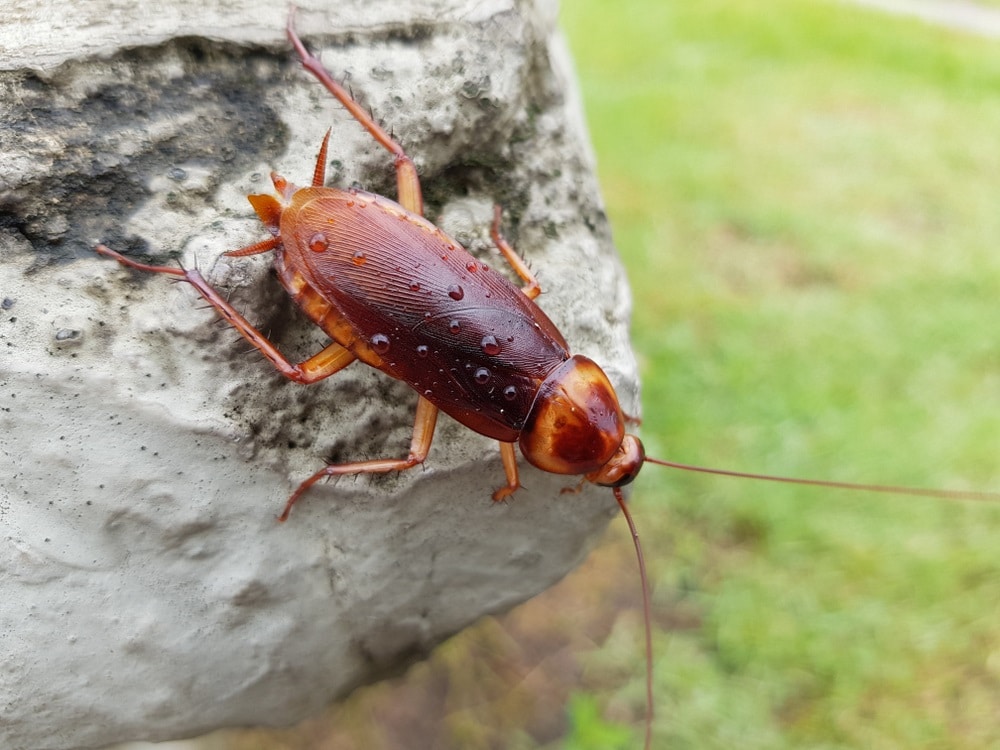
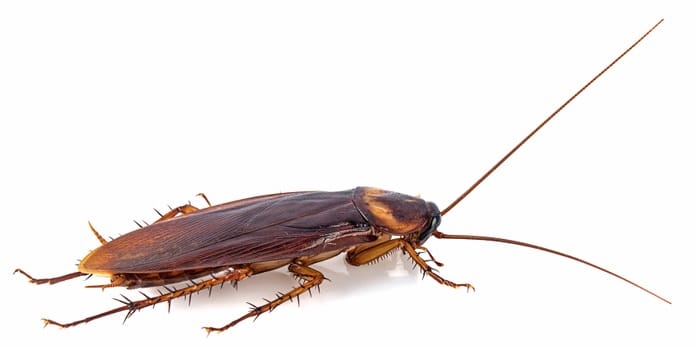
- Size: about 1.5 to 2 inches long, the largest common cockroach (OSU Extension, Texas A&M AgriLife).
- Color: reddish brown.
- Markings: a pale, yellowish band around the edge of the shield (pronotum) behind the head.
- Wings: full wings on adults of both sexes. They can fly, though they mostly run.
The smokybrown cockroach, a close relative, is nearly as big but a shiny, uniform dark brown with no pale band. Some people call both of them palmetto bugs or waterbugs. Our Oklahoma cockroach ID guide has photos of every species.
Where palmetto bugs live
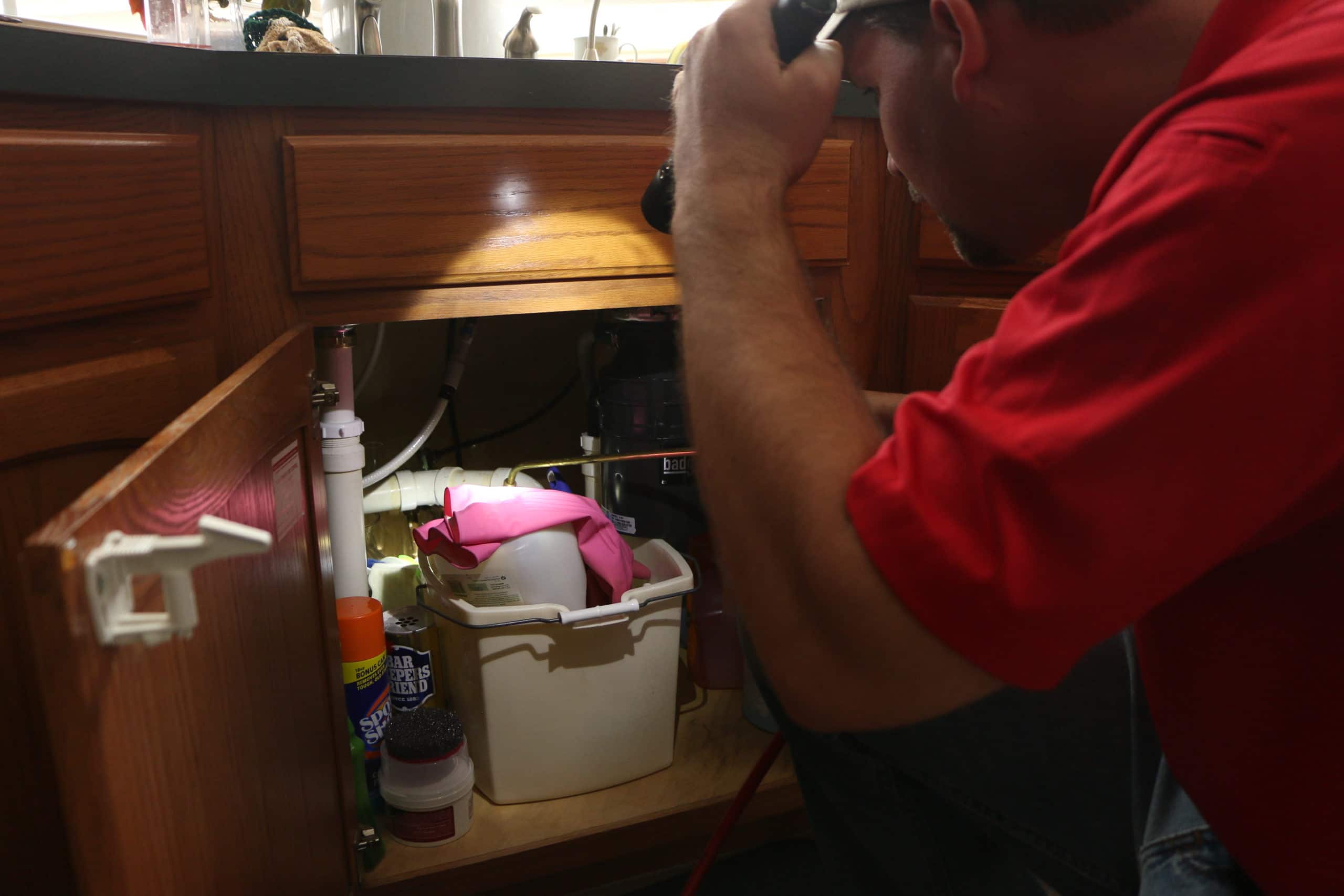
OSU Extension says American cockroaches are common in sewer systems and basements and in restaurants, grocery stores, bakeries and other places where food is prepared or stored, and that alleys and yards can be heavily infested in summer. OSU's household pest guide adds that American and oriental cockroaches often hide beneath buildings and in dark, damp, sheltered places. The University of Kentucky notes they favor basements, floor drains and sewers and can travel a long way from where they gather.
In Oklahoma homes, that usually means they come from:
- Sewer lines, through floor drains, tub and shower drains or a dry trap.
- A damp crawl space or basement.
- Mulch, woodpiles, water meter boxes and storm drains outside.
- Gaps under doors, around pipes and in the foundation.
How palmetto bugs live and breed
OSU Extension says female American cockroaches glue their egg capsules to surfaces, each capsule holding up to 16 eggs, and a female can produce several capsules over her life. The eggs take about 38 to 49 days to hatch, and the young go through 13 molts before becoming adults. Texas A&M notes adults usually live one to two years. They eat almost anything: food scraps, starches, decaying organic matter and dead insects. They are active at night.
Are palmetto bugs dangerous?
They aren't aggressive, but they aren't harmless either. Because they move between sewers, drains and food areas, they can carry germs onto surfaces and food, and the University of Kentucky notes cockroach droppings and shed skins can cause allergy symptoms and, in some people, trigger asthma. Bites are very rare in U.S. homes; see do cockroaches bite humans?
How to keep palmetto bugs out
- Keep drains wet and covered. Run water in floor drains and seldom-used tubs and sinks so traps stay full; Texas A&M recommends keeping P-traps full for outdoor roaches. Use drain covers.
- Seal entry points. Add door sweeps and fix threshold seals, caulk gaps around pipes and wires, and screen vents and soffits (Texas A&M, OSU).
- Fix moisture. Repair leaks, keep the crawl space dry and direct downspouts away from the foundation.
- Clean up the yard. Keep mulch thin near the house and move woodpiles, leaf piles and debris away from walls.
- Cut off food. Store food and pet food in sealed containers and don't leave dishes or garbage out overnight.
- Treat where they breed. Baits and treatments placed in drains, crawl spaces, mulch beds and along the foundation reach roaches before they come in. Texas A&M describes granular baits in mulch, bait stations along walls and perimeter treatments for outdoor roaches.
A single palmetto bug now and then is usually a wanderer. Several at a time, roaches in the basement or crawl space, or roaches coming out of drains point to a source that needs to be found. See how to get rid of cockroaches.
Palmetto bug exterminator in Tulsa and across Oklahoma
Emtec Pest Control has been getting rid of American cockroaches in Oklahoma homes and businesses since 1979. We inspect drains, crawl spaces, the foundation and the yard to find where they are breeding and how they are getting in, treat those spots and the entry points, and tell you what to change to keep them out. If you need a palmetto bug or cockroach exterminator in Tulsa, Broken Arrow, Owasso, Jenks, Bixby, Sand Springs, Sapulpa, Stillwater, Oklahoma City, Edmond or nearby towns, see our roach control service or contact us.
Frequently Asked Questions
Is a palmetto bug a cockroach?
Yes. "Palmetto bug" is a common nickname for the American cockroach, Periplaneta americana. People also call it a waterbug. Some people use the name for the smokybrown cockroach too, a close relative that is evenly dark brown.
How big are palmetto bugs?
About 1.5 to 2 inches long, which makes the American cockroach the largest roach most Oklahomans will see. It is reddish brown with a pale, yellowish band around the edge of the shield behind its head.
Can palmetto bugs fly?
Yes. Texas A&M AgriLife notes that both males and females fly, though they usually run when disturbed.
Why do I have palmetto bugs in my house?
Usually because they found a way in from where they breed: sewer lines and drains, a damp crawl space or basement, or the yard. Dry floor drains, gaps under doors, openings around pipes and moisture problems all help them get in and stay.
Do palmetto bugs bite?
Very rarely. American cockroaches have strong jaws, and there are documented cases of roaches nibbling skin or nails in severely infested places, but bites are very rare in U.S. homes. The bigger concern is the germs and allergens they carry.
Sources
- American Cockroach (Digital Diagnostics) (opens in new tab)
- Smokybrown Cockroach (Digital Diagnostics) (opens in new tab)
- Household Pest Control (EPP-7312) (opens in new tab)
- Cockroach Biology and Management (ENTO-037) (opens in new tab)
- Cockroach Elimination in Homes and Apartments (ENTFACT-614) (opens in new tab)
- Do Cockroaches Bite? (opens in new tab)