
The most common bugs in Oklahoma homes are ants, spiders and cockroaches, followed by a long list of smaller visitors: pill bugs, millipedes, centipedes and earwigs that come in from damp soil; stink bugs, boxelder bugs and lady beetles that move in for the winter; small flies and gnats; and clover mites in spring. Most of these are harmless and leave on their own once the conditions that drew them in are fixed. Termites, bed bugs and anything that bites or stings are the ones to act on quickly. Use the quick table below to narrow down what you found, then jump to its section or its full guide.
Quick ID: what did you find?
| What you see | Most likely | Where to read more |
|---|---|---|
| Trails of small insects in the kitchen or bathroom | Ants | Oklahoma Ant ID Guide |
| Eight legs, webs in corners, garages and eaves | Spiders | Oklahoma Spider ID Guide |
| Fast, flat, brown insect at night, near water or food | Cockroach | Oklahoma Cockroach ID Guide |
| Swarm of winged insects indoors in spring, shed wings on sills | Termite or ant swarmers | Termite swarmers: what to do |
| Gray, armored bug that rolls into a ball | Pill bug (roly-poly) | If it crawls |
| Long, many-legged and fast; or slow, coiled and worm-like | Centipede or millipede | If it crawls |
| Brown insect with pincers on its tail | Earwig | Earwigs in Oklahoma |
| Tiny red specks on windowsills or walls in spring | Clover mites | Tiny red bugs |
| Itchy red welts at the ankles and waistband after yard work | Chiggers | Tiny red bugs |
| Small, flat, reddish-brown bug near the bed; itchy bites | Bed bug | Bed bugs |
| Shield-shaped bug with a bad smell, on sunny walls in fall | Stink bug | If it flies |
| Black and red bugs clustered on the south side of the house | Boxelder bugs | If it flies |
| Orange or red beetles with spots gathering indoors in fall | Asian lady beetles | If it flies |
| Tiny flies at the fruit bowl, drain or houseplants | Fruit flies, drain flies or fungus gnats | If it flies |
| Holes in wool clothing or rugs | Clothes moths or carpet beetles | If it flies |
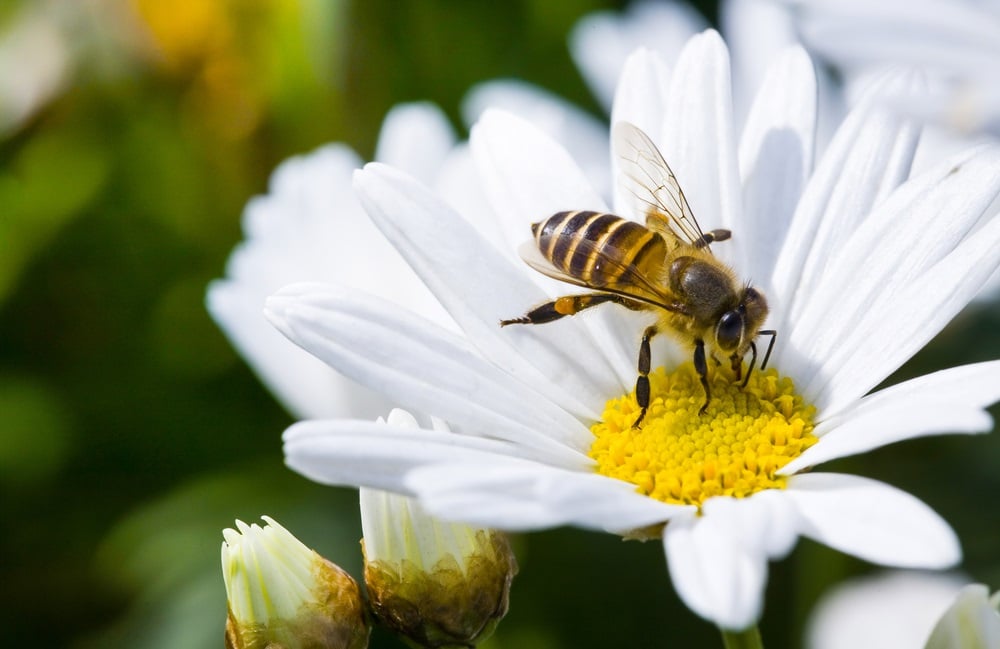
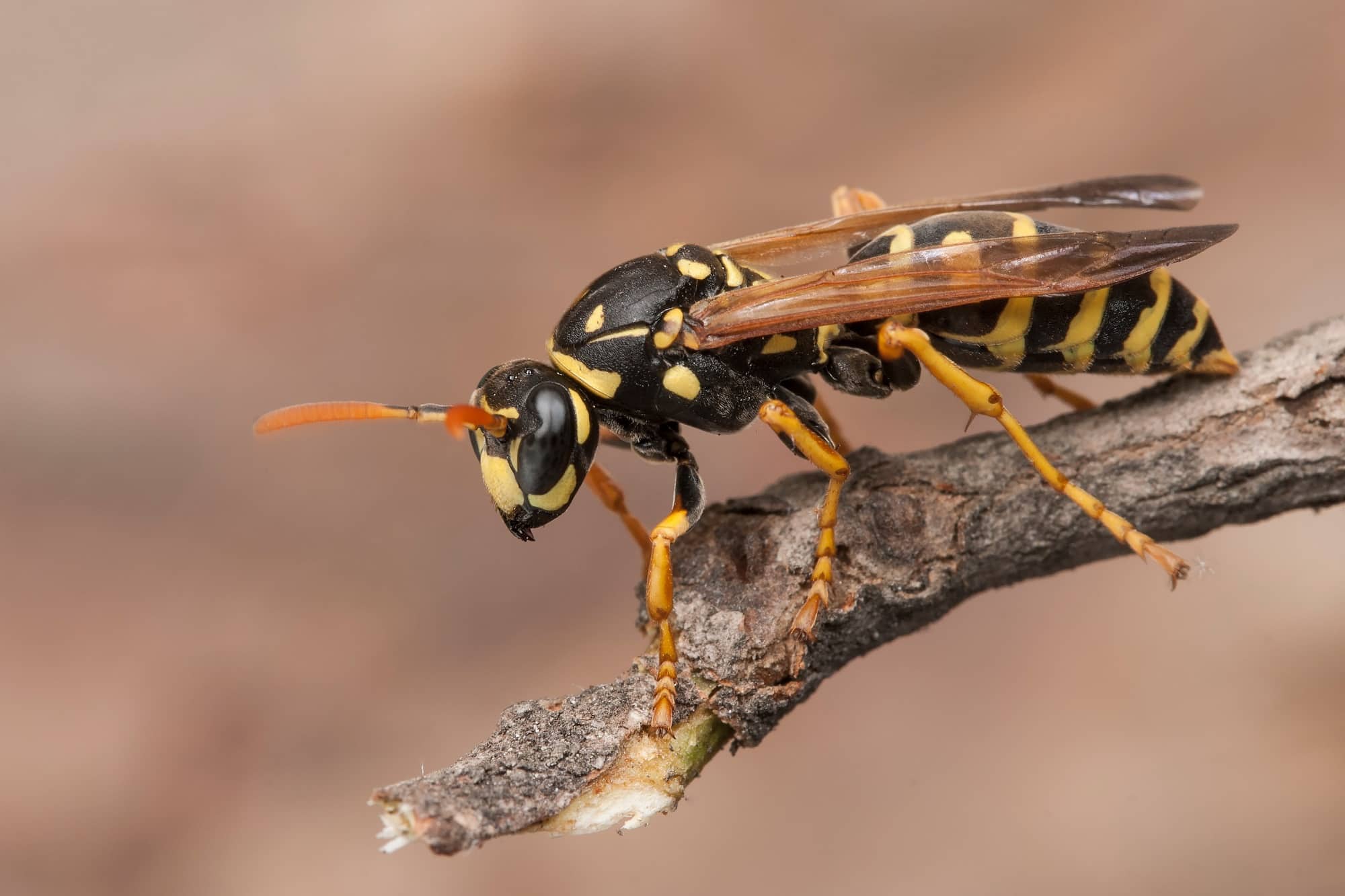
| Wasps, yellowjackets or bees around eaves | Stinging insects | Oklahoma Wasp & Bee ID Guide |
| Biting at dusk in the yard | Mosquitoes | Oklahoma Mosquito ID Guide |
Not an insect at all? Mice, rats, scorpions, ticks and fleas have their own guides: the Rodent ID Guide, the Oklahoma scorpion guide and our guide to fleas and ticks. Termites are covered species by species in the Oklahoma Termite ID Guide.
Why bugs end up inside
Every bug in this guide comes in for the same few reasons: food, water and shelter. Ants follow crumbs and sweet spills, cockroaches and silverfish follow moisture, and moisture bugs wander in from wet mulch and soil. In the fall, insects that spend the winter as adults start looking for protected places and find gaps around windows, siding and attic vents. Knowing which need drew a bug in tells you most of what you need to do about it. Our guide to where bugs go in winter covers the cold-season side.
If it crawls
Pill bugs and sowbugs
Pill bugs, also called roly-polies, and their flatter cousins the sowbugs are not insects. They are land-living crustaceans, related to crayfish and shrimp, with seven pairs of legs and armored plates, and grow to about 3/4 inch. Pill bugs roll into a tight ball when disturbed; sowbugs have two small tail-like points and cannot roll up. They eat decaying plant matter and fungi and can nibble tender seedlings.
They are harmless. They do not bite, sting or damage the house. According to the University of Kentucky, they need so much moisture that they find it almost impossible to survive indoors, which is also why indoor sprays rarely help. A pill bug in the house is a clue: look for a damp spot, a gap under a door or mulch piled against the foundation. OSU's school IPM guide says keeping the building as dry as possible inside and out is what controls them. Pull mulch, leaves, boards and stones back from the foundation, fix drainage and seal door sweeps.
Pill bugs are also food for scorpions and spiders, so a yard full of them can bring those hunters closer to the house. See our scorpion guide if you are seeing both.
Centipedes and millipedes
OSU Extension separates them by legs. Centipedes have one pair of legs per body segment, a flattened body and long antennae, and they hunt other small insects at night. The house centipede is 1 to 1.5 inches long and grayish-yellow, with 15 pairs of long, banded legs. Some centipedes can bite; OSU says the bite of the small species is usually similar to a bee sting and is not lethal. Millipedes have two pairs of legs per segment, a rounded, hard body that coils up when disturbed, and are harmless: OSU notes they do not bite, sting, damage structures or contaminate food. Many give off a smelly fluid when handled.
Millipedes migrate in large numbers during drought, after heavy rains and in late spring and early fall. For both, OSU recommends sweeping or vacuuming them up, sealing entry points, drying out damp basements and crawl spaces and removing rotting wood, grass clippings and leaves from around the foundation. Centipedes also follow their food, so fewer household insects means fewer centipedes.
Earwigs
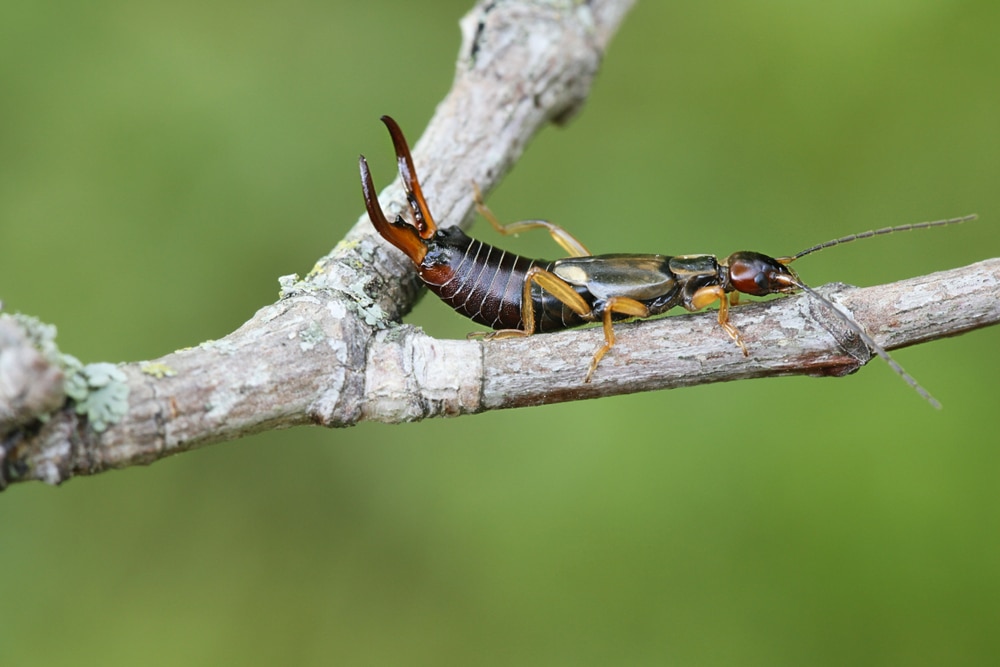
Earwigs are the brown insects with a pair of pincers at the tail. They look threatening but are harmless to people, and they do not crawl into ears. They come indoors during hot, dry weather looking for damp shelter. Oklahoma has only a handful of species, and the one found in buildings is mostly the wingless ring-legged earwig. Everything about them, including how to keep them out, is in our guide to earwigs in Oklahoma.
Clover mites
If you find dozens of tiny red specks crawling on a sunny windowsill in March or April, they are almost certainly clover mites. OSU Extension describes them as about 1/30 inch long, red or brown, with very long front legs, and says indoor invasions in Oklahoma are most common in March and April. They do not bite and do not feed on anything in the home, but they leave a reddish stain if crushed. Chiggers are a different tiny red mite, and the one that bites. Our guide to tiny red bugs sorts them out.
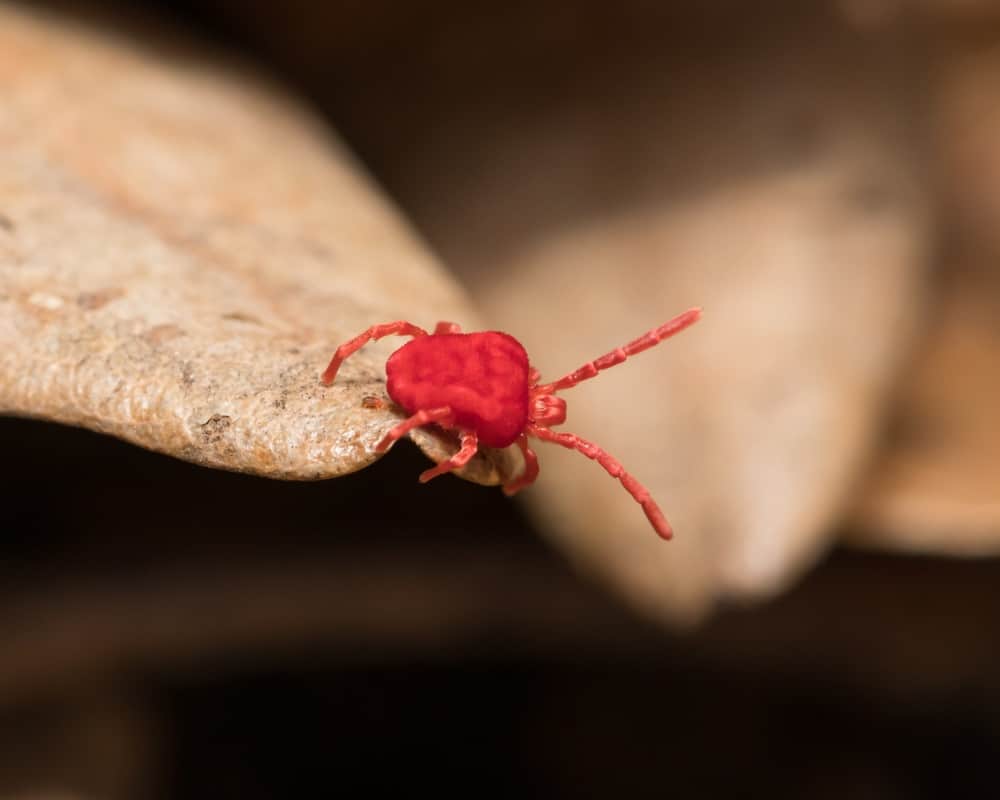
Bed bugs
Bed bugs are wingless, oval and flat, red to dark brown, and about 1/5 to 3/8 inch long as adults, according to OSU Extension's Preventing Bed Bugs fact sheet. Young bed bugs are smaller and light tan or red. Signs include the bugs themselves, eggs, blood spots and black fecal spots on sheets and mattress seams, and in heavy infestations a sweet, musty odor. OSU says most bed bugs hide within 15 feet of the bed. Bat bugs and swallow bugs look nearly identical, so have a suspect bug identified before treating.
A few myths are worth clearing up, carried over from our older bed bug posts:
- They are not only in beds. They also hide in couches, chairs, nightstands and other furniture near where people rest.
- You can see them. Adults are visible to the naked eye. Young ones are harder to spot.
- A night in the cold does not kill them. The EPA says items have to be sealed in a bag and kept at 0°F for three days, and home freezers should be checked with a thermometer.
- Foggers are not the answer. The EPA says foggers should never be your only method, because the spray does not reach the cracks where bed bugs hide.
- They do not spread disease. OSU notes they are a nuisance but do not transmit diseases.
Most bed bugs arrive in luggage or used furniture. When you travel, OSU recommends checking the room before you unpack, keeping luggage in the clean, dry bathtub while you look, pulling back the sheets to check the top of the mattress, and keeping bags off the bed. At home, wash and dry all travel clothes right away and clean out the suitcase. Never take furniture from the curb, and inspect used furniture before it comes inside. If you think you have bed bugs, mattress and box spring encasements, a clothes dryer on high heat and reduced clutter all help, but a confirmed infestation needs a thorough, professional plan. Call us and we will talk through your options.
If it flies
Winged insects are the ones people most often misidentify, because a flying ant, a termite swarmer and a small wasp can look alike at a glance. Here is how to sort the common flyers.
Flying ants or termite swarmers
Both swarm in spring and leave shed wings on windowsills. Termites have a thick waist, straight antennae and two pairs of wings of equal length; ants have a pinched waist, elbowed antennae and front wings longer than the hind wings. A termite swarm indoors is a sign of an active colony in or under the house and should be checked. See ants vs. termites and our guide on what to do when you see termite swarmers.
Stink bugs
Stink bugs are shield-shaped and give off a strong odor when disturbed or crushed. The invasive brown marmorated stink bug is the one known for invading homes in other states, and OSU Extension confirmed the first Oklahoma record from a Logan County specimen collected in October 2019, with a second found in Stillwater that December. Adults are about 0.5 to 0.6 inch long, with black and white bands on the antennae and along the edges of the abdomen. They overwinter in homes and can gather in large numbers.
Penn State Extension says sealing them out is the most effective approach: caulk gaps around windows, doors, siding, utility pipes and chimneys, and repair damaged screens before September and October, when adults look for winter shelter. Indoors, vacuum them up (the vacuum may smell for a while). Spraying inside is not recommended, because more bugs keep emerging from the walls. They do not reproduce or cause damage inside the house.
Boxelder bugs
Boxelder bugs are black with red markings, and the young are bright red. In summer they feed on boxelder, maple, ash and other trees. In fall they gather on the sunny south sides of buildings and crawl into cracks in the foundation and siding and gaps around windows and doors. Iowa State University Extension says they are harmless to the house and the people in it and do not feed or reproduce indoors. Caulking and sealing entry points is the first line of defense; outdoors, soapy water (5 tablespoons of liquid detergent per gallon) kills clusters on contact. Indoors, vacuum or sweep them up, since household aerosols generally do not kill them.
Asian lady beetles
The multicolored Asian lady beetle helps gardens by eating aphids but becomes a nuisance when large numbers move into homes in the fall. Texas A&M AgriLife Extension notes they give off a disagreeable odor when disturbed, may nip skin, and can trigger allergies in some people. Warm winter days can wake beetles already inside the walls. Sealing outside entry points is the most effective prevention; indoors, vacuum them up and throw out the bag. Spraying piles of beetles inside leaves dead insects and odor behind.
Flies and gnats
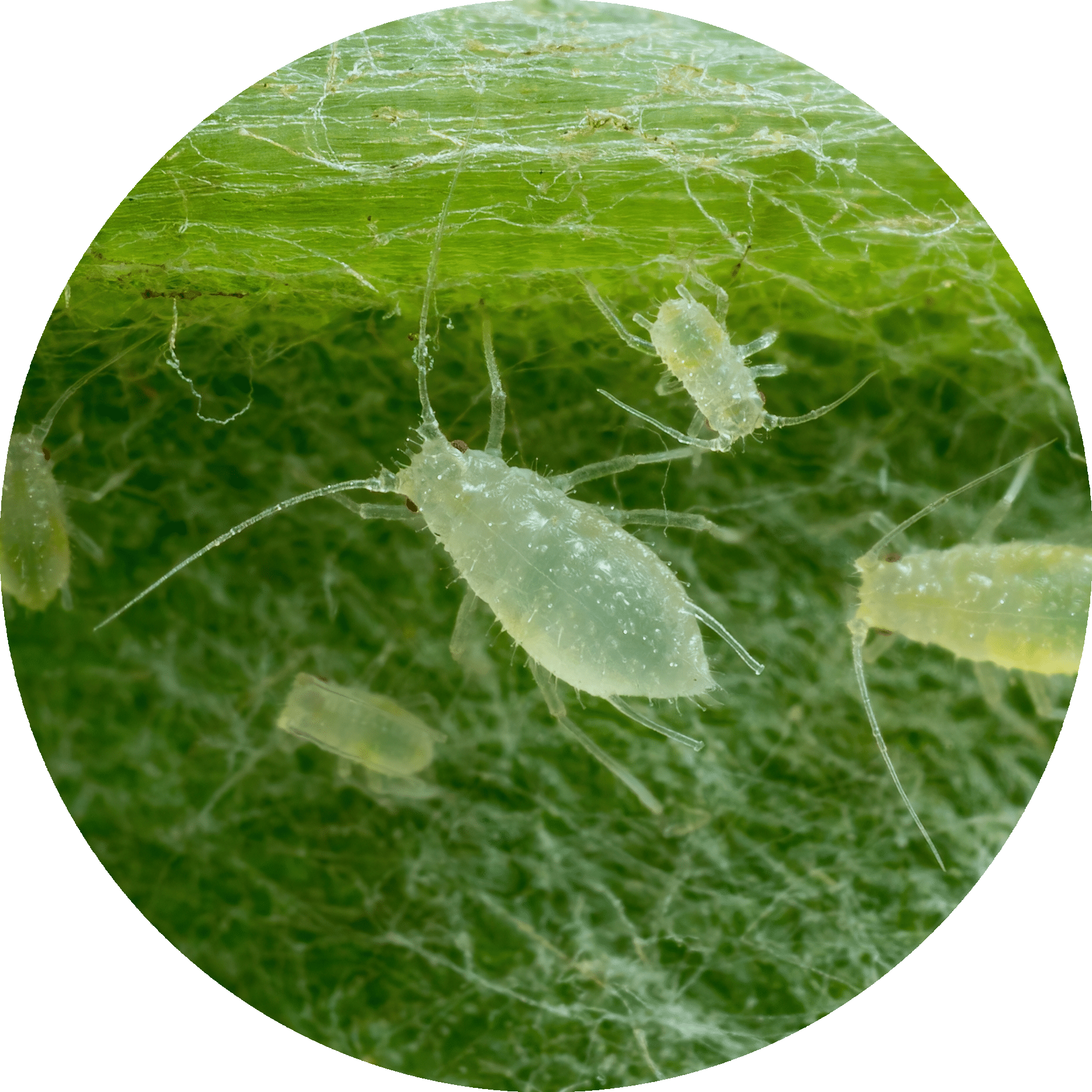
Texas A&M's Indoor Flies and Their Control makes one point for every small fly: find and remove the place it is breeding, because sprays only give temporary relief.
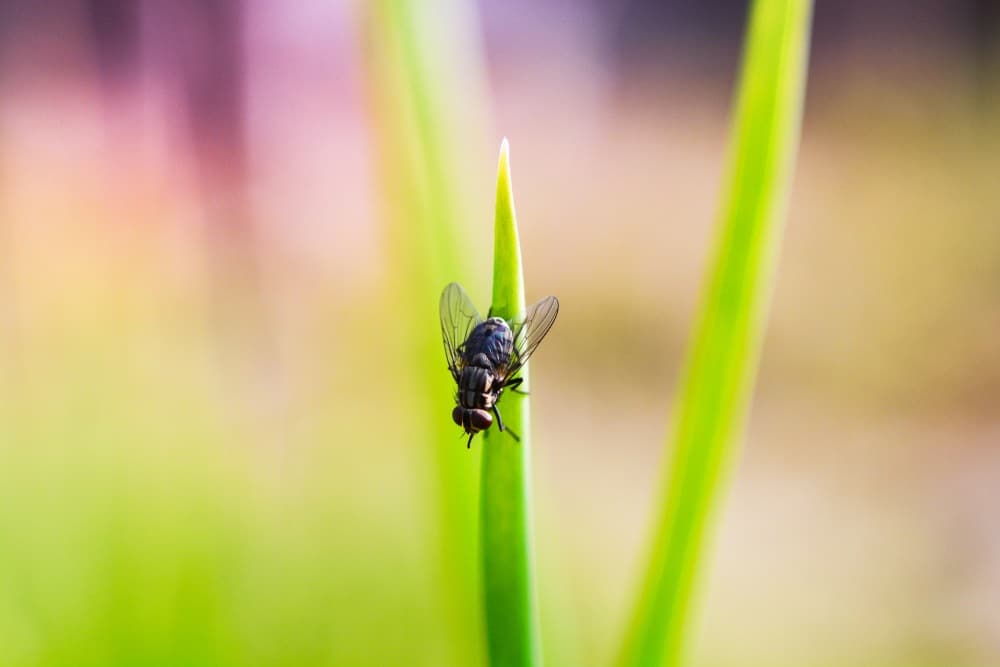
- House flies are larger than 1/4 inch and breed in garbage, manure and compost, rarely indoors. Look for the source nearby, keep screens tight and doors closed.
- Fruit flies are under 1/8 inch, usually with red eyes, and breed in overripe fruit, onions and potatoes, wet trash can bottoms and spilled drinks. Take out the trash and the fruit; a cup of cider vinegar with a drop of soap traps the adults.
- Drain flies are fuzzy and moth-like and breed in the slime inside drains. A strip of clear tape over the drain at night shows which one; scrub the pipe with a stiff brush, since bleach does little against the film.
- Fungus gnats are tiny, mosquito-like flies around houseplants. Their larvae live in the top 2 to 3 inches of damp potting soil. Colorado State University Extension recommends letting the top 1 to 2 inches dry between waterings and using yellow sticky cards. They do not bite.
Flies in the yard are a separate problem with outdoor sources; see how to limit flies in your yard.
Clothes moths and carpet beetles
If wool sweaters, rugs or felt have small holes, the culprit is the larva of a clothes moth or carpet beetle. NC State Extension notes that adult moths do not eat; the creamy-white larvae do the damage, feeding on wool, fur, feathers and hair, and on cotton or synthetics only when they are soiled or blended with wool. Clean woolens before storing them and keep them in sealed containers or bags. Vacuum rugs on both sides regularly. Cedar loses its value after about two years, and mothballs must only be used in sealed containers exactly as the label says, since they are toxic to people and pets.
Wasps, bees and mosquitoes
Stinging insects and mosquitoes have their own guides: the Oklahoma Wasp & Bee ID Guide, our wasp control guide and the Oklahoma Mosquito ID Guide.
Bugs that hitch a ride inside
Some bugs do not find their way in; we carry them in.
- Firewood. Wood piles shelter beetles, carpenter ants, spiders and termites. Stack firewood off the ground and away from the house, and bring in only what you will burn that day. Our carpenter ant guide covers the ants that nest in damp wood.
- Christmas trees and greenery. A live tree can carry small insects and spiders. Shake it hard outside, or ask the lot to shake it, before bringing it in, and look over the branches before decorating.
- Houseplants. Check the undersides of leaves and the soil surface before buying, and keep new plants apart from the others for a while so any stowaways show up. Fungus gnats, whiteflies, spider mites, aphids and scale are the usual ones.
- Luggage and used furniture. The main way bed bugs travel. See the bed bug section above.
Invasive insects to know in Oklahoma
A few insects that are not native here are worth knowing. The Asian tiger mosquito is now common in Oklahoma backyards and is covered in our mosquito guide. The brown marmorated stink bug reached the state in 2019. The emerald ash borer, a beetle that kills ash trees, has been spreading in Oklahoma since 2016; in May 2026 KGOU reported a confirmed population in Wagoner County, next door to Broken Arrow and Tulsa. Signs are a thinning canopy, dying branches and D-shaped exit holes in the bark. Forestry officials ask people not to move firewood and to burn it where they buy it.
Fall bug season
Fall is when bugs crowd in. Ant colonies are at their largest after a summer of growth, small flies peak in early fall, and stink bugs, boxelder bugs and lady beetles start looking for winter shelter. Rodents and spiders follow. Four things do most of the work before the first cold front:
- Seal the outside. Caulk gaps around windows, doors, siding, utility lines and the chimney, and replace worn door sweeps and torn screens.
- Dry things out. Fix leaks and gutters, and pull mulch and leaves back from the foundation.
- Clear the perimeter. Move firewood, stones and boards away from the walls and trim plants back from the siding.
- Vacuum, do not spray, indoors. For bugs that are already in, a vacuum works better than a can of spray.
A professional treatment around the outside of the house can stop many of these insects before they reach the walls. That is the idea behind preventative pest control.
When to call an exterminator
Call when you cannot identify the bug, when a harmless bug keeps coming back in numbers, or right away for termites, bed bugs and stinging insect nests near doors. Emtec Pest Control has helped Oklahoma homeowners since 1979. As your local exterminator we inspect, identify what you are seeing, treat where the insects live and get in, and show you which gaps and moisture problems to fix. We serve Tulsa, Broken Arrow, Owasso, Jenks, Bixby, Sand Springs, Sapulpa, Stillwater, Oklahoma City and Edmond. See our preventative pest control service, browse all of our pest guides or contact us to schedule an inspection.
Frequently Asked Questions
What are the most common bugs in Oklahoma homes?
Ants, spiders and cockroaches top the list. After those come moisture bugs such as pill bugs, millipedes, centipedes and earwigs, fall invaders such as stink bugs, boxelder bugs and lady beetles, small flies and gnats, and clover mites in spring. Termites are less often seen but do the most damage.
Are pill bugs (roly-polies) harmful?
No. Pill bugs and sowbugs are land-living crustaceans, not insects. They do not bite, sting or damage houses, and they cannot survive long indoors because they need constant moisture. Seeing them inside usually points to a damp area or a gap under a door.
Why do stink bugs and lady beetles come inside in the fall?
They are looking for a protected place to spend the winter. Adults gather on sunny walls in September and October and slip through gaps around windows, siding and utility lines. They do not breed indoors, so sealing those gaps before fall is what keeps them out.
Do bed bugs spread disease?
No. Oklahoma State University Extension notes that bed bugs are a nuisance but do not transmit diseases. Their bites can itch, and an infestation is hard to clear without a thorough plan, so it is worth having a suspected bug identified quickly.
What are the tiny flies around my houseplants?
Most likely fungus gnats. Their larvae live in damp potting soil and feed on fungi and roots. Letting the top 1 to 2 inches of soil dry out between waterings and using yellow sticky cards usually brings them under control.
Sources
- Sowbugs and Pillbugs (Oklahoma School IPM) (opens in new tab)
- Centipedes and Millipedes (EPP-7316) (opens in new tab)
- Preventing Bed Bugs (T-4420) (opens in new tab)
- First record of brown marmorated stink bug in Oklahoma (opens in new tab)
- Clover mite, Bryobia praetiosa (opens in new tab)
- Sowbugs & Pillbugs (ENTFACT-439) (opens in new tab)
- Brown Marmorated Stink Bug (opens in new tab)
- Boxelder Bug (opens in new tab)
- Lady beetle invasion (opens in new tab)
- Indoor Flies and Their Control (ENTO-050) (opens in new tab)
- Fungus Gnats as Houseplant and Indoor Pests (opens in new tab)
- Clothes Moths and Carpet Beetles: Controlling Fabric Pests (opens in new tab)
- Do-it-yourself Bed Bug Control (opens in new tab)
- Invasive, tree-killing beetle found in Wagoner County (opens in new tab)