
Yes, Oklahoma has scorpions, and they live in every part of the state. Oklahoma State University Extension estimates three to five species here, but only one is common statewide: the striped bark scorpion. It is a tan scorpion about 2 inches long with two dark stripes down its back, and its sting is painful but rarely serious. You can live in Oklahoma your whole life and never see one, or you can slip your foot into a garden shoe and find one already inside. This guide covers how to identify Oklahoma scorpions, how bad a sting really is, where they hide and what they do in winter.
Stung by a scorpion? Call 911 right away for trouble breathing, swallowing or speaking, muscle twitching, seizures, or a strong allergic reaction. For anything else, or if a young child or older adult was stung, call Poison Help at 1-800-222-1222 (free, 24/7). This article is general information, not medical advice.
What scorpions live in Oklahoma?
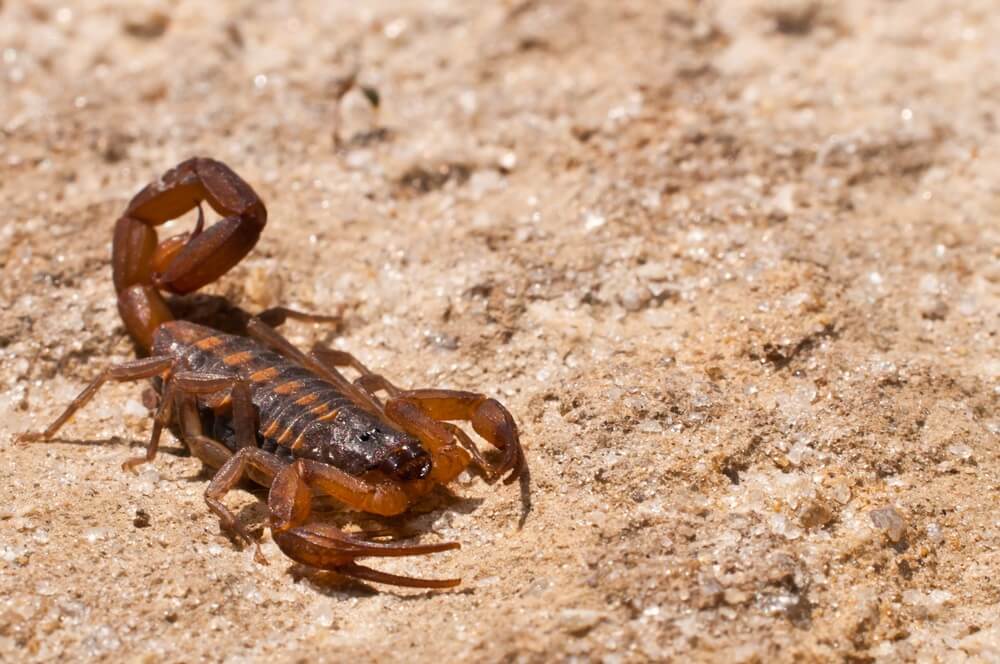
About 50 scorpion species live in the continental United States, most of them in the desert Southwest. Oklahoma has only a handful, and nearly every scorpion found in an Oklahoma home is the striped bark scorpion (Centruroides vittatus). Arachnologists Rowland Shelley and David Sissom mapped its range across all of Oklahoma, with records from homes, motels and office buildings in counties from Alfalfa and Kay to Muskogee, Payne and Marshall. Oklahoma's other species are rarely seen.
The striped bark scorpion gets its name from where it likes to live: under loose bark, fallen logs and dead plants. It also lives comfortably around houses, which is why it is the scorpion Oklahomans meet in garages, attics and closets.
How to identify a striped bark scorpion
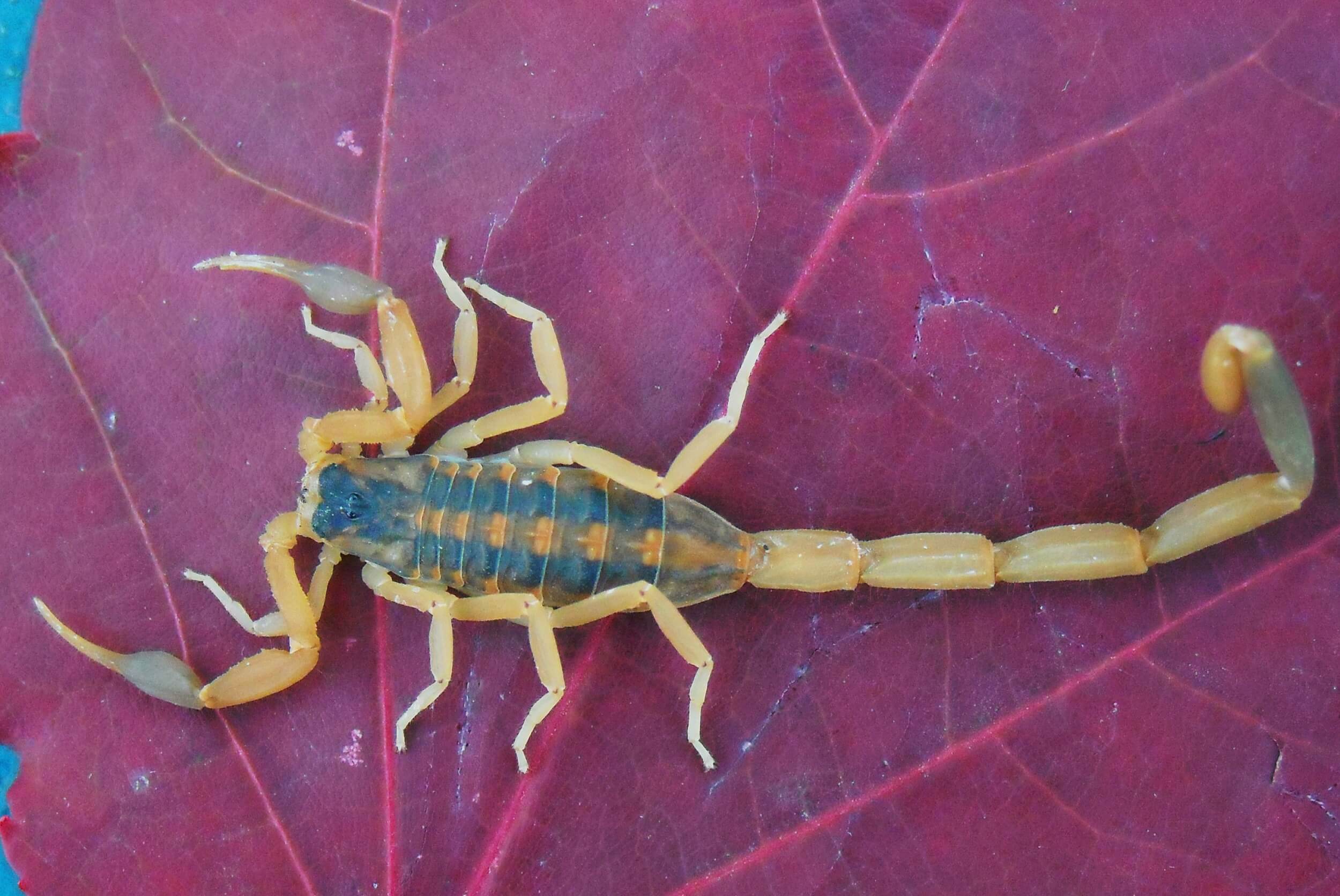
All scorpions have eight legs, two pincers (called pedipalps) and a segmented tail with a stinger at the tip, usually carried arched over the back. Scorpions are arachnids, related to spiders, ticks and mites, not insects. To pick out a striped bark scorpion, look for:
- Color: yellowish tan, with two broad dark stripes running the length of the back. Texas A&M AgriLife Extension also points to a dark triangle on the head above the eyes.
- Shape: slender pincers and a long, thin tail. Males have longer tails than females.
- Size: adults are usually about 2 to 2½ inches long. OSU notes large adults can reach about 3½ inches. Stories of 6-inch Oklahoma scorpions are not true.
- Young scorpions: smaller and often darker at the base of the pincers and at the end of the tail, which is why people sometimes report a "small brown scorpion."
Scorpions see poorly. They find prey by touch and vibration, and they wait in ambush rather than chase.
Not the Arizona bark scorpion
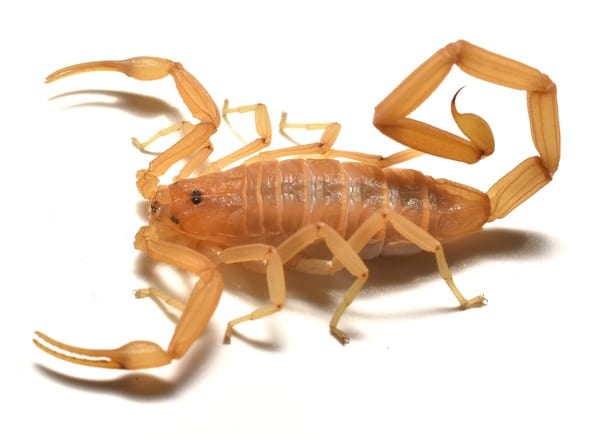
The name "bark scorpion" causes a lot of worry. The scorpion with a reputation for dangerous stings is the Arizona bark scorpion (Centruroides sculpturatus), a relative that lives in the Southwest. University of Arizona Health Sciences calls it the only scorpion in North America that is dangerous to people. Oklahoma's striped bark scorpion is a different species with much milder venom.
Are Oklahoma scorpions dangerous?
Scorpions are shy. They sting when they are stepped on, grabbed, or trapped against skin in a shoe, glove, towel or bed. OSU Extension describes what a striped bark scorpion sting is usually like:
- Slightly more painful than a bee or wasp sting.
- Limited swelling around the sting.
- Sometimes numbness and tingling for four to six hours.
- Symptoms normally gone within 24 hours.
OSU says the Oklahoma species is not considered lethal. Reactions vary from person to person, though, and some people are allergic. Young children, older adults and people who react strongly need closer watching.
What to do if you are stung
- Stay calm and move away from the scorpion. If you can do it safely, trap it in a jar or take a photo so it can be identified.
- Wash the sting with soap and water.
- Apply a cool compress or ice wrapped in a cloth, 10 minutes on and 10 minutes off. Do not soak the area in ice water.
- Keep the stung arm or leg still and raised, and remove rings or tight jewelry near the sting.
- Do not drink alcohol or take sedatives. Call Poison Help at 1-800-222-1222 before giving any medicine.
Get medical care right away if the person stung is a young child or someone who is hypersensitive, if pain or swelling does not go away, or if there is any trouble breathing, drooling, muscle twitching, double vision or unusual restlessness. Those signs mean the venom is affecting more than the skin.
Where scorpions hide around Oklahoma homes
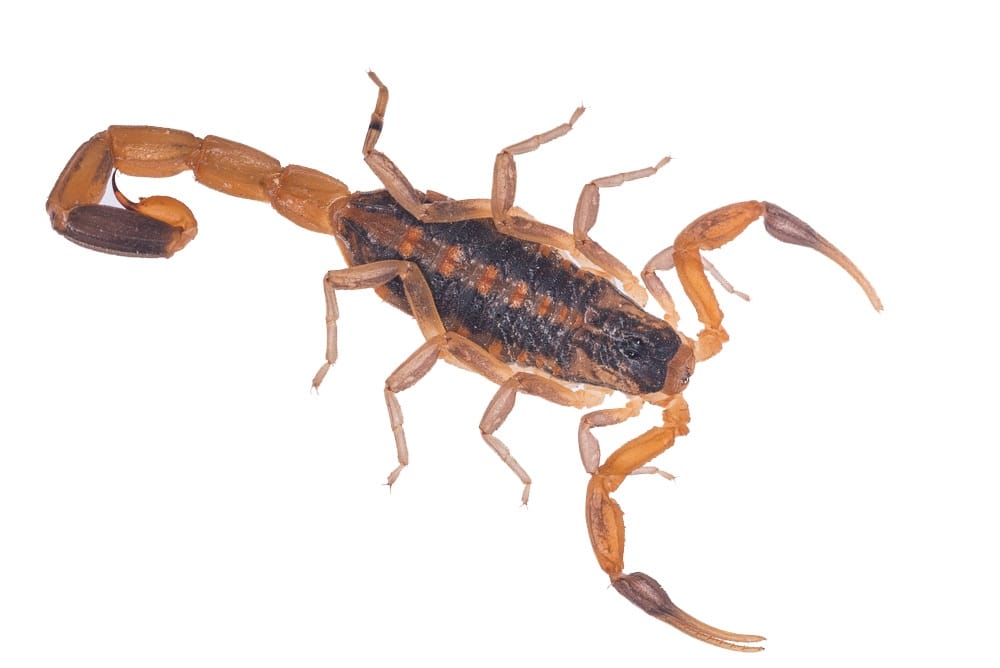
Scorpions hide during the day and come out at night to hunt and mate. Their flat bodies let them squeeze into narrow cracks. Unlike desert scorpions, the striped bark scorpion does not burrow, and it is a good climber, so it turns up on walls and in attics.
Outdoors: under rocks, boards, landscape timbers, firewood, mulch, leaf litter, trash piles and loose bark.
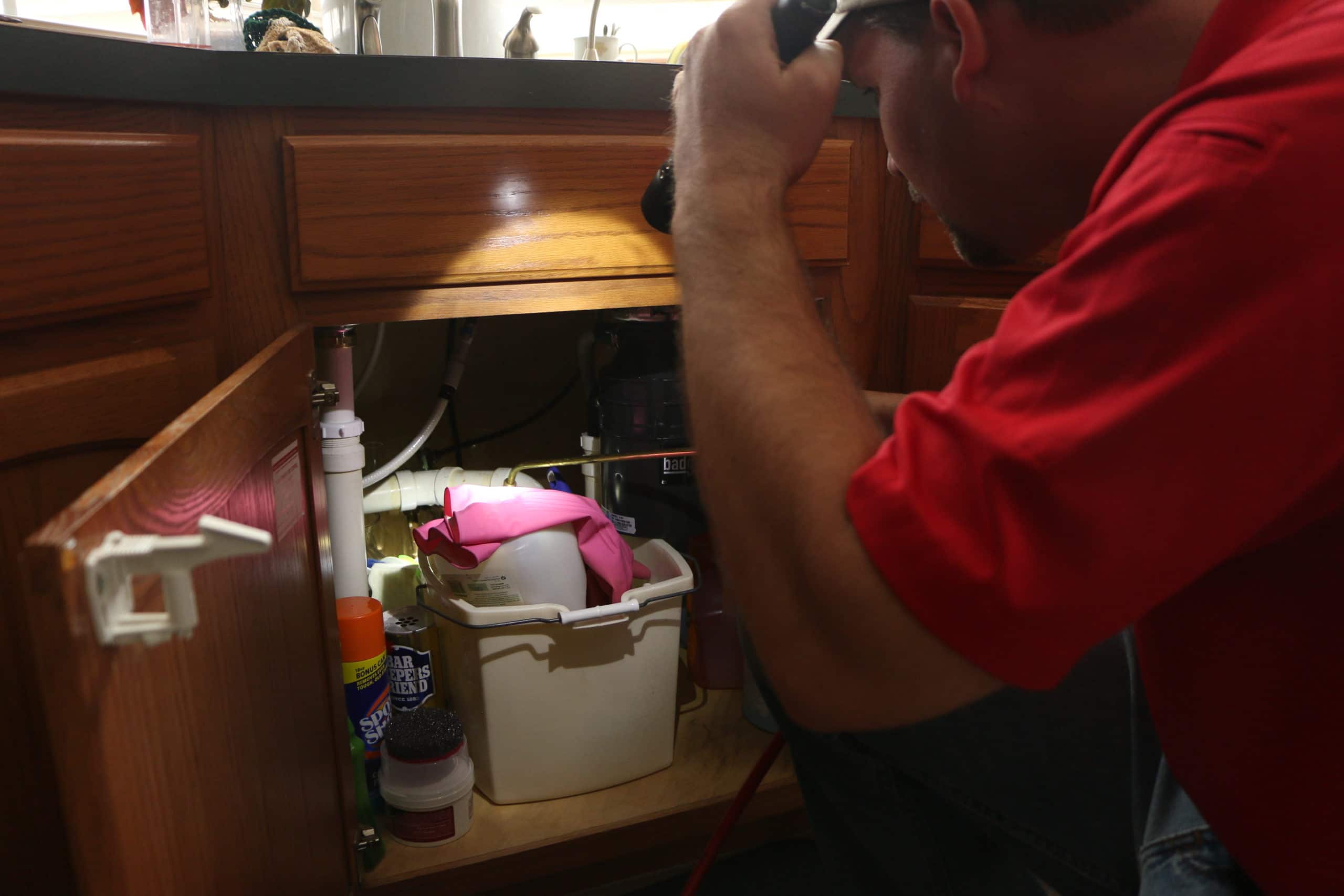
Indoors: crawl spaces, attics and wall voids, plus kitchens, bathrooms and laundry rooms where there is moisture. They also crawl into closets, piles of clothes, shoes, boxes, cabinets and storage bins.
Scorpions live in dry country but still need water, so OSU says they are drawn to damp spots near plumbing, condensers and air conditioner drains. They eat crickets, cockroaches, spiders, centipedes and other small insects, and they can go a very long time between meals (OSU puts it at almost two years for some species and life stages). A house with leaks and a steady supply of insects gives them everything they need.
Why scorpions come inside
OSU Extension points to three triggers. Construction or clearing nearby destroys their outdoor hiding places. Heavy late-spring and early-summer rains push them toward drier shelter. And as summer heat builds, they move into cooler living areas, which is when most stings inside homes happen.
Do scorpions hibernate? Scorpions in winter
Scorpions do not die off in winter. Cold makes them sluggish, so they settle into sheltered spots under bark, rocks and debris, or inside wall voids and attics, and wait for warm weather. Field surveys of striped bark scorpions on the northern edge of their range found them active from about March to October.
A common belief is that scorpions move indoors in fall to stay warm. OSU Extension says the opposite: scorpions usually do not enter houses in winter because the cold slows them down. The ones found inside during winter are most likely summer visitors that never left. That is also why many people first notice scorpions when spring warms up. They have often been inside the walls or attic since the summer before.
Sealing the gaps they use, before warm weather returns, is the simplest way to keep that from happening again. Our guide to getting rid of scorpions covers exactly where to look. For what other pests do in the cold, see where bugs go during winter.
How to tell if you have scorpions
- Use a black light. Scorpions glow under ultraviolet light. Walk the foundation, garage, patio and woodpile after dark with a UV flashlight. Do not look into the light.
- Check sticky traps. Traps along baseboards in garages, closets and laundry rooms catch scorpions that are wandering at night and show where they are getting in.
- Look for young. Females give birth to live young that ride on the mother's back. Seeing small scorpions means they are breeding nearby.
Scorpions are one of several Oklahoma pests that can hurt people and pets. Our roundup of Oklahoma pests that are harmful to people and pets covers the rest, and the Oklahoma spider ID guide covers their arachnid cousins. You can also browse all of our pest guides.
Scorpion exterminator in Oklahoma
If you are finding scorpions inside more than once in a while, they are living in or right next to the house. Emtec Pest Control has helped Oklahoma homeowners and businesses with scorpions and other pests since 1979. As your scorpion exterminator, we inspect inside and out to find where they are hiding and how they are getting in, treat the cracks, voids, attic and perimeter where they live, and point out the moisture, clutter and gaps that keep drawing them back. We serve Tulsa, Broken Arrow, Owasso, Jenks, Bixby, Sand Springs, Sapulpa, Stillwater, Oklahoma City, Edmond and nearby towns. Learn about our preventative pest control or contact us to schedule an inspection.
Frequently Asked Questions
Are there scorpions in Oklahoma?
Yes. Oklahoma State University Extension estimates three to five species live in the state, and only one, the striped bark scorpion, is found statewide. Researchers have recorded it across all of Oklahoma, often inside homes, motels and offices.
Are Oklahoma scorpions poisonous?
They are venomous, but OSU Extension says the Oklahoma species is not considered lethal. For most people a sting is a little more painful than a bee or wasp sting, with limited swelling and sometimes numbness or tingling for four to six hours. Young children, older adults and anyone with a strong reaction should get medical care.
Is the striped bark scorpion the same as the Arizona bark scorpion?
No. They are related, but the Arizona bark scorpion (Centruroides sculpturatus) lives in the Southwest, and it is the scorpion in North America whose sting can be life-threatening. The striped bark scorpion (Centruroides vittatus) is the one found in Oklahoma, and its sting is far milder.
Do scorpions hibernate in winter?
They go inactive. Cold makes scorpions sluggish, so they stay tucked under bark, rocks, debris or inside wall voids and attics until spring. OSU Extension notes they usually do not move into houses in winter; the ones you find indoors then are most likely summer visitors that never left.
Do scorpions glow under a black light?
Yes. Scorpions fluoresce under ultraviolet light, so a black light makes them easy to spot at night, according to Oklahoma State University. Do not look directly into the UV light, since it can harm your eyes.
Sources
- Scorpions (EPP-7303) (opens in new tab)
- Scorpions (Centruroides vittatus) (opens in new tab)
- Scorpions (School IPM common pests) (opens in new tab)
- Distributions of the scorpions Centruroides vittatus (Say) and Centruroides hentzi (Banks) in the United States and Mexico (opens in new tab)
- Scorpions (ENTO-PU-032) (opens in new tab)
- Insects and Scorpions (opens in new tab)
- Scorpion sting (opens in new tab)
- What You Need to Know About Scorpion Stings (opens in new tab)
- Seasonality and Occurrence of the Striped Bark Scorpion (Centruroides vittatus) in Franklin County, Nebraska (opens in new tab)