
To get rid of scorpions, take away the places they hide, close the gaps they use to get inside, and then treat where they live. Sprays alone rarely work: Oklahoma State University Extension says insecticides by themselves are not practical for scorpions, and Texas A&M AgriLife Extension calls them "difficult to control with insecticides alone." The steps below follow both extension services and what we see in Oklahoma homes.
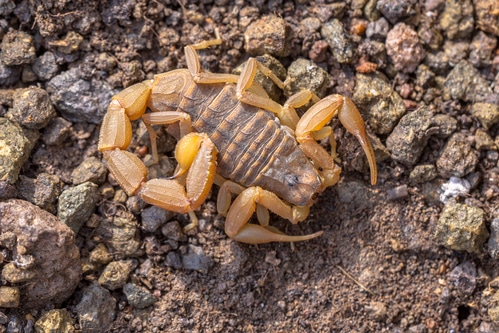
Almost every scorpion in an Oklahoma home is the striped bark scorpion, a tan, 2-inch scorpion with two dark stripes on its back. If you are not sure what you found, or you want to know how serious a sting is, start with our guide to scorpions in Oklahoma.
Step 1: Inspect inside and out
Find out where they are living before you do anything else. Wear gloves and closed shoes, and use a flashlight.
- After dark, use a black light. Scorpions glow under ultraviolet light, which makes a nighttime walk around the foundation, garage, patio, woodpile and landscaping the fastest way to find them. Do not look directly into the light.
- Outside, check under rocks, boards, landscape edging, firewood, mulch, potted plants and trash.
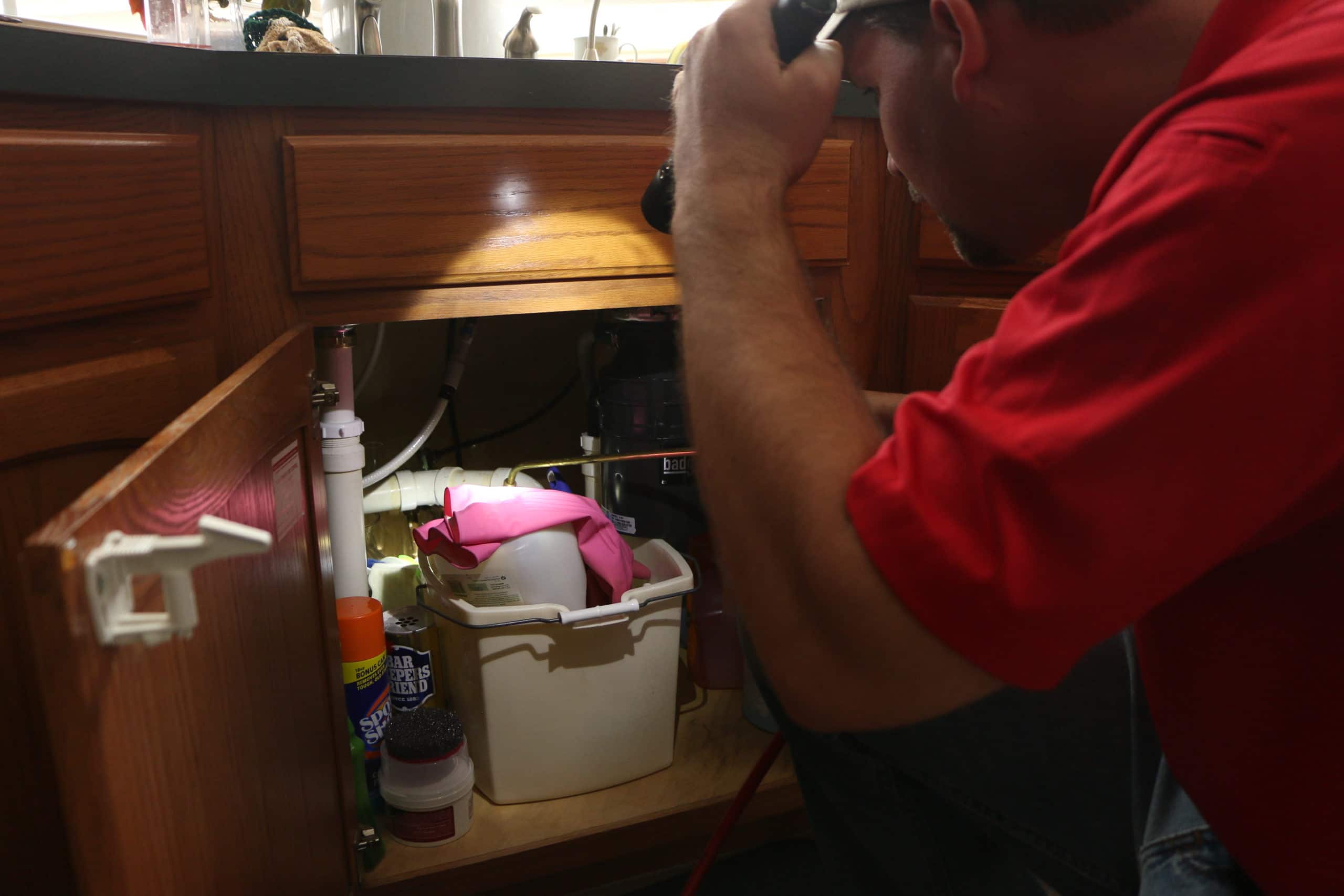
- Inside, check the garage, attic, crawl space, closets, laundry room, and under kitchen and bathroom sinks.
- Look at entry points: gaps under doors, around windows and pipes, weep holes in brick, and the roofline.
Step 2: Clear out hiding places
Scorpions spend the day under objects. Fewer hiding spots near the house means fewer scorpions close enough to wander in. OSU and Texas A&M recommend:
- Remove trash, logs, boards, stones, bricks and other debris from around the foundation.
- Keep the grass mowed short next to the house and prune shrubs and branches away from walls and the roof.
- Stack firewood off the ground and away from the house, and bring it inside only when it is going straight into the fire.
- Keep garbage cans off the ground.
- Indoors, clear clutter from the garage, attic and crawl space. Pick clothes, shoes and boxes up off the floor, and store items in sealed plastic bins instead of cardboard.
Step 3: Seal the way in
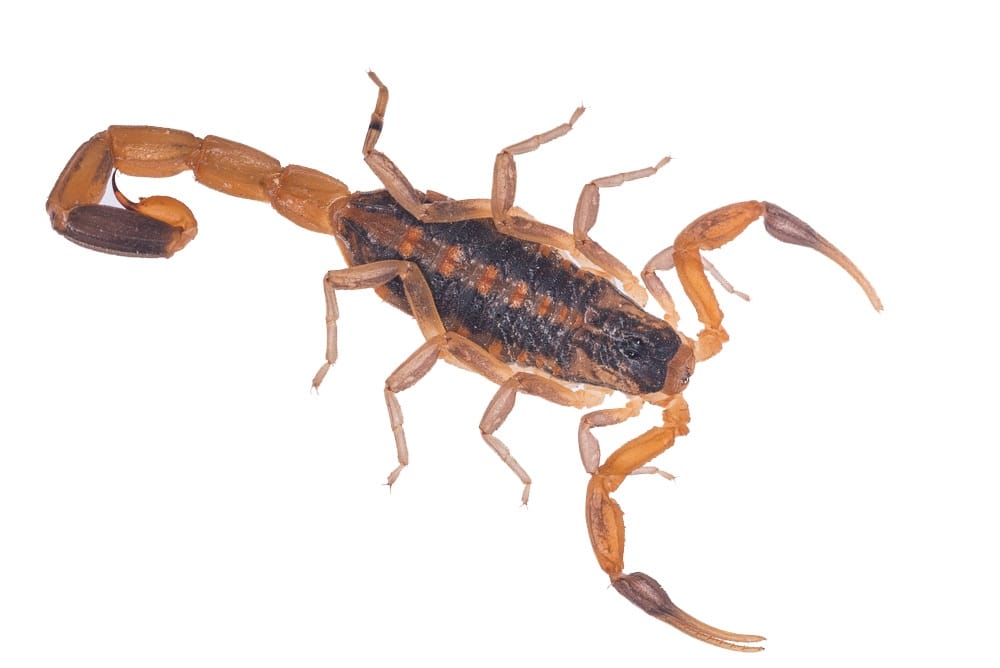
Scorpions have flat bodies and slip through thin cracks. They also climb, so high openings matter as much as low ones. Seal:
- Doors and windows: add weather-stripping and door sweeps, and replace any that are worn or gapped.
- Weep holes in brick veneer: plug them with mesh such as copper mesh, steel wool or screen, which keeps scorpions out but still lets the wall drain.
- Pipes, wires and vents: caulk where they pass through walls, and seal gaps around plumbing under sinks.
- Roof eaves and siding gaps: caulk cracks along the roofline and trim back branches that touch the roof.
- Screens: repair tears and make sure window screens fit tightly.
Step 4: Fix moisture and cut off their food
Scorpions need water and insects. OSU notes they are drawn to damp spots near plumbing, condensers and air conditioner drains. Fix dripping faucets and leaking pipes, direct AC condensate lines away from the foundation, and keep gutters draining. Control the crickets, cockroaches and spiders scorpions hunt. Starving scorpions out is not realistic on its own (OSU says some can go almost two years without food), but a house with less food and water draws fewer of them.
Step 5: Treat where they live
Once hiding places and gaps are dealt with, a treatment works far better. OSU Extension recommends applying labeled insecticides to baseboards, under furniture and to cracks and crevices inside and out, along with attics, garages, crawl spaces and areas where the house meets the soil, such as the foundation, siding and porches. Dusts work better than sprays in attics, wall voids and crawl spaces. Outside, Texas A&M recommends treating the foundation and the bottom foot of exterior walls plus the areas around doors and windows, and notes that wettable powder and microencapsulated perimeter products last longer. Always follow the label.
Store-bought sprays kill the scorpion they hit, but they do not reach the ones living inside walls and the attic. For a heavy or recurring problem, OSU recommends a pest control company.
Use sticky traps to check your progress
Glue traps along baseboards in garages, closets and laundry rooms catch scorpions walking along walls at night. They do not solve an infestation, but a trap that keeps catching scorpions tells you where they are getting in. Place them where children and pets cannot reach.
What does not work
- Lavender, citrus and essential oils. Older advice says planting lavender or cleaning with citrus keeps scorpions away. The OSU and Texas A&M control guides do not rely on repellent plants, and Texas A&M notes that plant-oil products break down quickly and may not last long.
- Pouring bleach down drains. Extension guides do not recommend it, and it does nothing about scorpions living in walls and attics. Seal gaps around plumbing under the sink instead.
- Counting on pets or chickens. A cat or a chicken may catch a scorpion now and then, but that will not clear out the ones living in your walls, and pets can be stung.
- Spraying only the scorpions you see. It kills one, not the population hiding in the attic and wall voids.
Avoid stings while you work
The CDC recommends long sleeves, long pants and leather gloves when moving rocks, wood or debris, and shaking out clothing and shoes before putting them on. At home, also shake out towels and bedding that have been sitting, and pull beds a few inches away from the wall. If someone is stung, our scorpion guide covers first aid and when to get medical help. Call Poison Help at 1-800-222-1222 with questions, or 911 for trouble breathing.
Scorpion exterminator for Oklahoma homes and businesses
Emtec Pest Control has treated scorpions across Oklahoma since 1979. A scorpion problem needs more than a quick spray, so as your scorpion exterminator we start with an inspection, find where scorpions are hiding and how they are getting in, and build a treatment plan for your specific home: treating cracks, voids, the attic and the perimeter, and showing you which gaps, moisture and clutter to fix so they stop coming back. Learn about our preventative pest control. We serve Tulsa, Broken Arrow, Owasso, Jenks, Bixby, Sand Springs, Sapulpa, Stillwater, Oklahoma City, Edmond and nearby towns. Contact us to schedule an inspection.
Frequently Asked Questions
Can pest control get rid of scorpions?
Yes, but not with a spray alone. Oklahoma State University Extension says insecticides by themselves are not practical for scorpions. Effective control combines removing hiding places and sealing entry points with targeted treatment of cracks, wall voids, attics and the outside of the foundation.
What attracts scorpions into a house?
Shelter, moisture and food. Scorpions hide in clutter, stored boxes and wall voids, they are drawn to damp spots near plumbing and air conditioner drains, and they hunt the crickets, cockroaches and spiders living around the house. Construction nearby, heavy spring rain and summer heat can also push them indoors.
Do lavender, citrus or essential oils keep scorpions away?
Do not count on them. The OSU and Texas A&M guides to scorpion control rely on habitat removal, sealing and insecticides, not repellent plants. Texas A&M notes that plant-oil insecticides such as clove, peppermint or rosemary oil break down quickly and may not last long.
How do scorpions get inside?
Through cracks and gaps. Common entry points are gaps under doors and around windows, open weep holes in brick veneer, roof eaves, gaps where pipes and wires enter, and torn window screens. Scorpions also climb, so tree branches touching the roof give them a path to the attic.
Can you starve scorpions out?
Not quickly. Oklahoma State University Extension notes some scorpions can survive almost two years without food and water. Cutting back the insects they eat still helps, because it makes your home less attractive, but it has to be paired with sealing and treatment.