
In a termite inspection, we check the outside and inside of the house and the yard for live termites, mud tubes, damaged wood, swarmer wings and the conditions that attract termites, such as moisture and wood touching the soil. For a home sale in Oklahoma, the findings go on the state's official ODAFF-1 termite report. Here is exactly what we look at, what the report can and can't tell you, and what to ask before you agree to any treatment.
What we check
Wood damage
Termites eat wood from the inside, so damage is hard to see from the surface. We tap wood beams, sills, joists, door frames and baseboards and listen for the dull sound of hollowed wood, and we probe suspect spots to see if the surface gives way. We only probe in places that normally won't be seen.
Mud tubes
Subterranean termites build pencil-wide tubes of soil to travel from the ground to the wood they are eating. We look for them along the foundation, on piers and plumbing in the crawl space, in the basement, in the attic, around pipes and wires where they enter the house, along the slab edge in the garage and at any other access point. Texas A&M AgriLife notes these tubes can blend in with concrete and soil, which is why it helps to have trained eyes on them.
Mud in joints and cracks
Termites dry out easily and seal small gaps with mud. We look for crusted soil in cracks in drywall, between flooring, along trim and in cracks in the concrete.
Evidence of swarmers
Swarm season in Oklahoma is mainly March through May (OSU Extension). We check windowsills, door thresholds, light fixtures, porches, decks and sidewalks for the see-through wings termites shed. Wings inside the house mean termites very likely swarmed from inside the structure. See termite swarmers.
Moisture
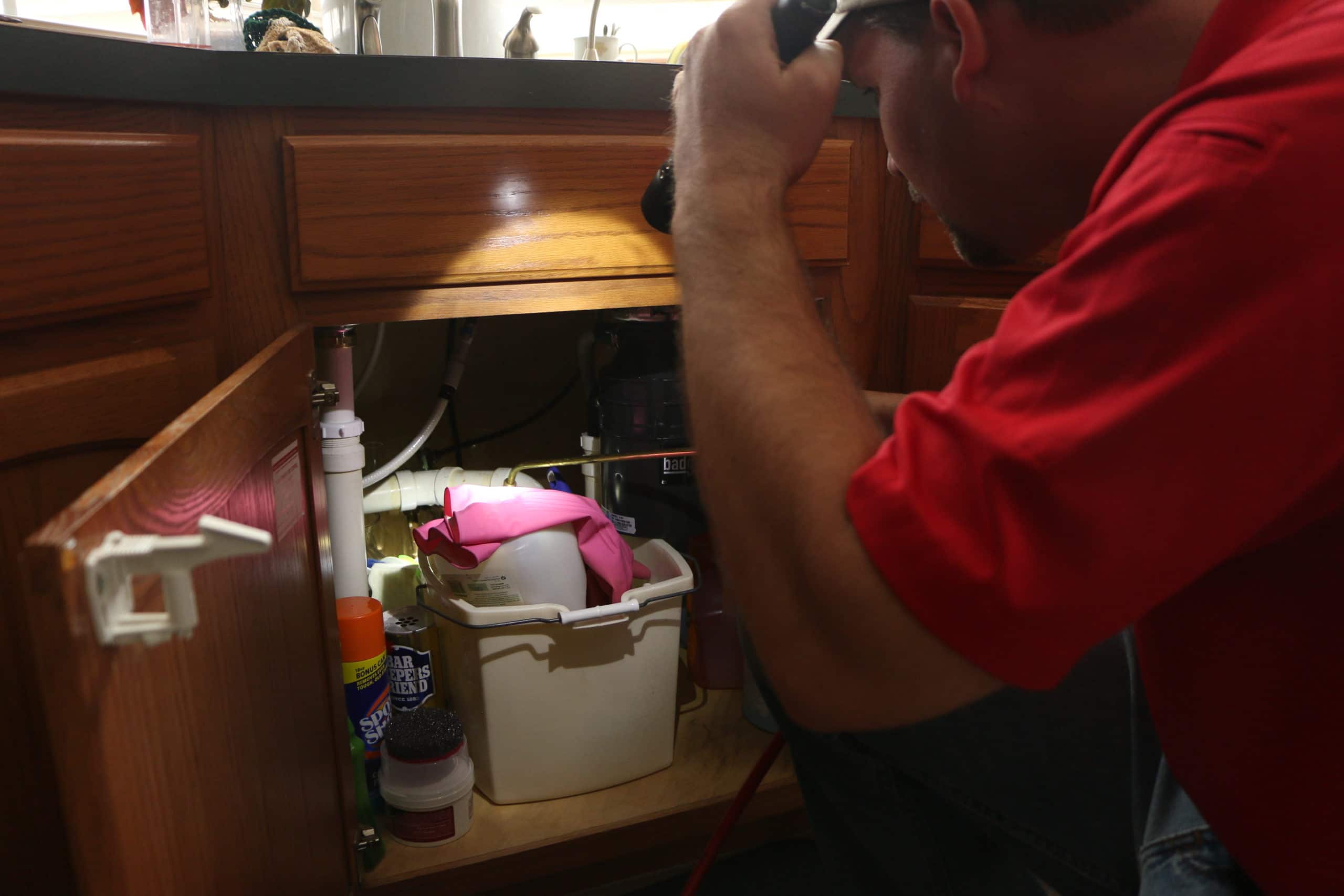
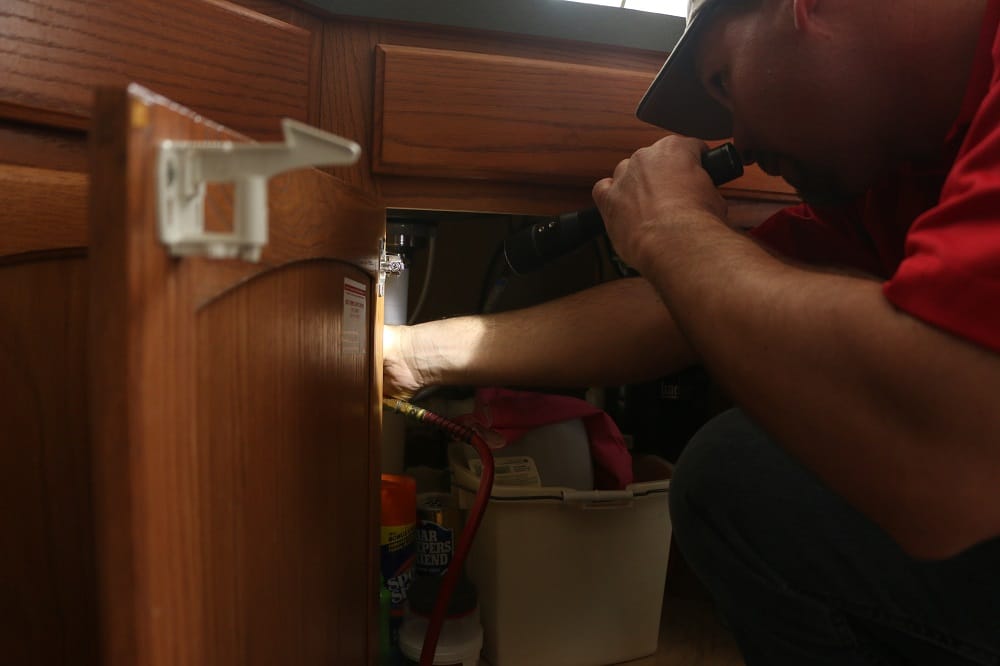
We look for the leaks and drainage problems that draw termites: plumbing leaks under sinks and around tubs, AC condensate lines, clogged gutters, downspouts emptying at the foundation, standing water in the crawl space and soil sloping toward the house. OSU Extension notes that inspection reports should point out drainage and moisture problems.
Wood around the property
This isn't proof of termites, but where there is wood touching soil, there is potential for termites. We check for wood-to-soil contact at siding, steps, posts and lattice, and for wood that could feed a colony near the house: fences, deep mulch, firewood, fallen limbs, stumps, scrap lumber and bundles of twigs. See what attracts termites to homes.
What an inspection can and can't tell you
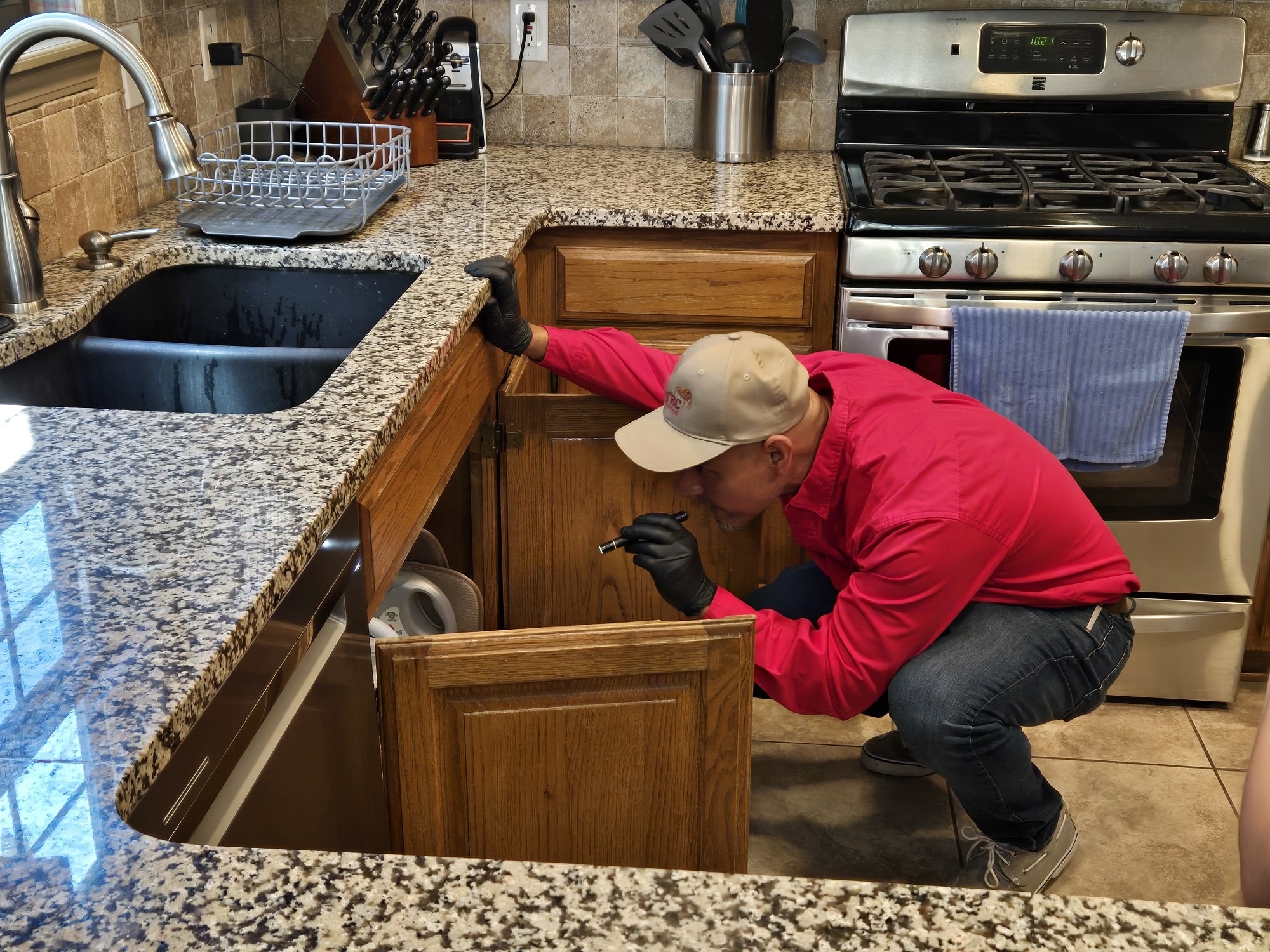
A termite inspection reports what can be seen. Termites can be working behind finished walls, under carpet and flooring, inside the slab joint or in spots that can't be reached without removing finishes. The University of Kentucky notes that infestations can go undetected for years and that even experienced inspectors can miss hidden signs. Texas A&M AgriLife adds that tools such as moisture meters and probes help, but no equipment can find every termite or every bit of damage. A clean report means no visible evidence was found, not that termites can never be present.
Termite inspections when buying a home in Oklahoma
When a termite inspection is part of a real estate transaction in Oklahoma, it must be documented on the Oklahoma Official Termite and Wood Destroying Insect Report, form ODAFF-1, according to the Oklahoma Department of Agriculture, Food and Forestry (ODAFF), which regulates pest control companies. Lenders may require the inspection as a condition of the loan, so check with your agent and lender.
Two things buyers should know:
- ODAFF-2 is gone. Since September 14, 2020, ODAFF no longer recognizes the ODAFF-2 form that companies used to issue for corrections. If the ODAFF-1 recommends a treatment, damage repair or correction of conditions, ODAFF advises that the company doing the work keep records, invoices and photos. Ask for copies.
- Insurance usually won't pay for termite damage. Standard homeowners policies generally exclude it because insurers consider it preventable, so finding it before closing matters.
Tips for buyers
- Be there for the inspection if you can. Ask the inspector to show you any damage or tubes and whether they look active or old.
- Read the seller's disclosure. Look for past termite activity, damage and treatment. A past treatment isn't a red flag, but ask what was done and when.
- Ask about repairs. If active termites are found, the inspector can recommend treatment, and the damaged wood may need a contractor's evaluation.
- Negotiate before closing. If termites are found, the sale terms can address treatment and repairs.
When to get a termite inspection
- You saw swarmers, shed wings or mud tubes.
- You found damaged wood during a remodel or repair.
- You are buying or selling a home.
- You are building a new home (pretreating the soil before the slab is poured is the one chance to treat under it; see what attracts termites).
- Your home has never had termite protection. OSU Extension says termites are present in every Oklahoma county and the chance of attack within a few years of construction is high.
What a good inspection report includes
OSU Extension recommends a written report that notes active and inactive infestations and damaged areas, the treatment needed, a diagram of the house showing features like porches, plumbing access and moisture problems, and a cost estimate. OSU also advises:
- Don't panic or rush. Termites work slowly, so take a few days to decide. Getting a second opinion or more than one estimate is reasonable.
- Ask whether the estimate is a fixed final price.
- Get the plan in writing, including what the company will do if termites come back, and keep copies.
- Watch for warning signs: door-to-door "inspectors," prices quoted by the gallon, "secret formulas," pressure to sign today, or requests for payment in advance.
Termite inspections by an Oklahoma exterminator
Emtec Pest Control has inspected Oklahoma homes for termites since 1979, for homeowners, buyers, sellers and builders. We walk you through what we found, show you the evidence, and, if termites are active, explain the treatment options, including the Sentricon® System Emtec has long recommended. For a termite inspection or exterminator in Tulsa, Broken Arrow, Owasso, Jenks, Bixby, Sand Springs, Sapulpa, Stillwater, Oklahoma City, Edmond or nearby towns, see our termite control service or contact us to schedule.
Frequently Asked Questions
What is an ODAFF-1?
The Oklahoma Official Termite and Wood Destroying Insect Report. The Oklahoma Department of Agriculture, Food and Forestry requires termite inspections made for real estate transactions to be documented on this form, completed by a pest control company regulated by ODAFF.
Is a termite inspection required to buy a house in Oklahoma?
State law doesn't require every buyer to get one, but lenders may require it, and the real estate contract may call for one. When an inspection is done for a property sale, it must be reported on the ODAFF-1 form. Ask your agent and lender what your contract requires.
Can a termite inspection miss termites?
Yes. Inspectors report what they can see. Termites can be hidden behind walls, under floors and in places that can't be reached without removing finishes. The University of Kentucky notes that even experienced inspectors can miss hidden signs.
What does ODAFF-2 mean?
It used to be a follow-up form for corrections. Since September 14, 2020, ODAFF no longer recognizes the ODAFF-2. ODAFF advises that the company doing any recommended treatment or repair keep records, invoices and photos instead.
What should a termite inspection report include?
OSU Extension recommends a written report that notes active and inactive infestations and damage, the treatment needed, a diagram of the house showing things like porches, plumbing access and moisture problems, and a cost estimate. Ask whether the estimate is a fixed final price.
Sources
- Termite inspection handout (ODAFF-1 and ODAFF-2) (opens in new tab)
- Choosing a Pest Management Company to Protect Your Home Against Termites (EPP-7308) (opens in new tab)
- Termite Control: Answers for Homeowners (ENTFACT-604) (opens in new tab)
- Subterranean Termites (E-368) (opens in new tab)
- Termite swarming season (Pest e-Alert, May 1, 2008) (opens in new tab)
- Does homeowners insurance cover termite damage? (opens in new tab)