
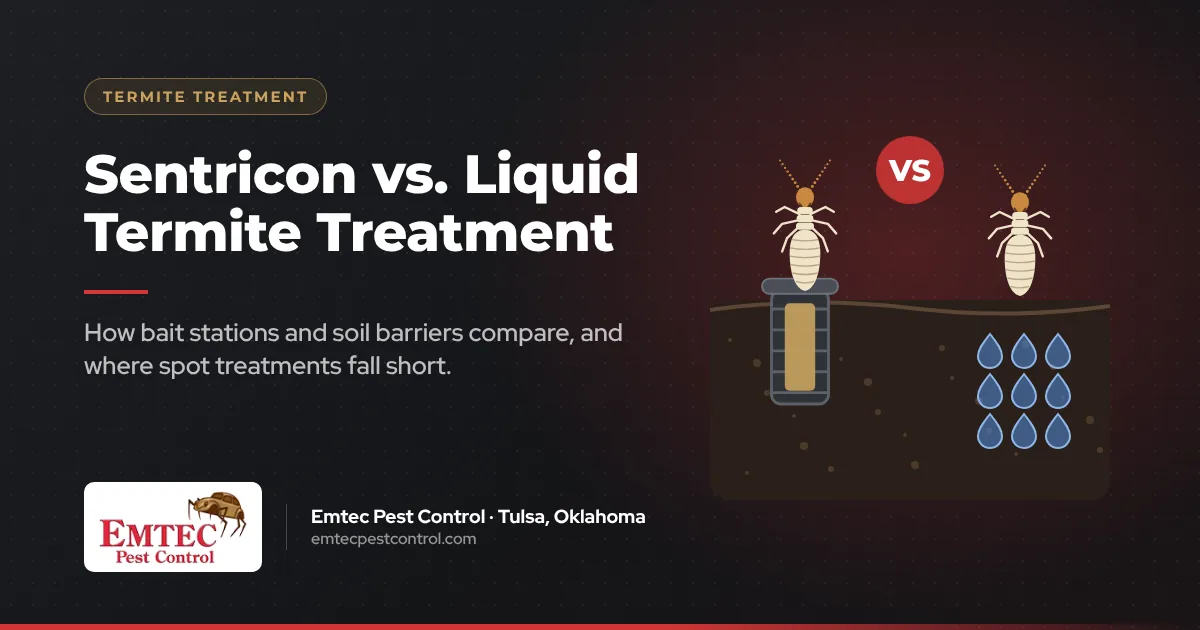
There are two main ways to treat a home for subterranean termites: a liquid barrier, which puts termiticide in the soil around and under the house, and a bait system like Sentricon®, which puts a small amount of slow-acting bait in stations that termites carry back to their colony. Liquids work faster; baits use much less pesticide and no drilling. Both can work well when they are installed carefully and followed up. Here is how each one works, the trade-offs, where spot treatments and do-it-yourself products fit, and why Emtec has long preferred baiting for most Oklahoma homes.
Liquid barrier treatments
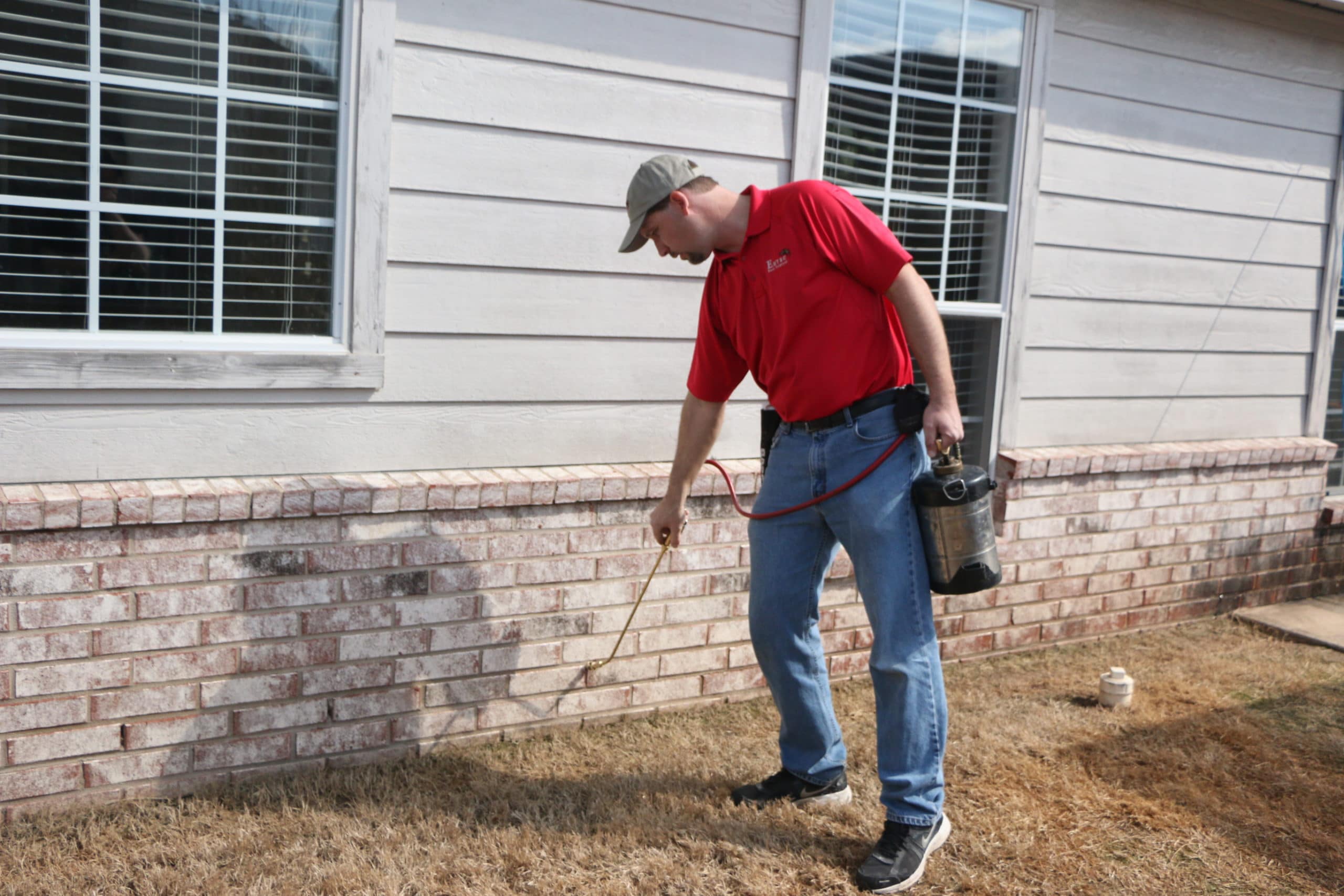
A liquid treatment puts termiticide into the soil so that termites moving between the colony and the house pass through treated soil. OSU Extension describes a typical slab job as three parts: treating the soil under the slab (including porches and patios touching the house) by drilling through it, digging a trench around the outside of the foundation and filling it with termiticide, and drilling into the void behind brick or block veneer. Pier-and-beam homes get trenching around piers, pipes and foundation walls. The University of Kentucky notes a typical job can use hundreds of gallons of diluted termiticide.
Older liquids repelled termites, so any gap in the treated zone let them through. Most modern liquids are non-repellent: termites can't detect them, tunnel into treated soil and die. The University of Kentucky lists Termidor, Premise and Altriset as examples and says non-repellent products are usually more reliable at controlling an infestation on the first attempt. OSU notes that some of these products can be used as an exterior perimeter treatment with limited interior treatment when no live interior infestation is found.
Strengths of liquids
- Fast. OSU Extension notes that liquid treatments work quickly.
- A good fit for heavy infestations and for real estate deadlines, as the University of Kentucky points out.
- Once applied, the treated soil is in place; there are no stations to maintain.
Drawbacks of liquids
- Large volumes of termiticide, plus trenching and drilling through slabs, porches and sometimes interior floors.
- The treated zone has to surround the whole structure (OSU). The University of Kentucky says termites returning soon after treatment usually point to an untreated gap.
- Landscaping, new patios, additions and soil work can disturb the treated zone later.
- Some homes are hard to treat this way, such as homes near wells or cisterns, with sub-slab ducts or with inaccessible crawl spaces.
Termite bait systems like Sentricon
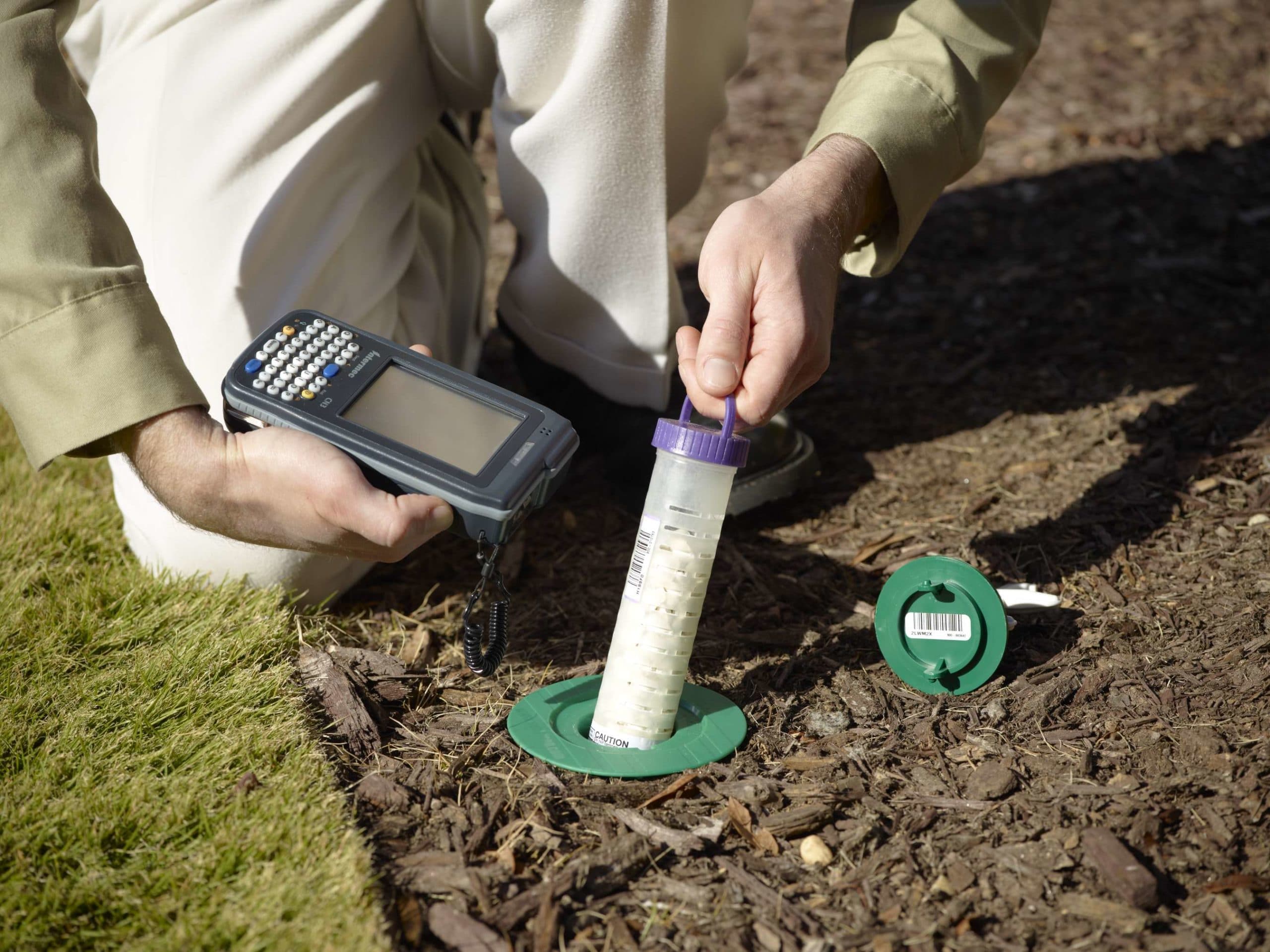
A bait system works with termite behavior instead of a barrier. The University of Kentucky describes termite baits as cellulose food combined with a slow-acting insecticide. Stations are set in the ground around the house, usually a foot or two from the foundation and 10 to 15 feet apart, with extra stations near stumps, woodpiles, moist spots and past damage. Foraging termites find a station, feed, and share the bait with nestmates. Because the active ingredient works slowly by stopping termites from molting, it spreads through the colony before termites start dying, and the population declines.
The Sentricon System uses noviflumuron, one of the bait active ingredients registered by the EPA. Read more in how the Sentricon system works.
Strengths of baits
- Very little pesticide, kept underground in tamper-resistant stations (University of Kentucky).
- No drilling through floors or porches, no moving furniture, and usually no need for the technician to come inside.
- Works where liquids are hard to apply, such as near wells, under additions or around inaccessible crawl spaces.
- The stations double as monitors, so new termite activity shows up in the stations.
Drawbacks of baits
- Slower. OSU Extension says baiting often takes two, three or up to six months, and sometimes longer. Termites forage less in winter, drought and saturated soil, so stations may take longer to be found.
- Some feeding can continue in the house before the bait takes effect.
- No pesticide is left in the soil, so ongoing protection depends on the stations staying in place and being checked.
- Ongoing station checks add a recurring cost, which the University of Kentucky notes can make baits cost more over time.
Side by side
| Liquid barrier | Bait system (Sentricon) | |
|---|---|---|
| How it works | Treated soil kills termites tunneling through it | Termites eat bait and share it through the colony |
| Speed | Fast | Months |
| Amount of pesticide | Large volume in the soil | Small amount, inside stations |
| Drilling and trenching | Usually | No |
| Ongoing visits | Inspections | Station checks and re-baiting as needed |
| Best fit | Heavy infestations, real estate deadlines | Homes where drilling is hard, families who want less pesticide, ongoing monitoring |
The two can also be combined. OSU Extension and the University of Kentucky both describe using a partial liquid treatment where termites are active along with bait stations. OSU's honest caution applies to every option: no strategy or product has been shown to work 100 percent of the time, which is why follow-up matters.
Are spot treatments effective?
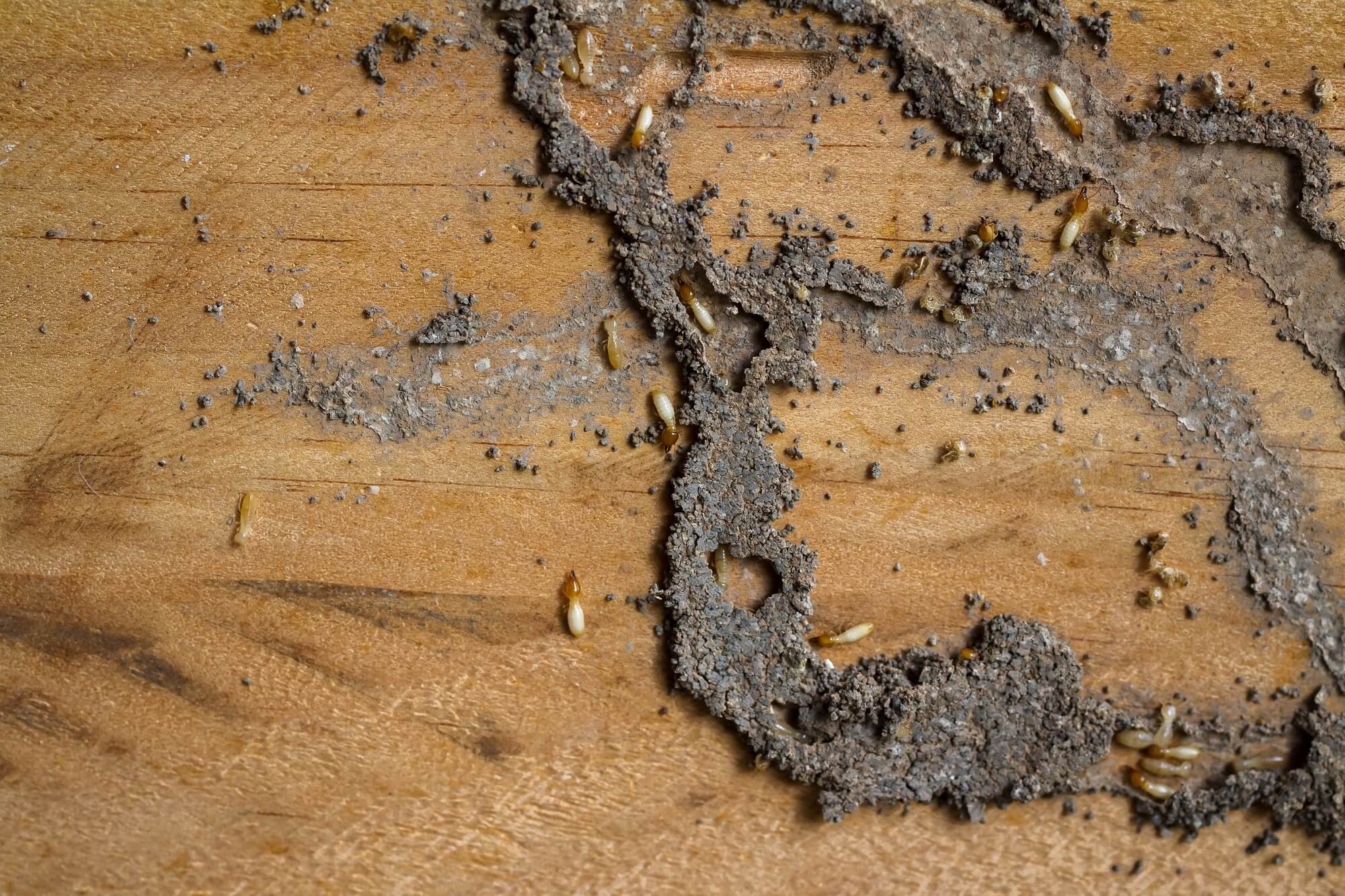
A spot treatment treats only the area where termites were seen, such as one wall, a door frame or a section of slab. It is cheaper, and that is the appeal. The trouble is that a colony forages in many directions and can enter in more than one place. The University of Kentucky calls spot treatments usually a gamble, except as a follow-up within an existing treatment program. OSU Extension notes that when a live infestation is found inside, the soil under the slab in that area has to be treated in addition to any exterior work. In our experience, treating one spot often leaves the rest of the house open to the same colony or a neighboring one, which is why we recommend protecting the whole structure.
Other treatments you may hear about
- Foam: termiticide foam reaches hard spots like chimney bases, soil-filled porches and voids under slabs (OSU, Texas A&M). It supplements a treatment; it doesn't replace one.
- Borates: wood treatments often sprayed on framing during construction (EPA). Texas A&M notes they may not reach the core of lumber and work best with other treatments.
- Fumigation (tenting): used for drywood termites, which live inside wood and are not native to Oklahoma (UC IPM). It is not a treatment for subterranean termites in the soil.
- Electronic and ultrasonic devices: OSU Extension says none has been scientifically proven to control subterranean termites.
Should you try DIY termite control?
Treating a house for termites takes knowledge of construction, specialized equipment and, for liquids, large amounts of product. The University of Kentucky says retail products seldom eradicate an existing termite problem, and OSU Extension does not recommend do-it-yourself or over-the-counter bait systems. OSU also notes that most termiticides and baits are sold only to pest control companies and applied by trained applicators. The EPA warns that termiticides applied incorrectly can contaminate a home and nearby wells, and that the product label must include directions for protecting a structure; products that only claim to kill termites have not shown they can protect a house. For more on where DIY fits, see DIY vs. professional pest control.
How to choose
The right treatment depends on the house: slab or crawl space, wells or cisterns nearby, how heavy the infestation is, whether a sale is pending, and how you feel about drilling and pesticide volume. Get a written inspection report first. OSU Extension recommends one that notes active and inactive infestations, the treatment needed and a diagram of the house, and suggests getting more than one estimate. Ask what the plan includes after treatment and get it in writing. Our termite inspection guide explains what to expect, and how long a termite treatment lasts covers what keeps protection working.
Termite treatment from an Oklahoma exterminator
Emtec Pest Control has treated Oklahoma homes for termites since 1979, and for most homes we recommend the Sentricon® System because it controls termites with very little pesticide and no drilling. When a home needs a faster knockdown or a combined approach, we explain why and what it involves. If you need a termite exterminator in Tulsa, Broken Arrow, Owasso, Jenks, Bixby, Sand Springs, Sapulpa, Stillwater, Oklahoma City, Edmond or nearby towns, see our termite control service or contact us to schedule an inspection.
Frequently Asked Questions
Is Sentricon better than a liquid termite treatment?
Each has strengths. Liquids work faster and suit severe infestations; baits use far less pesticide, need no drilling and work around wells and hard-to-treat construction. Emtec has long preferred baiting for most homes, and some homes do best with both. The University of Kentucky notes that success with either depends on careful installation and follow-up.
What is the difference between Sentricon and Termidor?
Sentricon is a bait system: stations in the ground hold a cellulose bait with noviflumuron, which termites share and which stops them from molting. Termidor is a liquid termiticide (fipronil) applied to the soil around and under the house. The University of Kentucky lists Termidor among the modern non-repellent liquids that kill termites tunneling into treated soil.
Do termite spot treatments work?
Rarely on their own. The University of Kentucky calls spot treatments usually a gamble, because colonies are large and forage in many directions. OSU Extension notes that when termites are active inside, the soil in that area needs to be treated, but most homes need more than one spot covered.
Can I treat termites myself?
For a structure, it rarely works. The University of Kentucky says retail products seldom eradicate an existing termite problem, and OSU Extension does not recommend do-it-yourself or over-the-counter termite baits. Most professional termiticides and baits are sold only to pest control companies.
How long does it take bait stations to get rid of termites?
Longer than a liquid. OSU Extension says baiting often takes two, three or up to six months, and sometimes longer, because termites first have to find the stations and then share the bait through the colony.
Sources
- Choosing a Pest Management Company to Protect Your Home Against Termites (EPP-7308) (opens in new tab)
- Termite swarming season (Pest e-Alert, May 1, 2008) (opens in new tab)
- Termite Control: Answers for Homeowners (ENTFACT-604) (opens in new tab)
- Termite Baits: A Guide for Homeowners (ENTFACT-639) (opens in new tab)
- Subterranean Termites (E-368) (opens in new tab)
- Termites: How to Identify and Control Them (opens in new tab)
- Drywood Termites (Pest Notes) (opens in new tab)