
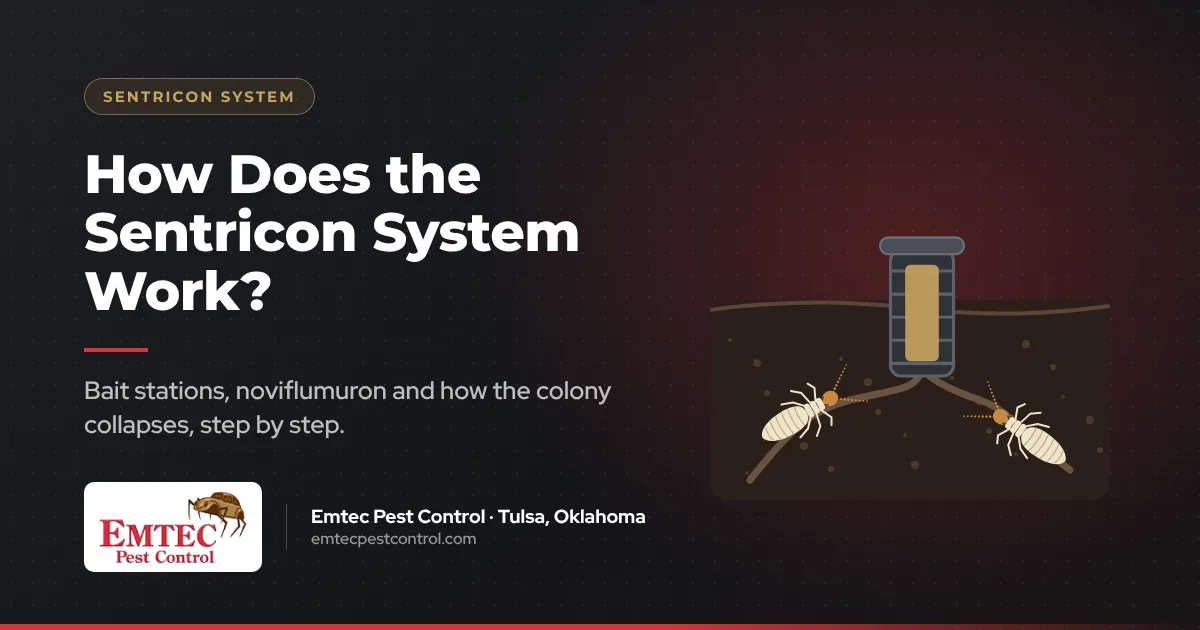
The Sentricon® System is a termite bait system. Bait stations are set into the ground around the outside of the house, and each holds a cellulose bait laced with noviflumuron, an ingredient that stops termites from molting. Worker termites find the bait while foraging, eat it and carry it back to share with the colony. Because it acts slowly, it spreads through the colony before termites start dying, and the colony declines over a period of months. The stations then stay in place to catch any new termites. Here is each step in more detail.
Where Sentricon came from
Sentricon grew out of research by Dr. Nan-Yao Su at the University of Florida, who documented how termites recruit nestmates to food. His team worked with Dow AgroSciences to develop an in-ground bait system, and Sentricon was introduced in 1995. The original active ingredient, hexaflumuron, was later replaced by noviflumuron, and the current bait, Recruit® HD with Always Active™ technology, was introduced in 2010. Sentricon is now made by Corteva Agriscience.
How Sentricon works, step by step
1. Inspection
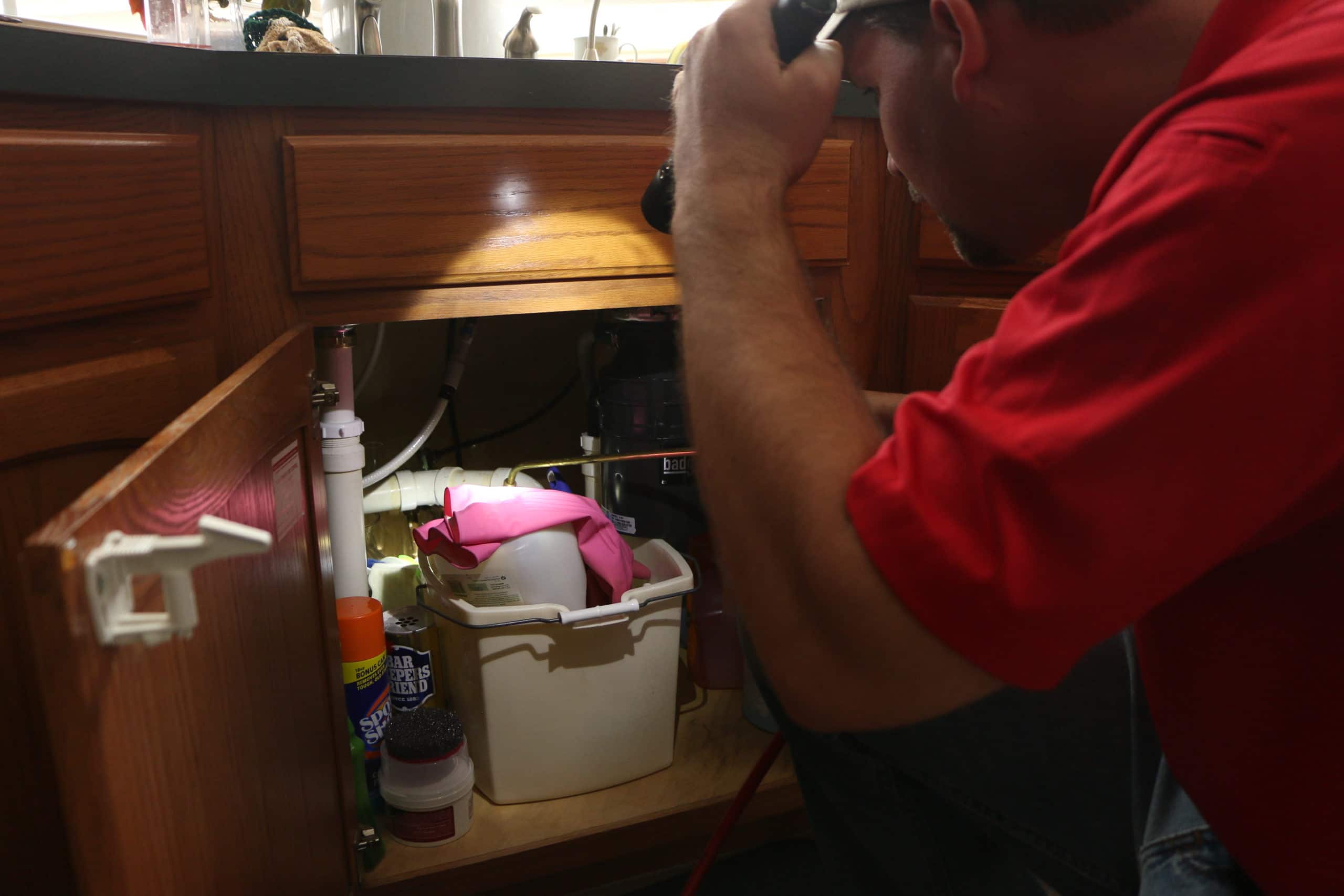
A technician inspects the house and yard for termite activity and for the conditions that attract termites, such as moisture and wood touching the soil. That determines where stations go and whether any extra treatment is needed indoors. See what we check in a termite inspection.
2. Stations go in around the house

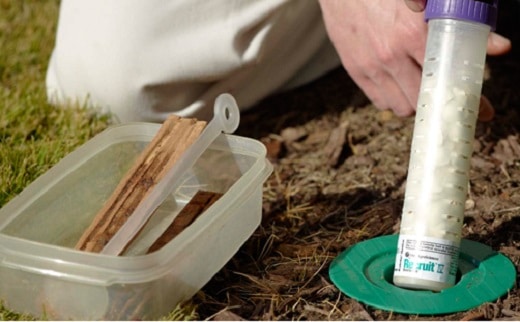
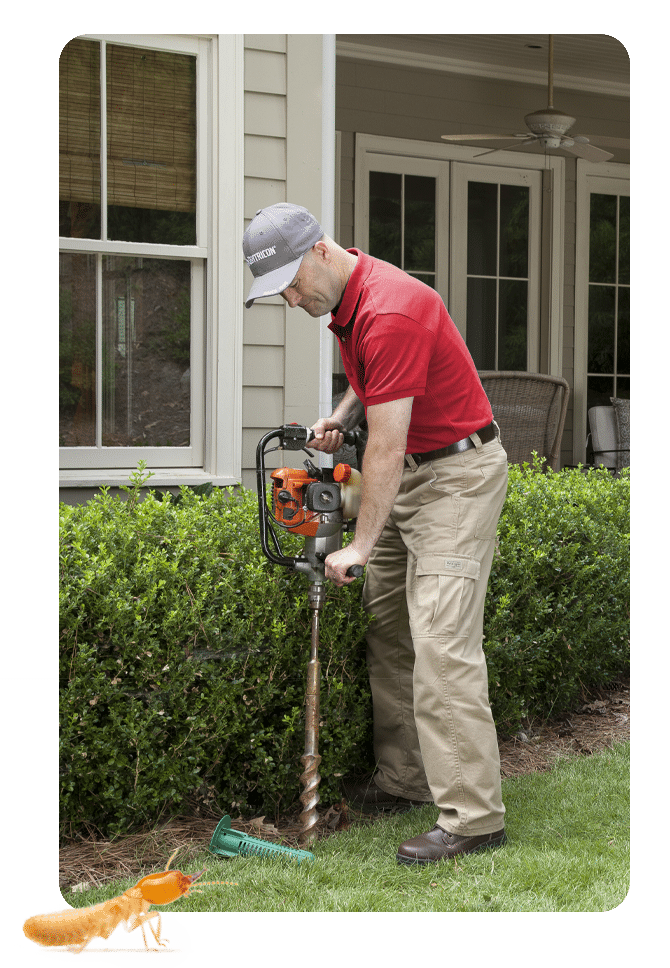
Stations are set into holes in the soil around the perimeter, with the lid flush with the ground. The University of Kentucky describes typical bait stations as set a foot or two from the foundation and 10 to 15 feet apart, with extra stations near woodpiles, stumps, moist areas and past damage. Lids are tamper-resistant and need a special key to open. There is no trenching and no drilling through the slab.
3. Termites find the bait
Termites can't see or smell bait in the ground. They find it the same way they find wood: by tunneling through the soil in search of food. Once workers find a station, they recruit nestmates to it. The manufacturer says its bait is more desirable to termites than wood. The University of Kentucky notes that termites forage most from spring through fall, and less in late fall and winter or when the ground is frozen, saturated or very dry.
4. The bait spreads through the colony
Workers feed on the bait and share it with the rest of the colony, including soldiers and young termites that never visit a station. Noviflumuron is an insect growth regulator: it doesn't kill on contact, it keeps termites from molting. The University of Kentucky explains that termites die within weeks of eating the bait, while trying to molt, and that this delay is what lets the bait reach nestmates first. As workers die off, the colony can no longer feed itself and declines.
5. The colony collapses
This is the slow part. OSU Extension says baiting often takes two, three or up to six months, and sometimes longer, and the University of Kentucky notes that some feeding can continue in the house in the meantime. When a heavy infestation needs a faster knockdown, a technician may combine bait with a liquid or foam treatment where termites are active.
6. Stations stay in place
Neighboring colonies can still move in later. The University of Kentucky stresses that a bait program includes ongoing inspection, monitoring and re-baiting as needed, and that because baits leave no pesticide in the soil, protection depends on the stations staying in place and being checked. Ask your provider how often your stations will be checked and what happens if termites show up again.
Above-ground stations for termites already inside
When termites are already working inside a wall or door frame, the manufacturer offers above-ground stations that are fastened right over an active mud tube or damaged wood. The termites feed on bait where they are already working, without drilling into walls to inject foam. The in-ground stations around the outside of the house stay in place as well.
Why Emtec has long used Sentricon
Emtec Pest Control has offered the Sentricon System to Oklahoma homeowners for many years, and it remains the termite treatment we recommend for most homes. The reasons are practical:
- Very little pesticide. A few stations of bait instead of hundreds of gallons of termiticide in the soil, and the bait stays inside locked stations.
- No drilling. No trenching along flower beds and no holes through the slab, porch or garage floor.
- It targets the colony. The bait is shared through the colony that is feeding on the house.
- Ongoing monitoring. The stations show new termite activity in the yard, often before it reaches the house.
Baiting is slower than a liquid treatment, and some homes are better served by a liquid or a combination. See Sentricon vs. liquid termite treatment for a fair comparison, and how long a termite treatment lasts for what keeps protection working over time.
Sentricon termite exterminator in Oklahoma
Emtec Pest Control has protected Oklahoma homes from termites since 1979. We inspect your home, install Sentricon stations where termites are most likely to forage, add above-ground stations where termites are already active, and keep watch on the stations after the colony is gone. We are the termite exterminator for Tulsa, Broken Arrow, Owasso, Jenks, Bixby, Sand Springs, Sapulpa, Stillwater, Oklahoma City, Edmond and nearby towns. Learn about our termite control service or contact us to schedule an inspection.
Frequently Asked Questions
What is the active ingredient in Sentricon?
Noviflumuron. It is an insect growth regulator that keeps termites from molting, and termites that can't molt die. It is one of the termite bait active ingredients registered by the EPA.
How long does Sentricon take to work?
Usually months rather than days. OSU Extension says termite baiting often takes two, three or up to six months, and sometimes longer, because termites first have to find the stations and then spread the bait through the colony.
Do Sentricon stations go inside the house?
The main stations go in the ground around the outside of the house. When termites are already active indoors, the manufacturer offers above-ground stations that are attached over active mud tubes or damaged wood so termites feed right where they are working.
Can I install Sentricon myself?
No. Sentricon is installed and serviced by pest control companies. OSU Extension notes that most termite baits are sold only to pest control companies, and it does not recommend do-it-yourself or over-the-counter termite baits.
Is Sentricon better than a liquid treatment?
It depends on the home. Baits use far less pesticide and no drilling; liquids act faster. Our Sentricon vs. liquid treatment guide compares them side by side.
Sources
- How a termite treatment with the Sentricon system works (opens in new tab)
- The Sentricon system: history of a revolution (opens in new tab)
- Termite Baits: A Guide for Homeowners (ENTFACT-639) (opens in new tab)
- Choosing a Pest Management Company to Protect Your Home Against Termites (EPP-7308) (opens in new tab)
- Termites: How to Identify and Control Them (opens in new tab)
- Termite swarming season (Pest e-Alert, May 1, 2008) (opens in new tab)