
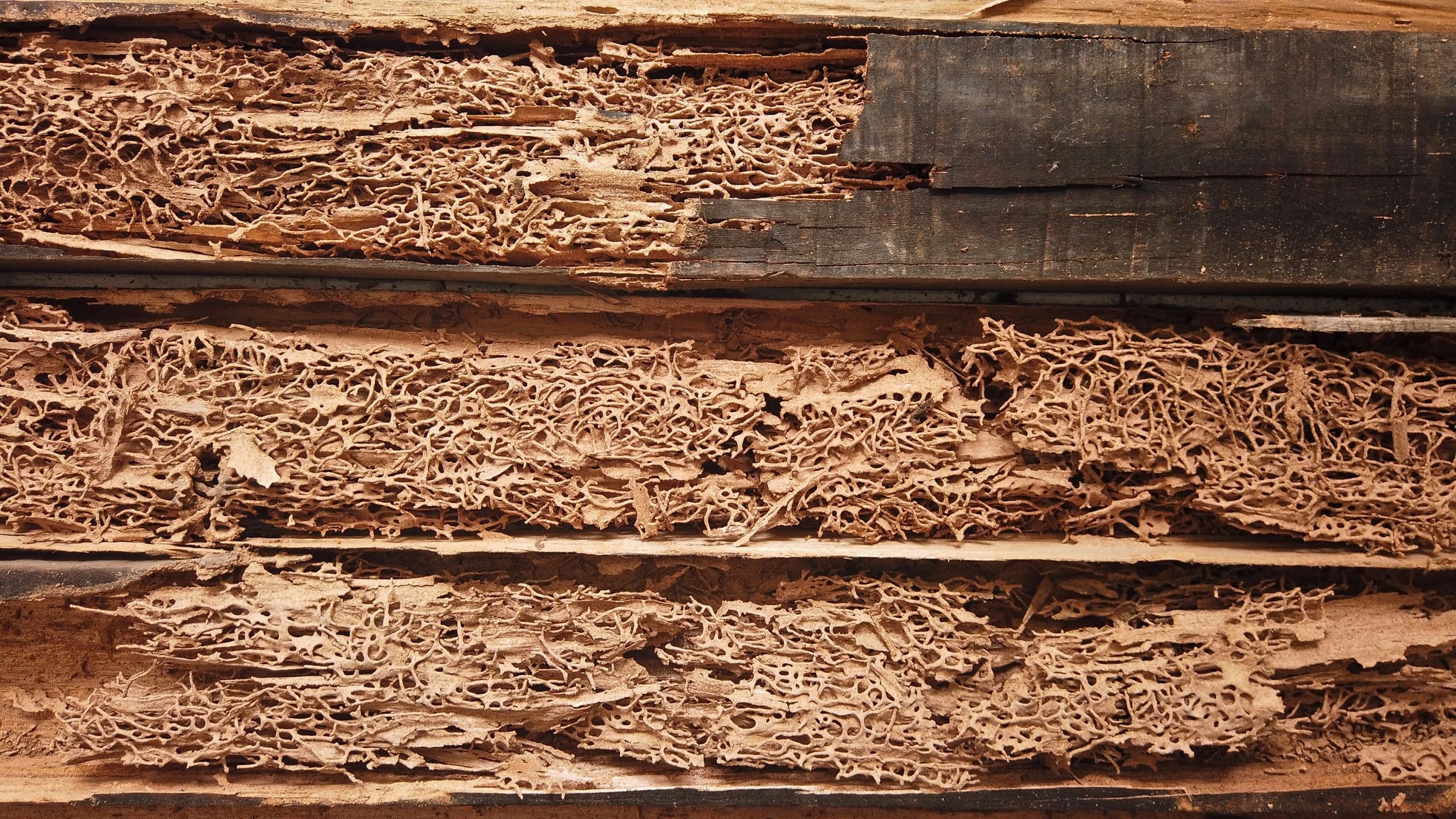
The most reliable signs of termite damage in an Oklahoma home are mud tubes on the foundation or walls, winged termites or their shed wings near windows and doors, and wood that is hollowed out along the grain with mud packed into the tunnels. Because termites eat wood from the inside and leave the surface in place, damage often goes unnoticed for years. Here is what each sign looks like, where to check, what is often mistaken for termites, and what to do if you find something.
Why termite damage is easy to miss
Almost all of Oklahoma's termites are subterranean termites. They live in the soil and come up into the house through cracks, joints and mud tubes, then feed inside the framing, subfloor and trim. The University of Kentucky notes that an infestation can go undetected for years while the outer surface of the wood stays intact, and that even experienced inspectors can miss hidden signs. Most people find termites one of two ways: a swarm in spring, or damage uncovered during a remodel.
The 6 signs of termites
1. Mud tubes
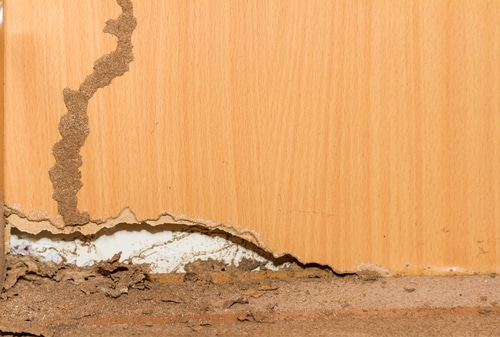
Subterranean termites build tunnels of soil, chewed wood and saliva to travel between the ground and the wood they are eating. These mud tubes are usually about the width of a pencil and run up foundation walls, piers, plumbing, sill plates and joists. Texas A&M AgriLife notes they can blend in with concrete or soil and can bridge across masonry to reach wood. Break a small section open: if you see creamy white termites inside, the tube is active. An empty tube does not prove the termites are gone, since they sometimes abandon one section and keep feeding elsewhere.
2. Swarmers or shed wings
Every spring, usually March through May in Oklahoma, mature colonies send out winged termites to start new colonies. Swarmers inside the house almost always mean an infestation, according to OSU Extension and the University of Kentucky. Look for them, or just their wings, on windowsills, in sinks and bathtubs, in spider webs and around light fixtures. See I saw termite swarmers, now what?
3. Wood hollowed out along the grain
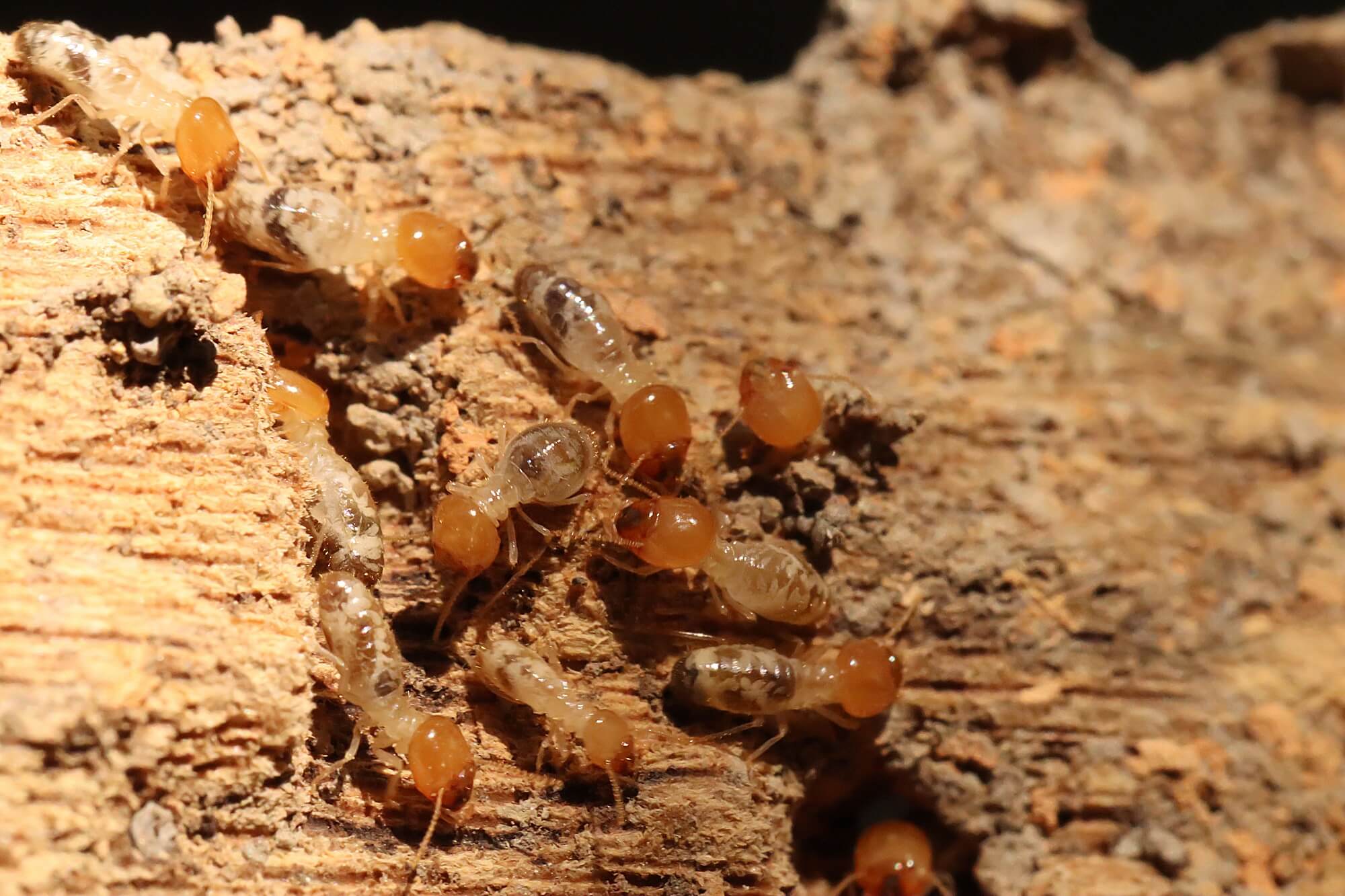
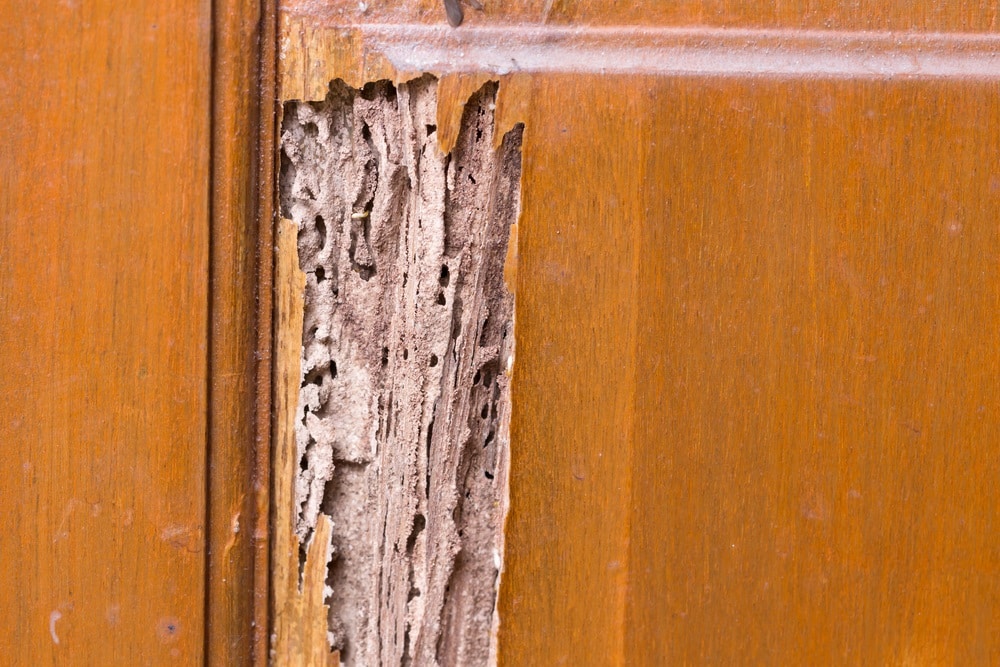
Termites eat the softer layers of wood and leave the harder grain lines, so damaged wood looks layered or honeycombed when it is opened up. The University of Kentucky and Texas A&M describe termite tunnels as running with the grain and lined with dried mud, soil or pale spotted material. That mud is the giveaway. Tunnels made by carpenter ants are clean and smooth.
4. Wood that sounds hollow or gives way
Tap exposed wood with a screwdriver handle. Damaged wood often makes a dull thud instead of a solid knock. The EPA suggests probing exposed wood with a flathead screwdriver: if the tip sinks in easily or breaks into a tunnel, have it inspected. Check baseboards, door and window frames, porch steps and any wood near the ground.
5. Blistered paint, rippled walls and tiny holes
UF/IFAS entomologists note that termites can hollow wood until only a paper-thin surface is left, which can look like blistered or peeling paint. The University of Kentucky adds that termites sometimes bore tiny holes through drywall or plaster, and that rippled or sunken spots in wallpaper or paneling can mean tunneling underneath. Water damage causes similar symptoms, so look for mud as well.
6. Mud in odd places
OSU Extension notes that termites plug small gaps with mud. Crusty dirt in cracks in drywall, between floorboards, along trim or in a concrete crack where there should not be any soil is worth a closer look. OSU also points to spots under sinks and around pipes, where humidity is high.
What isn't termite damage
Plenty of wood damage has nothing to do with termites. The common look-alikes in Oklahoma:
| What you see | Likely cause |
|---|---|
| Tunnels along the grain, packed with mud or soil | Subterranean termites |
| Smooth, clean galleries and piles of coarse sawdust nearby | Carpenter ants (see carpenter ants) |
| Round pinholes with fine, flour-like powder below them | Powderpost beetles |
| Small piles of hard, six-sided pellets | Drywood termites (rare in Oklahoma) |
| Soft, stringy wood that pulls apart by hand, in a wet spot, with no tunnels | Wood rot (fungal decay) |
The University of Kentucky describes powderpost beetle powder as feeling like flour or fine talc, and says fresh powder the color of new sawdust means an active infestation. UC IPM describes drywood termite pellets as six-sided and diagnostic for drywood termites, which are not native to Oklahoma. Texas A&M notes that fungal decay is often mistaken for termite damage. Rot and termites can also show up together, because termites are drawn to damp wood.
Where to check your home
- Outside: the foundation all the way around, porch steps, patios that touch the house, wood siding and trim near the soil, and where pipes and wires enter the house.
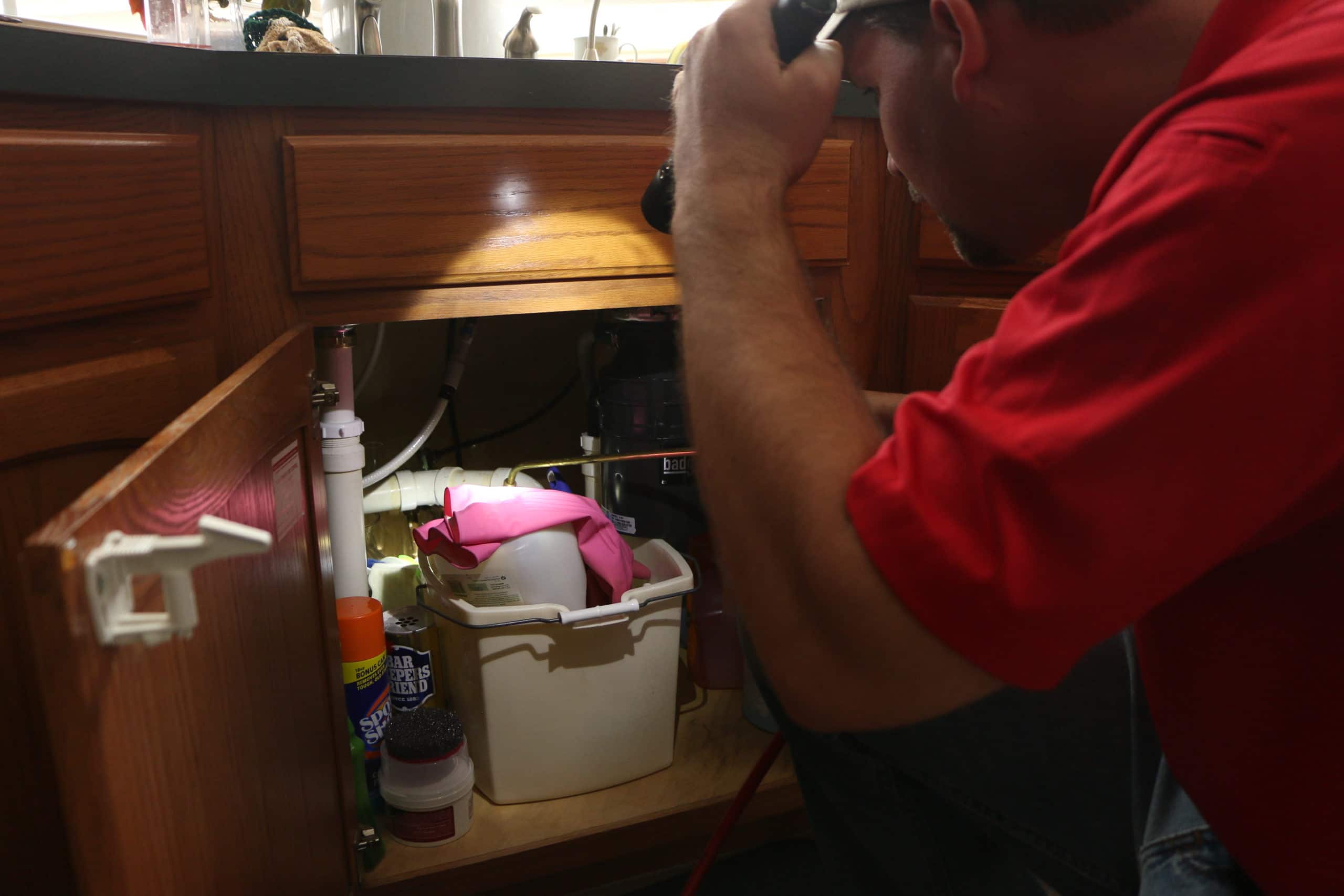
- Crawl space or basement: piers, sill plates, joists and the inside of foundation walls. Bring a flashlight and a screwdriver.
- Inside: baseboards, door and window frames, the floor under sinks, behind the water heater, and around tub drains on slab homes.
- Garage: the base of walls and the expansion joint where the slab meets the house.
- The yard: stumps, firewood, landscape timbers and fences. Termites here do not mean the house is infested, but they show that colonies are close.
Take photos of anything you find before you scrape it away, so an inspector can see exactly what was there.
Should you worry about termites outside?
Termites are in the soil across Oklahoma, so finding them in a rotting stump or the bottom of a firewood pile is common. The University of Kentucky says swarms from stumps or woodpiles in the yard are not necessarily cause for concern. Termites or swarmers coming from beside the foundation or from an attached porch or patio are different: they suggest the house itself may be infested. Moving firewood and wood debris away from the house helps either way. See what attracts termites to homes.
What to do if you find termite damage
- Don't panic. OSU Extension and the University of Kentucky both say termites work slowly. You have time to get an inspection and compare options.
- Don't spray store-bought insecticide. It kills the termites you can see but not the colony in the soil, and it can make it harder for an inspector to see where they are active.
- Get a thorough inspection and a written report. OSU recommends a report that notes active and inactive infestations and damage, the treatment needed and a diagram of the house. Our termite inspection guide covers what we check.
- Watch for pressure. Be wary of anyone who knocks on your door unannounced, pushes you to sign that day or prices the job by the gallon. Those are warning signs OSU lists.
- Plan repairs after treatment. Replace structural wood that is badly damaged, and fix the leak or drainage problem that drew termites in.
Termite exterminator for Oklahoma homes
Emtec Pest Control has been finding and treating termites in Oklahoma homes since 1979. Our technicians check the foundation, crawl space, plumbing penetrations and other places termites get in, tell you whether the damage is old or active, and lay out the options, including the Sentricon® System that Emtec has long recommended. If termites are the problem, we are the termite exterminator for Tulsa, Broken Arrow, Owasso, Jenks, Bixby, Sand Springs, Sapulpa, Stillwater, Oklahoma City, Edmond and nearby towns. Learn more about our termite control service or contact us to schedule an inspection.
Frequently Asked Questions
What does termite damage look like?
Termite-damaged wood is hollowed out along the grain, and the tunnels are lined or packed with dried mud or soil. The surface is often left intact, so it may only show as blistered or peeling paint, a rippled wall covering, or wood that sounds dull and gives way when you press a screwdriver into it.
What are the first signs of termites?
For most Oklahoma homeowners, it is a spring swarm of winged termites inside the house, a pile of shed wings on a windowsill, or a pencil-wide mud tube running up a foundation wall. Termites inside the house almost always mean an infestation.
Can you see termite droppings?
Usually not with Oklahoma termites. Subterranean termites use their droppings and soil to build mud tubes and line their tunnels. Small piles of hard pellets below tiny holes point to drywood termites, which are not native here, and fine flour-like powder points to powderpost beetles.
Should I worry if I see termites outside?
Not automatically. Termites in a stump, firewood pile or fence post across the yard do not mean the house is infested. Termites or swarmers coming from next to the foundation, an attached porch or a patio are more concerning, and that is a good time to have the house inspected.
How fast do termites cause damage?
Slowly. OSU Extension and the University of Kentucky both note that termites damage wood slowly, so you have time to get an inspection and compare options. The risk is that damage can build up for years before anyone notices.
Sources
- Termite Control: Answers for Homeowners (ENTFACT-604) (opens in new tab)
- Termite swarming season (Pest e-Alert, May 1, 2008) (opens in new tab)
- Choosing a Pest Management Company to Protect Your Home Against Termites (EPP-7308) (opens in new tab)
- Subterranean Termites (E-368) (opens in new tab)
- Native Subterranean Termites (EENY-212) (opens in new tab)
- Powderpost Beetles (ENTFACT-616) (opens in new tab)
- Drywood Termites (Pest Notes) (opens in new tab)
- Termites: How to Identify and Control Them (opens in new tab)