
To get rid of flies in your yard, find what they are breeding in and remove it. Flies do not hang around a yard by chance. A crowd of flies means something close by is feeding them and giving them a place to lay eggs: pet waste, garbage, wet grass clippings, compost or fallen fruit. Clean that up and the numbers drop within a week or two. Traps, fans and screens take care of the stragglers.
Why flies show up in your yard
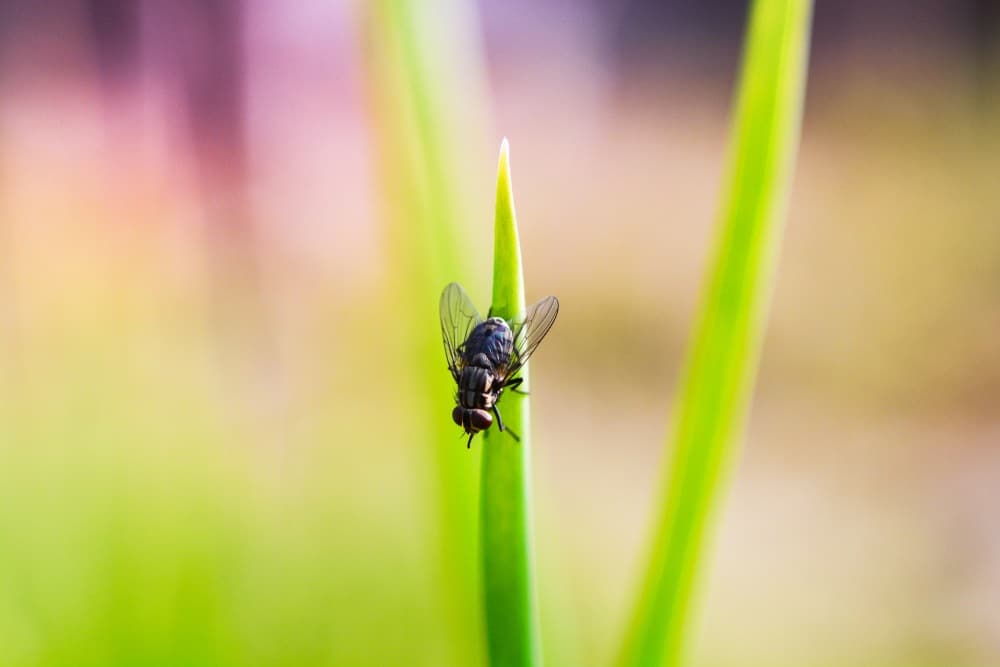
Most of the flies around a house in Oklahoma are house flies and blow flies (the shiny green or blue "bottle flies"). University of California IPM experts explain that house flies lay their eggs in warm, moist organic matter such as manure, garbage, lawn clippings and rotting fruit and vegetables, and that blow flies mostly develop in food waste and pet waste. In summer heat either one can go from egg to adult in as little as seven days, and each female house fly lays several batches of 100 to 150 eggs.
That fast turnover is why a single forgotten trash bag or a corner of the yard the dog uses can turn a few flies into a cloud by the weekend. It is also why the fix works quickly once you find the source.
Which flies are you seeing?
Knowing the fly tells you where to look.
| Fly | What it looks like | Where it breeds | What fixes it |
|---|---|---|---|
| House fly | Gray, about 1/4 inch, four dark stripes on the back | Pet waste, garbage, wet grass clippings, compost | Remove the breeding material, lidded trash, bait traps |
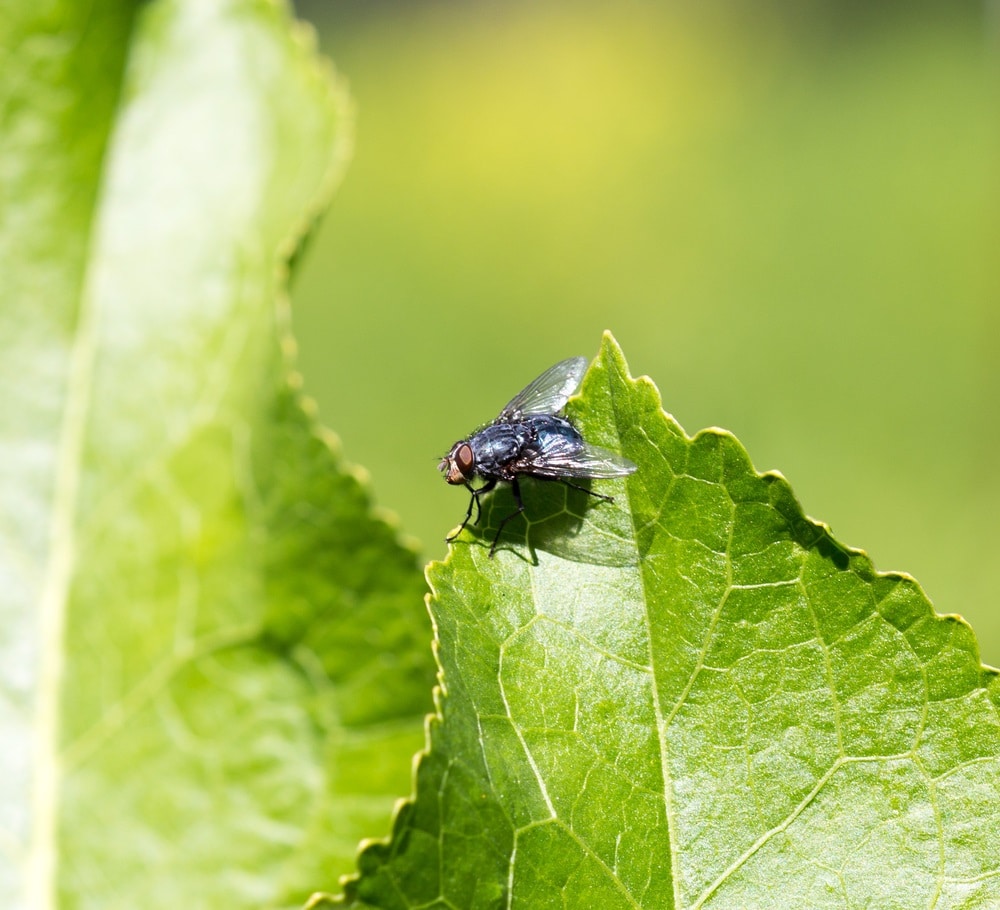
| Blow fly (bottle fly) | Shiny metallic green or blue, a little bigger than a house fly | Food waste in trash cans, pet waste, dead animals | Bag food waste, wash cans, pick up pet waste |
| Fruit fly | Tiny, about 1/8 inch, tan with red eyes | Overripe fruit, recycling bins, drains, empty cans and bottles | Remove ripe produce, rinse recycling, vinegar trap |
| Cluster fly | Dull gray, sluggish, slightly larger than a house fly | Earthworms in the lawn (larvae are parasites of earthworms) | Seal gaps before late summer; not a sanitation problem |
| Fungus gnat | Tiny, dark, delicate, weak fliers | Wet potting soil and mulch | Let soil dry between waterings |
For more look-alikes, see the "If it flies" section of our Oklahoma Bug ID Guide.
Step 1: Find and remove the breeding sources
This is the step that does most of the work. Every fly expert says the same thing: sanitation first, everything else second.
- Pet waste. Pick it up at least once a week, and more often in summer heat. Bag it before it goes in the outdoor trash. Mowing over it spreads the smell and does not solve the problem.
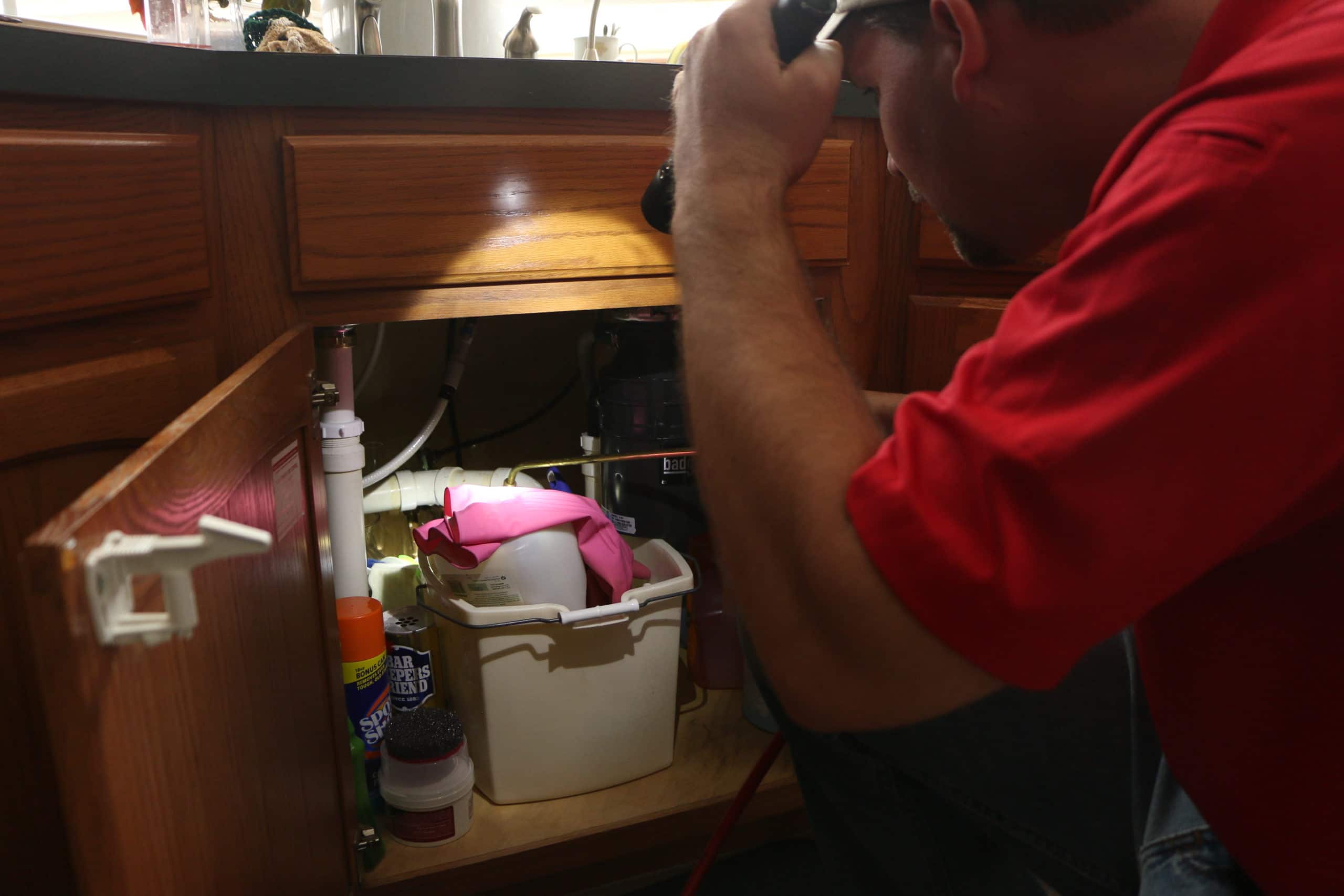
- Garbage. Put food waste in plastic bags inside cans with tight-fitting lids, keep the cans away from doors and the patio, set them out for pickup every week and wash them now and then with soap and water. A can with a cracked lid or a bag left beside it is a fly nursery.
- Grass clippings and leaves. Wet clippings left in a pile ferment, and Texas A&M lists fermenting lawn clippings as a common house fly breeding site. Spread them thin, bag them or compost them properly.
- Compost. Keep the pile as far from the house as you can and keep it "cooking." Texas A&M notes that compost held above 120°F kills fly eggs and maggots. A cool, soggy pile breeds flies.
- Fallen fruit, spilled feed and pet food. Pick up fruit under trees, do not leave pet food bowls outside and clean up spilled bird seed or livestock feed.
- Grills and outdoor kitchens. Empty the grease trap and wipe down the grill after each cookout.
Check the neighbor's side of the fence too. Flies follow smells, so a source two yards over can keep sending them your way.
Step 2: Use traps that actually work outdoors
- Baited fly traps. Inverted-cone traps with a fly bait inside work well outdoors, as long as they are not competing with open garbage or pet waste nearby. They smell bad, so the University of California recommends hanging them away from buildings. Put them at the edge of the yard, between the flies' source and your patio, not next to the table.
- Fly baits around trash. Baits labeled for house flies can cut adult numbers around trash storage areas, but only if the garbage itself is closed up.
- Sticky ribbons. These are fine for a few flies in a garage or shed. They do not make a dent outdoors and do little against blow flies.
Step 3: Make the patio less inviting
- Cover food until it is time to eat, and keep drinks in cups with lids or bottles with caps.
- Run a fan. Small flying insects have a hard time in moving air, and a fan pointed across the table keeps flies and mosquitoes from settling. More patio tips are in our guide to keeping bugs away from your patio and deck.
- Fix screens and keep doors closed so the flies outside stay outside.
What does not help much
- Bug zappers. A University of Delaware study of a backyard zapper found that only 0.22% of the insects it killed were biting flies; nearly half were harmless insects from nearby water, and more than 13% were predators and parasites that eat pests. University of California experts also say not to use zappers near food, because they scatter insect parts.
- "Fly-repelling" plants. Lavender, mint, basil and marigolds are pleasant to have around a patio, but there is no good evidence that growing them clears flies from a yard. Colorado State University Extension makes the same point about plants sold to repel mosquitoes: none of them work just by growing in the landscape.
- Spraying without cleaning up. An insecticide spray knocks down the flies you can see. If the breeding source is still there, a new crop arrives in about a week.
Fall flies on the sunny side of the house
If you see dozens of slow, gray flies sunning on your south and west walls in September and October, those are most likely cluster flies. Colorado State University explains that their larvae live as parasites in earthworms, so they have nothing to do with garbage or how clean your house is. In late summer and fall the adults gather on warm walls, then slip into attics and wall voids through gaps around windows, vents and siding to spend the winter. They do not breed indoors, but on warm winter days they wake up and wander into living areas.
The fix is exclusion, and timing matters. Seal gaps, repair screens and cover vents with fine mesh by mid-August, and no later than Labor Day. Once they are inside the walls, a crack-and-crevice treatment on the outside of the house only supplements sealing. Our Oklahoma Bug ID Guide covers other fall invaders that use the same gaps.
Flies that move indoors
Fruit flies are the ones that most often follow produce inside. The University of Kentucky notes they are only about 1/8 inch long, can go from egg to adult in about a week and breed in any moist film of fermenting material, including recycling bins, drains and empty cans. Eat, refrigerate or toss ripe fruit, rinse recycling before it goes in the bin and keep 16-mesh screens on windows and doors. A jar with a little cider vinegar and a paper funnel in the top makes a simple trap. If you still see them, tape a clear plastic bag over a drain overnight; flies in the bag mean the drain is the source.
When flies keep coming back, call an exterminator
If you have cleaned up the obvious sources and the flies keep coming, an exterminator can help find the breeding site you missed, whether it is under a deck, in a neighbor's yard or in a drain, and treat the outdoor surfaces where flies rest. Emtec Pest Control has been helping homeowners and businesses with flies and other outdoor pests since 1979 in Tulsa, Broken Arrow, Owasso, Jenks, Bixby, Sand Springs, Sapulpa, Stillwater, Oklahoma City and Edmond. See our preventative pest control service or contact us to talk about the flies around your home.
Frequently Asked Questions
Why are there so many flies in my yard all of a sudden?
Something nearby is feeding or breeding them. The usual culprits are pet waste, a garbage can with a loose lid, piles of wet grass clippings, a compost pile or fallen fruit. In warm weather house flies and blow flies can go from egg to adult in about a week, so one forgotten source can produce a lot of flies quickly. A neighbor’s yard can be the source too.
How do I get rid of flies in my backyard fast?
Pick up pet waste, bag the garbage and close the lids, rake up wet clippings and fallen fruit, then hang a baited fly trap at the edge of the yard, away from where you sit. Put a fan on the patio for the evening. Sprays give only short relief if the source is still there.
What keeps flies away from a patio?
Covering food, keeping drinks lidded, emptying trash away from the seating area and running a fan. Plants such as lavender, mint and marigolds are often sold as fly repellents, but there is no good evidence that growing them clears flies from a yard.
Do bug zappers kill flies?
They kill some, but a University of Delaware study found that most of what zappers kill are harmless insects, and only a fraction of a percent were biting insects. University of California experts also advise against using them near food because they scatter insect parts. A baited fly trap placed away from the patio works better for house flies.
Why are flies gathering on the side of my house in the fall?
Those are usually cluster flies. They rest on sunny south and west walls in late summer and fall, then crawl into attics and wall voids to spend the winter. Their larvae live in earthworms, so they have nothing to do with garbage or a dirty house. Seal gaps around windows, vents and siding before late summer to keep them out.
Sources
- Flies (Pest Notes) (opens in new tab)
- IPM Action Plan for House Flies and Filth Flies (opens in new tab)
- Cluster Flies and Other Winter Flies (opens in new tab)
- Fruit Flies (ENTFACT-621) (opens in new tab)
- Bug Zappers are Harmful, Not Helpful (opens in new tab)
- Plants that repel mosquitoes (opens in new tab)