
The right pest control provider is the one that identifies your pest correctly, explains its plan in writing, holds a valid Oklahoma pesticide license and stands behind its work. Price matters, but the EPA's own advice is to look for quality and value rather than the lowest quote. Most pest problems can wait a few days while you compare, so take the time to ask the questions below.
Signs it is time to call a professional
- Droppings. Roach droppings look like coffee grounds or pepper; mouse droppings look like dark grains of rice.
- Damage. Gnawed wires or food packages, hollow-sounding wood, mud tubes on the foundation or piles of shed wings.
- Pests in daylight. Roaches out during the day usually means they have run out of room to hide.
- Nests. Shredded paper or insulation, egg sacs, wasp nests near doors or soil mounds in the yard.
- Odors or sounds. A musty smell in cabinets, or scratching in walls and ceilings at night.
- Lots of spiders. They usually mean there are plenty of insects to eat.
- It keeps coming back. You have treated twice and the problem returns.
If you are on the fence, DIY vs. professional pest control walks through what you can handle yourself.
1. Know what you need
Write down what you have seen, where and when, and take a photo if you can. That helps you compare answers. Also decide whether you need a one-time fix, ongoing prevention or a termite plan, and whether the property is a home or a business; some companies focus on one or the other.
2. Check the license
In Oklahoma, companies that apply pesticides for hire must be licensed by the Oklahoma Department of Agriculture, Food and Forestry (ODAFF). The EPA recommends confirming that the person treating your home is a certified applicator or works under one, and verifying the license with the state Department of Agriculture. Ask the company for its license number and a copy of the license. ODAFF's Consumer Protection Services division is also where pesticide misuse complaints go.
3. Check the track record
- Ask how long the company has been in business and at its current address.
- Look for complaints with the Better Business Bureau and the state.
- Read recent reviews and look for patterns, including how the company responds to unhappy customers.
- Ask neighbors, friends and family who they use and whether pests came back.
- Ask for references and call a few, as the EPA suggests.
4. Expect an inspection before a plan
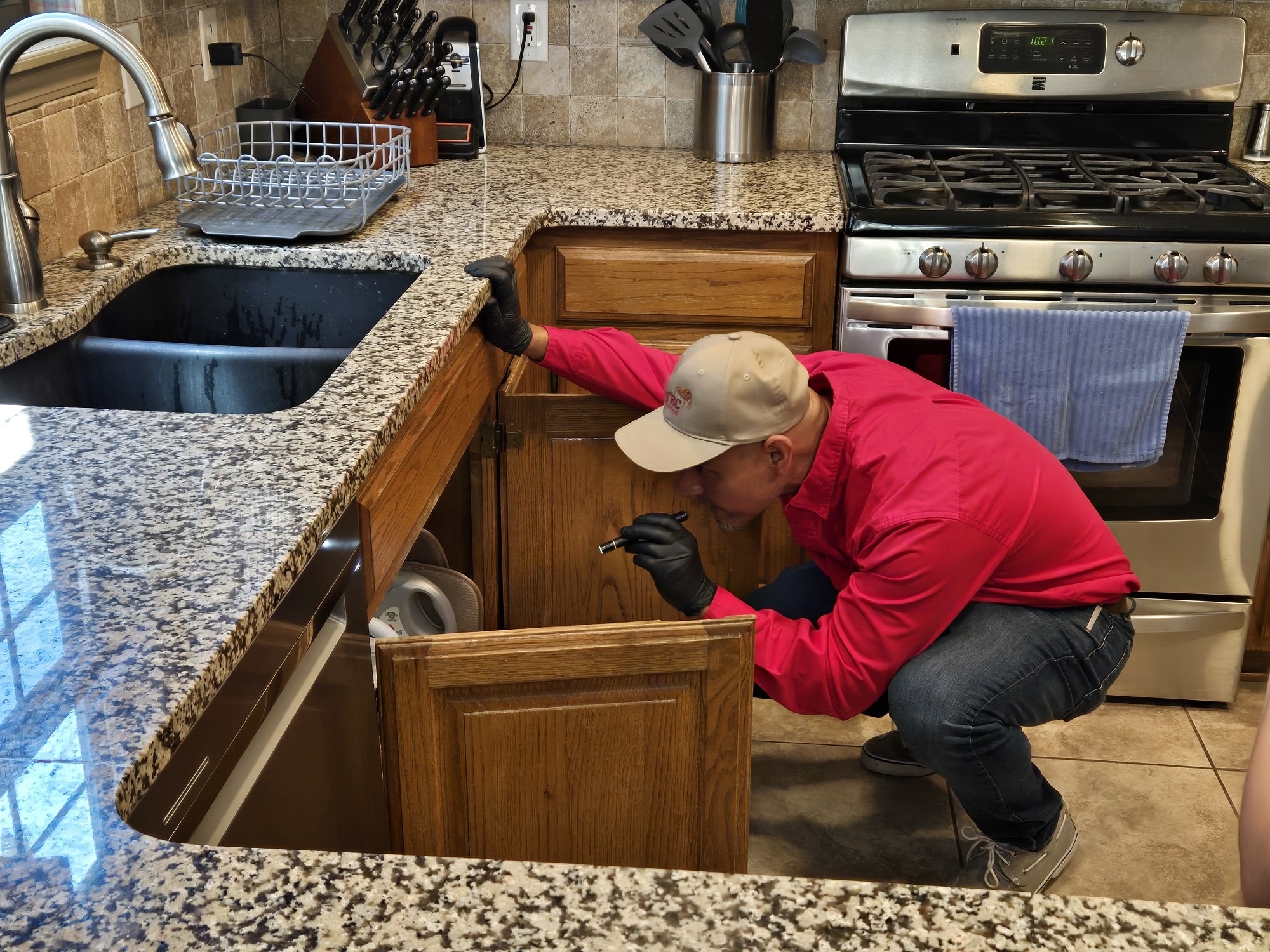
A good provider looks before it quotes. The technician should find out which pest it is, where it is living, how it is getting in and what conditions are feeding it, then recommend a plan for your property. Be wary of anyone who quotes a price over the phone for a problem they have not seen, especially termites. For what a thorough termite visit covers, see what we check in a termite inspection.
5. Ask how they treat
- Do they use integrated pest management? IPM combines inspection, sanitation, exclusion, traps and baits with targeted treatments, so products go only where they are needed.
- What will they apply, and where? The EPA says to ask for the pesticide labels and application rates; reliable companies will provide them.
- How will they protect your family and pets? They should explain how long to stay out of treated areas and what to cover or move. See the preparation checklist.
- What should you change? If a technician recommends non-chemical steps such as fixing a leak or sealing a gap, the EPA advises following them.
6. Read the contract and the price
- Get the plan and the price in writing, including what is included and what costs extra.
- Ask how the price is set: per visit, per plan, or by the size of the home or the job.
- Ask how often visits happen, what each one includes and how to cancel. The EPA notes routine treatments are generally unnecessary unless there is a constant problem, and that homeowner contracts should include periodic inspections.
- Ask what the company does if pests come back between visits.
- For termite plans, ask exactly what is covered, whether repairs are included, whether there are renewal or inspection fees and what happens if termites return.
Red flags the EPA warns about
- Pressure to sign today, especially claims that your house is about to fall down.
- Door-to-door sales, or someone who shows up uninvited with bugs "found at your neighbor's".
- A "secret formula", or claims of a government endorsement (agencies do not endorse companies).
- Prices quoted per gallon, or a discount for using "leftover" material.
- Pest control bundled with unrelated services or a same-day-only deal.
- No listed or working phone number.
7. Look at the service, not just the treatment
How quickly does the company return calls? Does it answer your questions plainly? Will someone come back if you still see pests? Good communication now is a fair preview of what service will be like later.
Regular inspections catch problems early
Many of the costliest pest problems, termites above all, stay hidden until the damage is done. Periodic inspections find conditions such as moisture, wood-to-soil contact and new entry points before pests take advantage, and they line up well with Oklahoma's seasons; see the Oklahoma pest calendar. Learning the warning signs yourself helps too: our pest guides cover how to identify the most common pests in the state.
Your questions checklist
- What is your Oklahoma pesticide license number?
- How long have you been in business here?
- What pest do you think this is, and why?
- What will you apply, where, and can I see the labels?
- What do I need to do before and after the visit?
- How many visits are included, and what does each include?
- What happens if pests come back?
- How do I cancel?
Choosing an exterminator in Oklahoma
We would be glad to be on your list. Emtec Pest Control has served Oklahoma homes and businesses since 1979, and our technicians in the red shirts are happy to take your questions. We inspect first, explain what we find and put the plan in writing. Our preventative pest control plan starts with an initial service and continues with return visits, and we also offer termite control and commercial pest control. We are the local exterminator for Tulsa, Broken Arrow, Owasso, Jenks, Bixby, Sand Springs, Sapulpa, Stillwater, Oklahoma City and Edmond. Contact us with your questions.
Frequently Asked Questions
How do I check that a pest control company is legitimate in Oklahoma?
Ask for the company's Oklahoma pesticide license number and confirm it with the Oklahoma Department of Agriculture, Food and Forestry, which licenses commercial pesticide applicators. Also check how long the company has been at its current address and look for complaints with the Better Business Bureau, as the EPA suggests.
What questions should I ask a pest control company?
Ask what pest they think it is and why, what they will apply and where, what you need to do before and after, how many visits the plan includes, what happens if pests come back, and for a copy of their license and the product labels. The EPA says reliable companies will provide those documents.
Do I need a recurring pest control contract?
It depends on the pest and the property. The EPA notes routine treatments are generally unnecessary unless there is a constant problem, and that homeowner contracts should include periodic inspections. Ask how often visits happen, what each visit includes and how to cancel.
What are signs I need professional pest control?
Droppings, gnaw marks, shed wings or mud tubes; insects seen in daylight; nests or nesting material; musty odors or scratching in walls; damage to wood, wiring or stored goods; and a problem that returns after you have treated it yourself.
Should I pick the cheapest pest control quote?
Not on price alone. The EPA advises looking for quality and value. A low quote that skips the inspection, uses the wrong product or needs repeat visits can cost more than a careful plan that solves the problem.