
A black widow bite often starts as a sharp pin prick and then turns into pain that spreads, sometimes with muscle cramps in the belly or chest, sweating and nausea. The spider behind it is easy to recognize once you know what to look for: the female is glossy black with a round belly and a red hourglass on the underside. Oklahoma State University Extension calls the black widow the most venomous spider native to North America, but the bite is treatable and deaths are rare. Here is how to identify one, what to do if you are bitten, and how to keep widows away from your home.
Medical emergency? Call 911 for trouble breathing, chest pain or a severe reaction. For advice on a bite, Poison Help is free at 1-800-222-1222. This article is general information, not medical advice.
How to identify a black widow
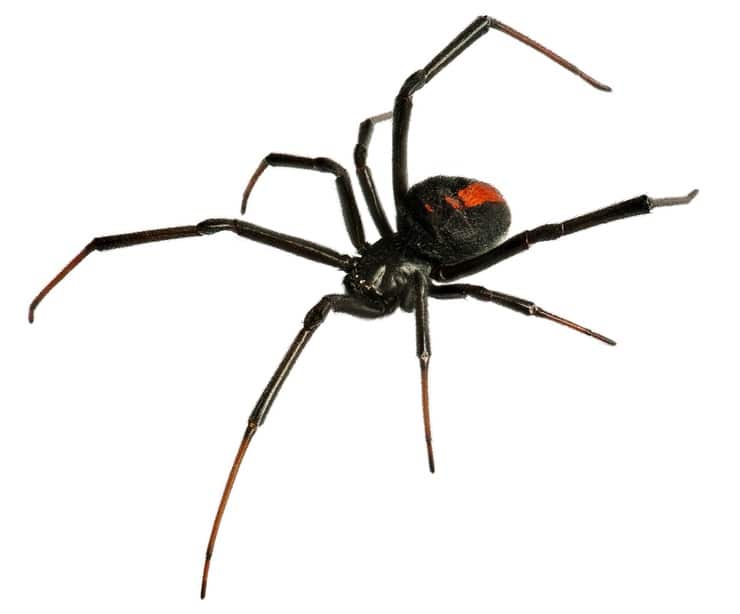
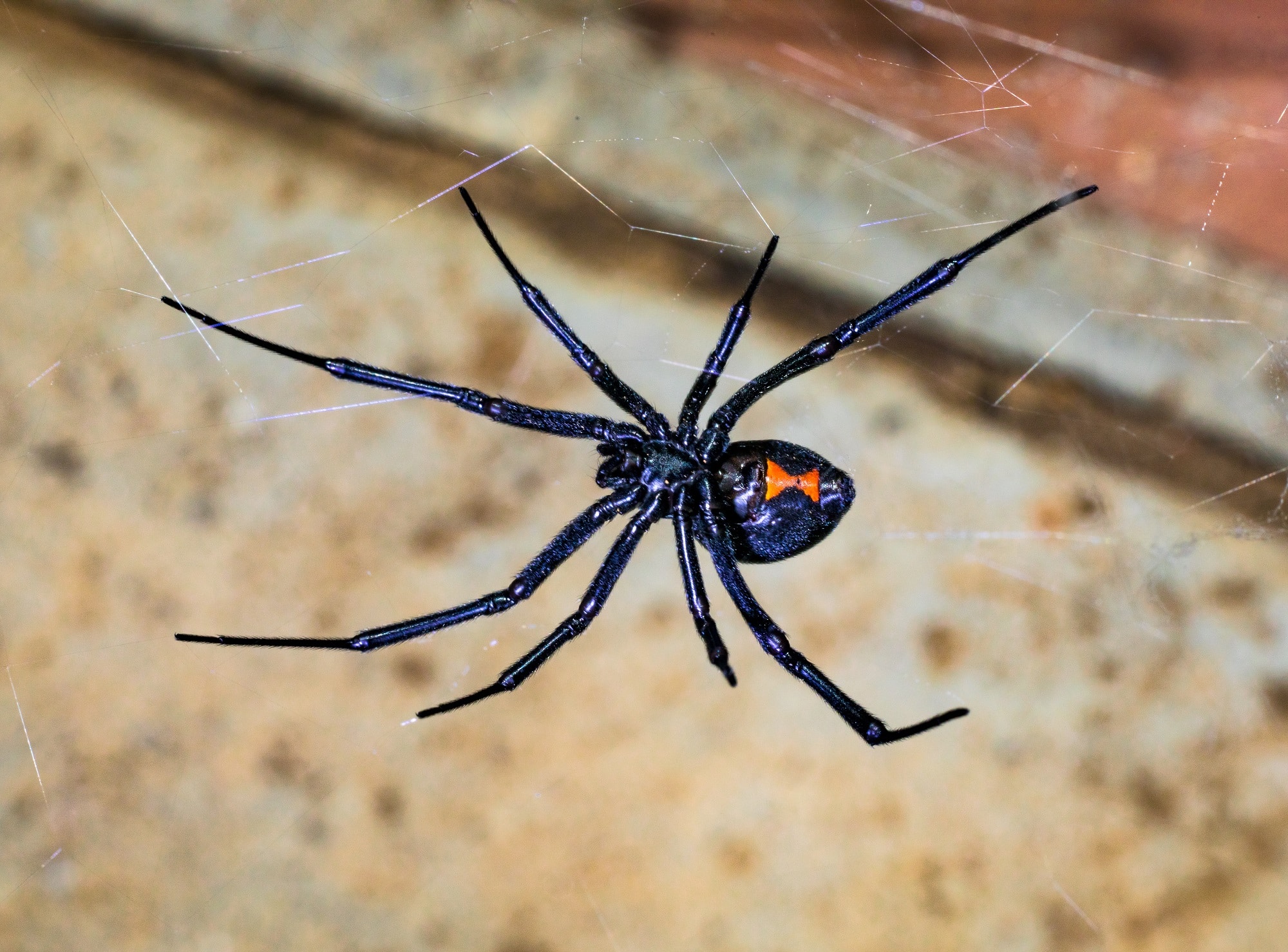
The species Oklahomans meet is the southern black widow (Latrodectus mactans). OSU Extension describes it this way:
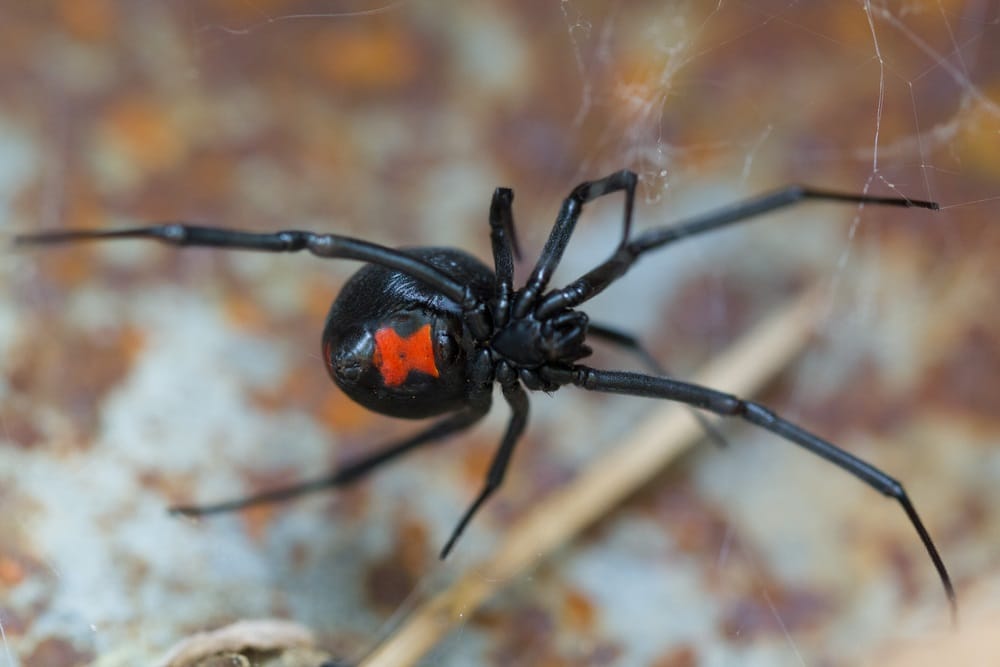
- Female: glossy black, round and never hairy, with a reddish hourglass on the underside of the abdomen. About an inch and a half across with legs extended. She has eight eyes in two rows.
- Male: much smaller, with three light streaks on the abdomen. Males are rarely involved in bites.
- Young widows: can be marked with lighter spots or stripes, so a spider without a clear hourglass may still be a widow.
The hourglass is not always complete. On some females it is broken into two spots, and you usually have to see the underside to spot it. If a spider is shiny black with a round, bulbous belly, treat it as a widow and do not handle it.
The web
Black widow webs are messy and irregular, with strong, sticky strands, built close to the ground or tucked under a ledge. The CDC notes that widows build webs between objects, and that bites often happen when people put a hand into one.
Where black widows live in Oklahoma
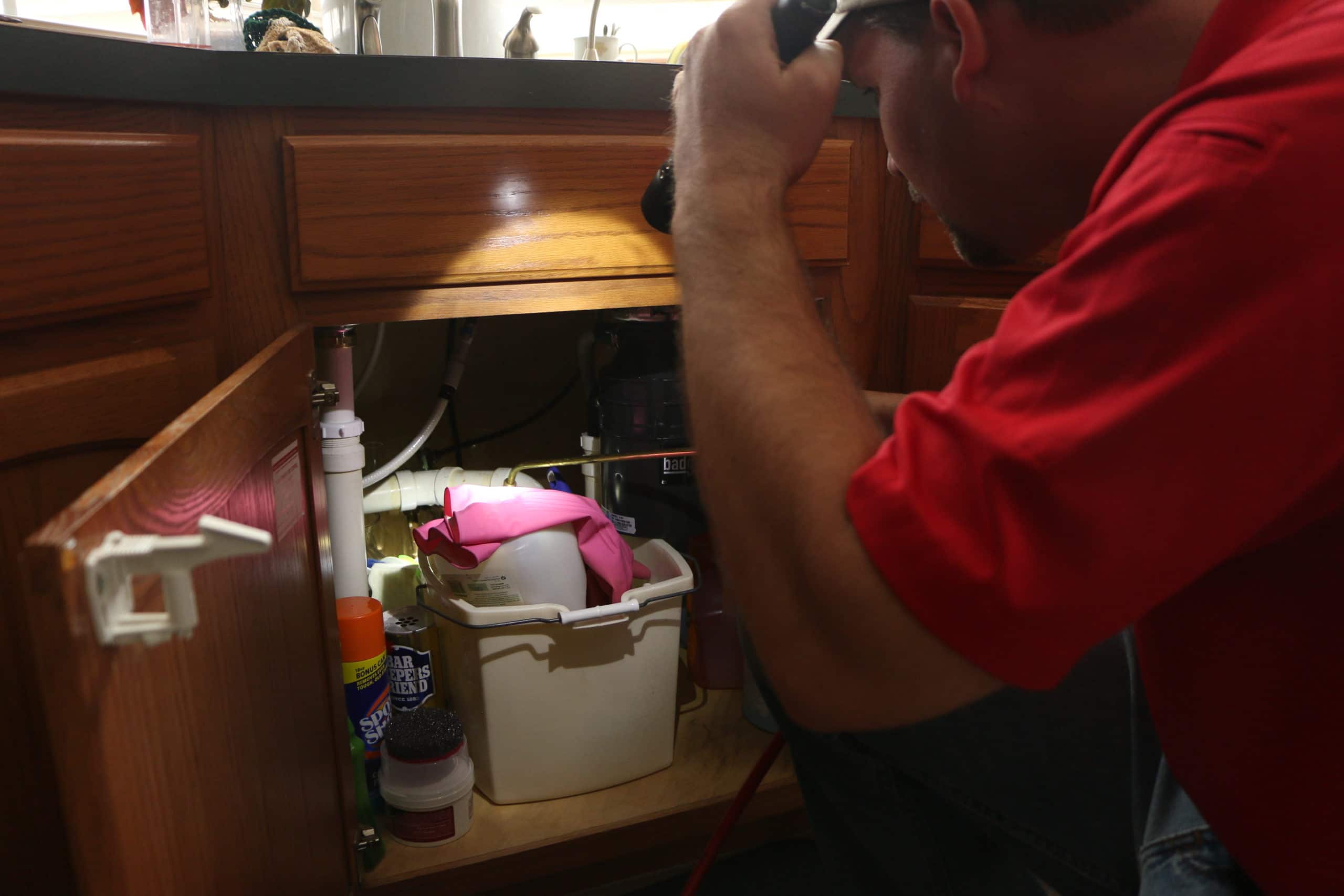
Widows live in town and country. OSU Extension lists houses (under eaves), trash cans, woodpiles, outdoor restrooms and rodent burrows, and notes that cold and drought can push them into buildings. Our technicians also find them in garages, sheds, crawlspaces, meter and utility boxes, under patio furniture, in stacked flowerpots and in shoes, boots and gloves left outside. Black widows can stay active year round in sheltered spots.
What a black widow bite feels like
Black widow venom is a nerve toxin. According to OSU Extension and the CDC:
- The bite usually feels like a pin prick, and you may see two small puncture marks or almost nothing.
- Pain at the bite grows and can spread to the chest, belly or whole body.
- Muscle pain and cramping, sometimes hard and rigid belly muscles.
- Sweating, chills, fever, headache, nausea and vomiting.
- Anxiety, restlessness and high blood pressure.
- In severe cases, difficulty breathing.
OSU Extension reports that people usually recover in one to five days. Children, older adults and anyone with heart disease or other serious health conditions are more likely to have a severe reaction.
First aid for a black widow bite
The CDC recommends these steps:
- Stay calm.
- Identify the spider if you can do it safely. A photo, or the spider in a sealed jar, helps the doctor.
- Wash the bite with soap and water.
- Put a cold, damp cloth or ice on the bite to reduce swelling and pain.
- Raise the bitten arm or leg if you can.
- Do not try to cut the bite, suck out the venom or use a tourniquet.
- Get medical care.
Treatment usually focuses on relieving pain and muscle cramps. OSU Extension notes that a specific antivenom is available for black widow bites, and doctors may use it for severe cases.
Black widow myths
- "Black widows are aggressive." They are not. They bite in self-defense, usually when pressed against skin in a shoe, glove or web.
- "Every bite is deadly." Deaths are rare, and many bites cause only local pain. Still, every suspected widow bite deserves medical attention.
- "No hourglass means no widow." Young widows and some adults have broken or missing hourglass marks.
- "The female always eats the male." It happens, which is where the name comes from, but many males survive mating.
How to keep black widows away from your home
- Wear gloves when moving firewood, rocks, boards, flowerpots and stored items, and when reaching into meter boxes or under decks.
- Shake out shoes, boots and gloves that have been left in the garage or outside.
- Stack firewood off the ground and away from the house, and clear brush, debris and junk piles near the foundation.
- Clean garages, sheds and crawlspaces regularly. OSU Extension notes that spiders avoid frequently disturbed areas.
- Seal the house with caulk, weather stripping and intact screens, and hose down webs under eaves.
- Cut down the insects widows feed on, and deal with rodents, whose burrows widows also use.
Our guide to getting rid of spiders has more prevention tips, and the brown recluse guide covers Oklahoma's other dangerous spider.
Black widow exterminator in Tulsa and Oklahoma City
If you are finding black widows around your home, especially near doors, play areas or where kids and pets spend time, call a professional rather than spraying on your own. Emtec Pest Control has been Oklahoma's spider exterminator since 1979. Our technicians inspect the places widows hide, treat the webs, cracks and harborage around your home, remove webs and egg sacs, and help you take away what is drawing them in. We serve Tulsa, Broken Arrow, Owasso, Jenks, Bixby, Stillwater, Oklahoma City, Edmond and nearby towns. Learn about our spider control service or contact us.
Frequently Asked Questions
What does a black widow bite look like?
Often very little. The CDC notes two small puncture marks, and some people see only slight redness or nothing at all. The symptoms, especially spreading pain and muscle cramps, are what tell you it may be a widow bite.
How long do black widow bite symptoms last?
Oklahoma State University Extension reports that people typically recover in one to five days. Get medical care rather than waiting it out, since treatment can ease severe pain and cramping.
Can a black widow bite kill you?
Deaths are rare. The CDC calls death extremely rare, and an antivenom is available for severe cases. Young children, older adults and people with heart or other health conditions are the ones to get to care quickly.
Are male black widows dangerous?
Male widows are much smaller, have light streaks instead of a bold hourglass, and are rarely involved in bites. Bites that cause symptoms come from females.
Where do black widows hide in Oklahoma?
Woodpiles, under eaves, around trash cans, in sheds and garages, in utility and meter boxes, under outdoor furniture, in rodent burrows and in shoes or gloves left outside.