
No, the hobo spider is not found in Oklahoma. It is a European spider that settled in the Pacific Northwest, and its known range runs from British Columbia south through Oregon and east to Idaho, Montana, Wyoming, Colorado and northern Utah. If you saw a brown spider with a funnel web in Oklahoma, it is almost certainly a grass spider, and you can relax: the hobo spider's reputation as a dangerous biter does not hold up either.
What is a hobo spider?
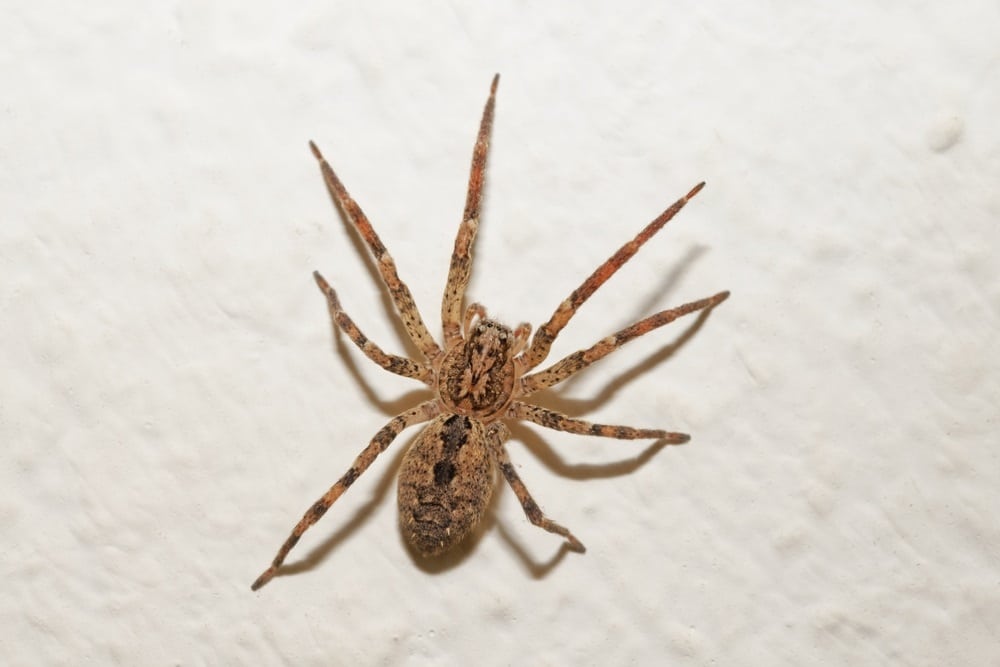
The hobo spider (Eratigena agrestis, formerly Tegenaria agrestis) is a funnel weaver native to Europe. It arrived in the Pacific Northwest in the 20th century and spread from there. In Seattle it has been pushed out in many places by another European import, the giant house spider.
Hobo spider identifying characteristics
The University of California's pest notes, written by spider researcher Rick Vetter, describe the hobo spider like this:
- Color: light brown with paler markings.
- Size: about one-half to five-eighths of an inch of body length.
- Eyes: eight, in two rows of four.
- Web: almost always hidden under objects such as boards, rocks and stored items, and often not obviously funnel-shaped.
The honest answer, though, is that you cannot identify a hobo spider by looking at it. Vetter and emergency physician Geoffrey Isbister note that color is not reliable, and a positive identification takes a microscope and real arachnological expertise. Many brown funnel weavers look the same to the naked eye.
Is the hobo spider bite dangerous?
For years the hobo spider was blamed for flesh-damaging bites in the Northwest. The research does not back that up. In a 2004 review in Annals of Emergency Medicine, Vetter and Isbister found that the evidence for hobo spiders causing necrotic wounds rested on a single verified bite. UC's pest notes go further: that one patient had a preexisting condition that also causes such lesions, and the bite is not considered of medical importance. To be cautious, UC suggests treating the spider as being of minor medical importance at most.
Any spider bite that gets worse instead of better, or any wound with spreading redness, fever or pus, should be seen by a doctor. Skin infections are far more often the real cause of a wound blamed on a spider.
Why people think they have hobo spiders in Oklahoma
Funnel-web spiders are everywhere in Oklahoma, and online pictures of hobo spiders look like many of them. These are the spiders most often mistaken for a hobo here:
Grass spiders
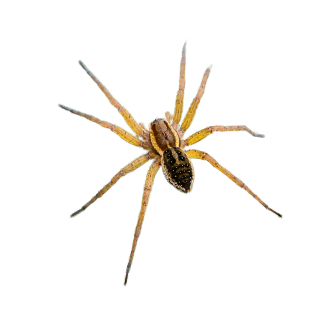
The best match. Grass spiders are brown funnel weavers with dark stripes running down the body. On a dewy morning their flat sheet webs, with a funnel at one side, cover lawns, shrubs and ground cover. The spider waits in the funnel and runs out when an insect lands. They are harmless and rarely come indoors.
Wolf spiders
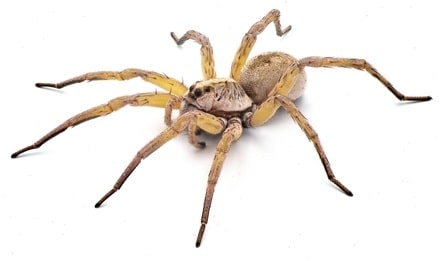
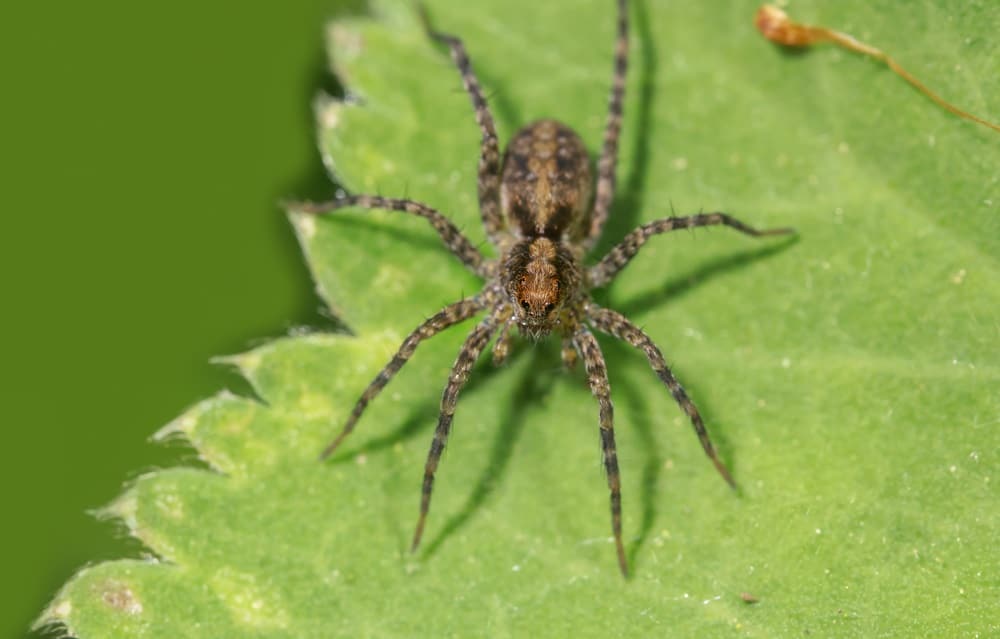
Brown, hairy and about the right size, but wolf spiders do not build webs at all. They hunt on the ground, and their eye pattern is different: a row of four small eyes with two large eyes above. OSU Extension lists them as no hazard to people.
Giant house spiders
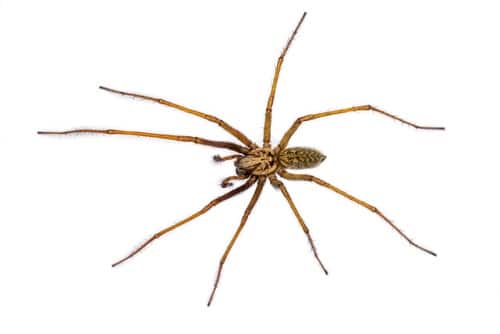
A close relative of the hobo spider and just as hard to tell apart by eye. Like the hobo, it is a European species, and in Seattle it has replaced the hobo in many places.
Southern house spider and brown recluse
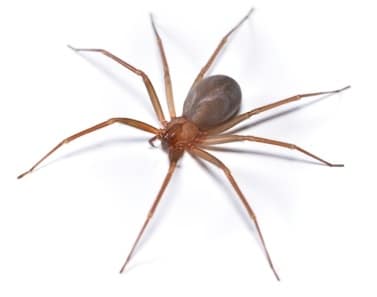
Tan, long-legged southern house spider males are often taken for hobos, and for brown recluses. The brown recluse is the spider in this group that matters in Oklahoma: it does not build a funnel web, it has six eyes instead of eight, and it has a dark violin shape behind its eyes. If that is what you are seeing, read our brown recluse guide.
For photos of 32 spiders that do live here, use our Oklahoma spider ID guide.
Not sure what you have?
Emtec Pest Control has been identifying and removing spiders across Oklahoma since 1979. If you are seeing spiders indoors and want to know whether they are a problem, our team can inspect, tell you what you have, and treat if you need it. As the spider exterminator for Tulsa, Oklahoma City, Stillwater and the communities around them, we see every species in this article. Learn about our spider control service or contact us.
Frequently Asked Questions
What are the identifying characteristics of a hobo spider?
A hobo spider is a light brown funnel-web spider with pale markings, roughly half an inch of body, and eyes in two rows of four. Its webs are usually hidden under objects. Color alone cannot reliably identify it; experts confirm the species under a microscope.
Are hobo spiders dangerous?
Current research says the hobo spider bite is not of medical importance. Its reputation for causing necrotic wounds came from misdiagnosed cases, and only one verified bite has ever been linked to a lesion, in a patient with another condition that causes such lesions.
What spider in Oklahoma looks like a hobo spider?
Grass spiders, which build sheet webs with a funnel in lawns and shrubs, are the closest look-alike. Wolf spiders and the southern house spider are also mistaken for hobos.
Which dangerous spiders are actually in Oklahoma?
The brown recluse and the black widow. Oklahoma State University Extension names them as the only two Oklahoma spiders considered dangerous to people.