
After a wasp sting, move away from the area, wash the sting with soap and water, put ice on it, and watch for signs of an allergic reaction. Pain, redness and some swelling right at the sting are normal and usually fade within hours to a day. Hives or swelling away from the sting, trouble breathing, a swollen throat or tongue, dizziness or vomiting are not normal. Those are signs of anaphylaxis, a medical emergency: use an epinephrine auto-injector if you have one and call 911. Here is what to do step by step, how to tell a normal reaction from a dangerous one, and how to avoid the next sting.
Medical emergency? Call 911 for trouble breathing, throat or tongue swelling, hives spreading over the body, dizziness or fainting, or many stings at once. For advice on a sting, Poison Help is free at 1-800-222-1222. This article is general information, not medical advice.
First aid for a wasp sting, step by step
- Get away from the wasps. Walk away calmly and quickly. If you disturbed a nest, OSU Extension says to leave right away, because alarmed wasps call in their nestmates. If several are attacking, run and get indoors or into a car. Do not jump into water.
- Have someone stay with you for the first half hour or so to watch for an allergic reaction. The CDC recommends this for outdoor workers. OSU notes serious reactions usually develop within 10 to 30 minutes.
- Check for a stinger. Wasps do not leave one. If there is a stinger, a honey bee stung you: scrape it out with a fingernail, the edge of a card or gauze. Speed matters more than method, according to OSU Extension, because the stinger keeps pumping venom.
- Wash the sting with soap and water.
- Apply ice or a cold pack wrapped in a cloth to ease pain and swelling.
- Do not scratch. The CDC warns that scratching increases swelling, itching and the chance of infection.
- Remove rings and tight items from a stung hand or arm before it swells.
- Ask a pharmacist about an oral antihistamine for itching and swelling, or an over-the-counter pain reliever. Follow the label.
What not to do
- Do not squeeze a bee stinger or pull it with tweezers. The CDC and the American College of Allergy, Asthma and Immunology (ACAAI) both warn this can push more venom in.
- Do not cut the skin or try to suck or squeeze venom out.
- Do not swat at the wasp. Swatting provokes more stings.
- Do not wait to see how a whole-body reaction develops. Use epinephrine and call 911.
Normal reaction, large local reaction or anaphylaxis?
| Reaction | What you see | What to do |
|---|---|---|
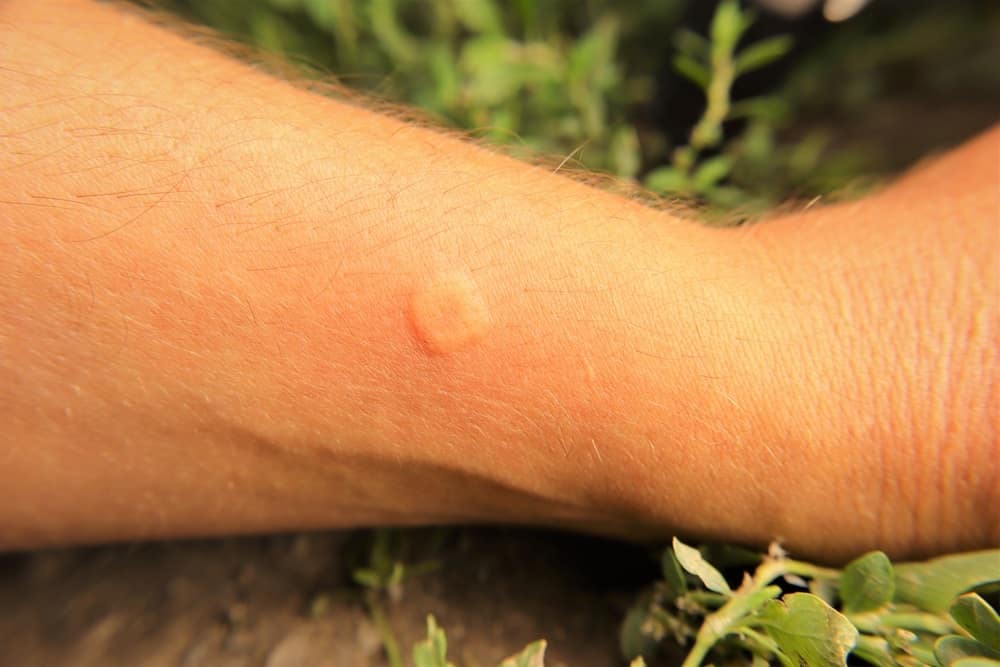
| Normal local reaction | Sharp pain, redness and swelling at the sting | Wash, ice, don't scratch. Settles within hours to a day. |
| Large local reaction | Swelling spreading past the sting, often more than 3 inches; peaks in 2 to 3 days and can last a week or more (ACAAI) | Ice, elevation and antihistamines; call a doctor. Not life-threatening. |
| Anaphylaxis | Hives or swelling away from the sting, trouble breathing, wheezing, chest tightness, hoarse voice, tongue or throat swelling, dizziness, fainting, a drop in blood pressure, cramps, vomiting. Can start within minutes. | Epinephrine right away if available, then call 911 and go to the emergency room, even if symptoms ease. |
| Many stings at once | Dozens of stings, often from a yellowjacket nest | Get medical care. UC IPM notes that many stings can damage blood cells and the kidneys, even without an allergy. |
| Sting in the mouth or throat | Swelling inside the mouth | Get emergency care. OSU warns swelling can close the airway. |
| Infection | Increasing redness, warmth, pus or fever days later | See a doctor. OSU notes infection is more likely after stings from scavenging yellowjackets. |
If you have had a bad reaction before
The ACAAI says a person who has had one allergic reaction to a sting has a 60% chance of a similar or worse reaction the next time. It recommends keeping two epinephrine auto-injectors on hand and wearing medical ID. An allergist can test for venom allergy and offer venom immunotherapy (allergy shots), which the ACAAI says gives up to 98% protection against future reactions. Ask your doctor for a referral.
Are wasps dangerous to humans?
For most people a single wasp sting is painful but not dangerous. The risk comes from three things:
- Allergy. The ACAAI estimates life-threatening reactions to insect venom happen in about 3% of adults and 0.4% to 0.8% of children. The CDC counted an average of 72 deaths a year from hornet, wasp and bee stings in the U.S. between 2011 and 2021, and 84% of them were men.
- Numbers. Wasps, yellowjackets and hornets keep their stingers and can sting repeatedly. A disturbed yellowjacket nest, with 1,000 to 5,000 wasps in a typical Oklahoma colony (OSU), can deliver dozens of stings in seconds.
- Location. Stings to the face, neck, mouth or throat are the most serious. A yellowjacket inside an open soda can is a common way to get stung in the mouth.
Why wasps sting
Wasps sting to defend their nest or themselves. Away from the nest, a wasp hunting for food will usually leave you alone if you stay still or move away slowly. Near the nest it is different. The University of Florida notes that an injured wasp can release an alarm scent that brings the colony out, which is why swatting one wasp near a nest can lead to many stings. Only females sting; the stinger is a modified egg-laying tube, so male wasps cannot sting at all.
Do wasps die after they sting?
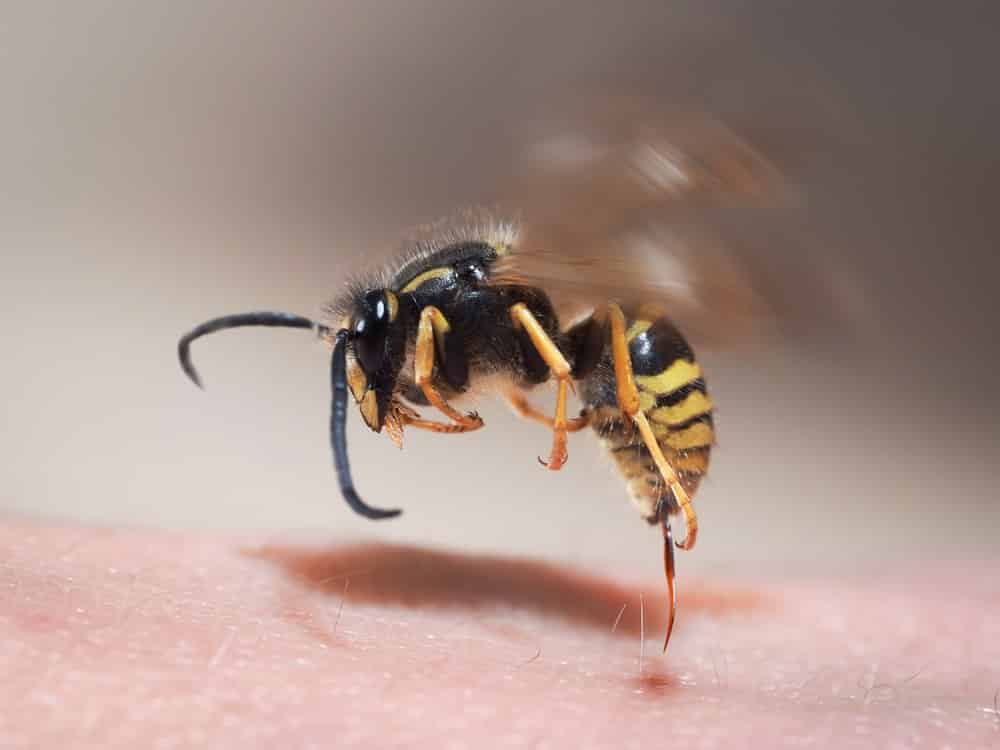
No. That is honey bees. A honey bee's stinger is barbed and tears away, and the bee dies. A wasp's stinger is smooth, so it can sting, pull out and sting again.
Are wasps beneficial around the home?
Yes, which is why the goal is control near people, not getting rid of every wasp in the neighborhood. Oklahoma State University Extension describes paper wasps as efficient predators, mostly of caterpillars, and notes that cicada killers seldom sting unless provoked. Yellowjackets eat many garden pests and act as scavengers. Many tiny parasitic wasps, which do not bother people, attack aphids, caterpillars and moth eggs. Some wasps visit flowers for nectar and do a little pollinating along the way.
A wasp nest in a quiet corner of the yard is often best left alone until frost ends the colony. A nest by a door, deck, play area or walkway, or any yellowjacket nest where people walk or mow, should be treated.
How to avoid wasp stings
- Look before you mow, trim shrubs or reach under deck rails, eaves and playsets. OSU warns that mowing or trimming near a yellowjacket nest almost always leads to stings.
- Cover food and drinks outside, and use cups with lids or straws.
- Keep trash cans closed and away from where you sit, and pick up fallen fruit.
- Skip perfume, cologne and scented products when you will be outside.
- Wear muted colors such as khaki or tan rather than bright yellow, orange or blue, and cover your head near a nest. See what colors attract wasps.
- Wear shoes outdoors, especially in clover and in sandy areas where cow killers and cicada killers live.
- Stay still or walk away slowly when a wasp comes near. Do not swat.
To figure out what stung you, see the Oklahoma wasp and bee ID guide. For fire ant stings and ant bites, see why ants bite and sting.
Wasp exterminator in Tulsa and Oklahoma City
If someone in your home has been stung by wasps nesting near the house, or anyone in the family is allergic, have the nest removed by a professional rather than taking on an angry colony yourself. Emtec Pest Control has been Oklahoma's wasp exterminator since 1979. Our technicians find and treat the nest, including nests in walls, attics and the ground, and treat the eaves, soffits and porches where wasps build. Our wasp control guide explains how we handle each kind. We serve Tulsa, Broken Arrow, Owasso, Jenks, Bixby, Sand Springs, Sapulpa, Stillwater, Oklahoma City, Edmond and nearby towns. Learn about our preventative pest control or contact us.
Frequently Asked Questions
How long does a wasp sting hurt and swell?
Sharp pain usually fades within a few hours, and a normal reaction (pain, redness and swelling at the sting) settles within a day or so. Some people get a large local reaction, with swelling that spreads more than about 3 inches. The American College of Allergy, Asthma and Immunology says that kind of swelling usually peaks 2 to 3 days after the sting and can last a week or more. It is not life-threatening, but ask a doctor about it.
When should I go to the hospital for a wasp sting?
Call 911 for any sign of a whole-body allergic reaction: hives or swelling away from the sting, trouble breathing, wheezing, a tight chest, a swollen tongue or throat, a hoarse voice, dizziness, fainting, vomiting or cramping. Also get care for many stings at once, any sting inside the mouth or throat, or a sting that shows signs of infection over the next few days.
Do wasps leave a stinger?
No. Wasps, yellowjackets and hornets have smooth stingers and can sting again and again. Honey bees have barbed stingers that stay in the skin, and the bee dies. If you see a stinger, it was almost certainly a honey bee. Scrape it out quickly.
Can a wasp sting kill you?
Rarely. The CDC counted an average of 72 deaths a year in the U.S. from hornet, wasp and bee stings between 2011 and 2021. Most of those deaths come from allergic reactions. Large numbers of stings can also be dangerous even without an allergy, which is why a disturbed yellowjacket nest is a real emergency.
Are wasps good for anything?
Yes. Oklahoma State University Extension describes paper wasps as efficient predators of caterpillars, and yellowjackets eat many garden pests. Many tiny parasitic wasps attack aphids, caterpillars and moth eggs. The goal is to keep nests away from the places people use, not to wipe out every wasp.
Sources
- Insects and Scorpions at Work (opens in new tab)
- Insect Sting Allergies (opens in new tab)
- QuickStats: Number of Deaths from Hornet, Wasp, and Bee Stings, United States, 2011–2021 (opens in new tab)
- Paper Wasps, Yellowjackets and Other Stinging Wasps (EPP-7305) (opens in new tab)
- The Africanized Honey Bee in Oklahoma (opens in new tab)
- Yellowjackets and Other Social Wasps (Pest Notes) (opens in new tab)
- Beneficial Insects (EPP-7307) (opens in new tab)