
No, fleas can't fly. They have no wings at all. What they can do is jump, and for their size they are remarkable jumpers: about 7 inches straight up and more than a foot sideways. That is how they get from your carpet onto your dog, and why it can look like they are flying. Here is how fleas actually move, how to tell a flea from a small fly, and how the flea life cycle keeps an infestation going.
Do fleas fly or jump?
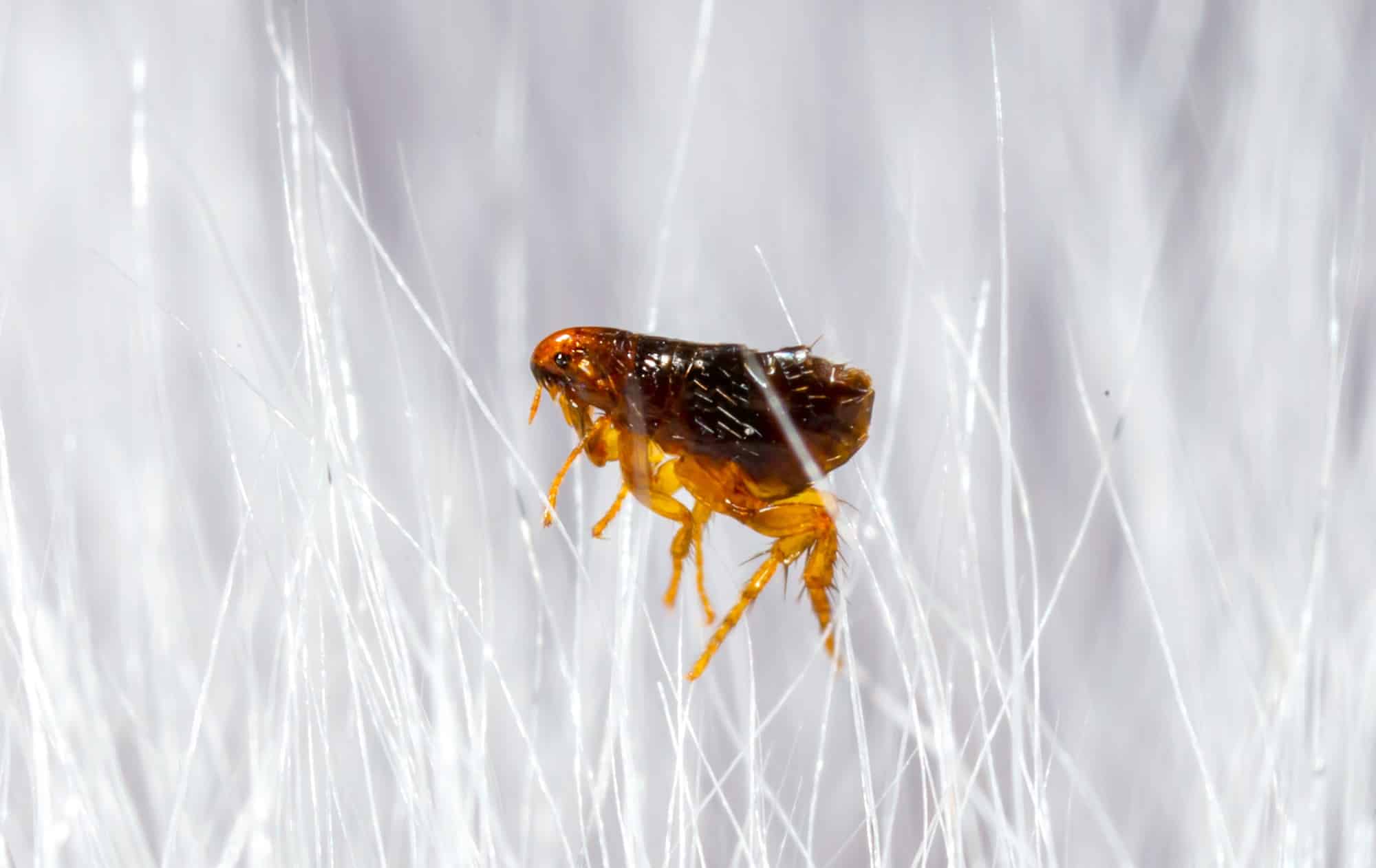
Fleas jump. Adult fleas are wingless, flattened from side to side and covered in backward-facing spines that let them slip through fur and hang on when a pet scratches. Oklahoma State University Extension describes them as about 1/16 to 1/8 inch long and pale to dark reddish brown. With no wings, every move a flea makes is either a crawl through fur or a jump.
How far can a flea jump?
- Up: about 7 inches, according to the Maine Department of Agriculture.
- Forward: about 13 inches (Maine), with OSU Extension noting sideways jumps of up to 14 to 16 inches.
For an insect an eighth of an inch long, that is an enormous leap, and it is plenty to reach a pet's legs or your ankles from the floor.
How fleas jump without wings
A flea's jump is not powered by muscle alone. Researchers at the University of Cambridge filmed fleas at high speed and found they store energy in a spring-like structure in the body, built partly from the elastic protein resilin, then release it all at once and push off through the tips of their hind legs. The whole takeoff lasts less than two thousandths of a second, which is why the eye loses track of the flea and it seems to vanish or "fly" away.
Flea or fly? How to tell what you are seeing
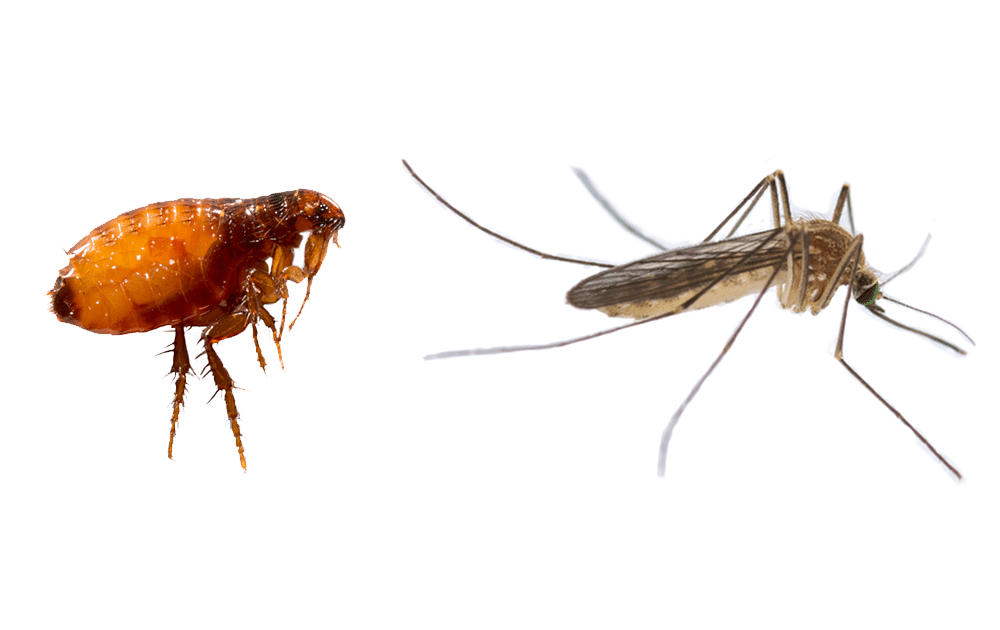
A lot of people searching "can fleas fly" have seen something tiny that hops or flies near a pet or a window. These clues help:
| Flea | Small fly or gnat | Springtail | |
|---|---|---|---|
| Wings | None | Two wings, flies away | None |
| How it moves | Jumps, crawls through fur | Flies, hovers, lands on walls and windows | Jumps using a tail-like spring under the body |
| Look | Dark reddish brown, hard, flattened side to side | Gray, black or tan, visible wings | Gray, soft, about the size of a mustard seed |
| Where you find it | On pets, pet beds, carpet, rugs | Drains, plants, trash, windows | Damp spots: bathrooms, basements, potted plants, mulch |
| Bites people? | Yes, often around the ankles | Some do (biting flies); gnats usually don't | No |
Springtails are the bug most often mistaken for fleas indoors, according to University of Kentucky entomologists. They jump too, but they live in damp places, don't bite and are fixed by drying things out, not by flea treatment. For flies outside, see how to limit flies in your yard.
Check your pet for flea dirt
The surest sign of fleas is flea dirt: flea droppings that OSU Extension describes as dark specks about the size of grains of pepper. Look near the tail and on the belly, or run a fine-toothed flea comb through the fur over a white paper towel. Pets that scratch more than usual are often the first clue.
Can fleas live on humans?
Fleas will bite people, usually on the ankles and lower legs, and OSU Extension notes they turn to humans when they can't find a cat or dog to feed on, or when there are simply a lot of them. But fleas do not live and reproduce on people. A home with flea bites and no pets often has a source nearby: a pet that recently left, a previous owner's pet, or wildlife such as rats, squirrels or raccoons living under the house or in the attic.
The flea life cycle: why fleas keep coming back
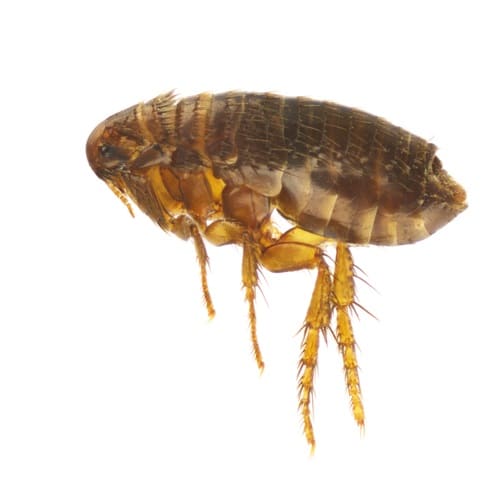
The flea you see on your pet is only the last stage. The cat flea, which University of Florida entomologists say is the flea commonly found on both cats and dogs in North America, goes through four stages:
- Egg. A female starts laying within 2 days of her first blood meal and averages about 27 eggs a day, according to Texas A&M AgriLife. The eggs fall off the pet wherever it walks, sleeps or shakes. They hatch within about two days.
- Larva. Tiny, worm-like and blind, larvae avoid light and burrow into carpet, pet bedding, furniture and shady soil. They feed mostly on flea dirt, the dried blood adult fleas leave behind. This stage lasts about 5 to 15 days.
- Pupa. The larva spins a silk cocoon that collects dust, pet hair and carpet fibers, which makes it hard to see and hard to vacuum up. The adult inside can wait for up to 5 months (Texas A&M) and comes out when it senses vibration or the carbon dioxide of a nearby host.
- Adult. The new flea jumps onto a host to feed and mate. Away from a host, adults live only a few days to two weeks.
In warm, humid conditions, egg to adult usually takes 30 to 75 days. Larvae prefer about 70 to 90°F with high humidity, which is why Oklahoma's late spring and summer bring flea problems, and why pets that live indoors can keep fleas going year-round. Larvae die in dry conditions or very hot soil, so sunny, open lawns hold far fewer fleas than shady spots under decks and shrubs.
The "fleas came back" problem
Two things surprise people. First, cocoons can sit in an empty house for months, then hatch all at once when people move in or come home from vacation. Second, after a good treatment you may still see fleas for a few weeks as adults keep emerging from cocoons. That doesn't mean the treatment failed. It means the cycle is still finishing, and it is why regular vacuuming during that window matters so much.
How to break the flea life cycle
Oklahoma State University Extension and University of Florida entomologists give the same advice: treat the pet, the house and the yard at the same time. Treating only the pet doesn't work.
- Treat every pet in the house with a product your veterinarian recommends. Use each product only on the animal and weight it is labeled for. The EPA warns never to use dog products on cats.
- Vacuum often, especially where pets sleep, along baseboards and under furniture. Texas A&M found vacuuming removes up to 30 percent of larvae and up to 60 percent of eggs from carpet, and the vibration coaxes adults out of their cocoons. Empty the canister or throw out the bag outside afterward.
- Wash pet bedding, throws and rugs in hot, soapy water.
- Comb your pet with a flea comb and drop the fleas into soapy water. UF notes combing removes only part of the fleas, so it is a check, not a cure.
- Treat shaded outdoor spots where pets rest, such as under decks, porches and shrubs. Spraying the entire lawn isn't necessary. Our guide to getting rid of fleas and ticks in your yard covers this step by step.
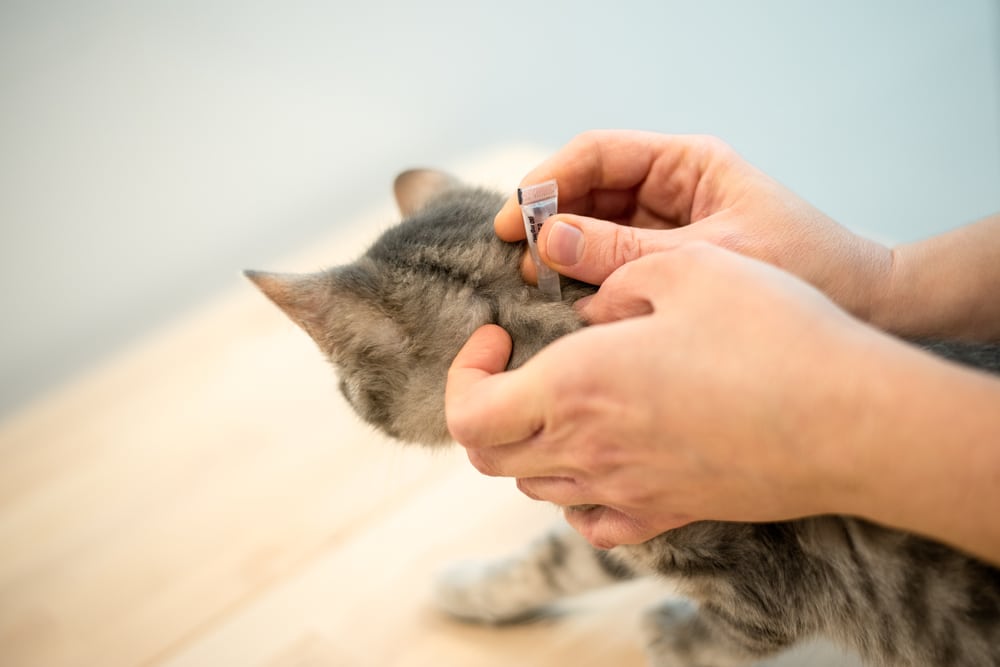
Insect growth regulators, used on pets and indoors, stop eggs and larvae from becoming adults. Texas A&M notes they take 4 to 6 weeks to show full control, because they work on the next generation rather than the fleas already biting. UF entomologists rate ultrasonic and insecticidal flea collars as not very effective, so ask your veterinarian which on-pet product fits your pet.
Fleas or ticks?
Ticks don't jump or fly either. They crawl up grass and brush and wait for a host to brush past. If you're not sure which one you're dealing with, see the difference between fleas and ticks.
Flea exterminator in Oklahoma
Emtec Pest Control has been helping Oklahoma families get rid of fleas since 1979. A flea problem that keeps coming back usually means part of the life cycle is being missed, so we start by finding where fleas are developing in the house and yard, then treat those spots inside and out while you treat your pets with your veterinarian's help. We are the flea exterminator for Tulsa, Broken Arrow, Owasso, Jenks, Bixby, Sand Springs, Sapulpa, Stillwater, Oklahoma City, Edmond and nearby towns. See our flea and tick control service or contact us to schedule an inspection.
Frequently Asked Questions
Can fleas fly?
No. Fleas are wingless insects. They get around by jumping, and they jump so fast that it can look like flying. If a tiny bug in your house has wings, it is not a flea.
How high can a flea jump?
The Maine Department of Agriculture puts it at about 7 inches straight up and 13 inches forward. Oklahoma State University Extension notes sideways jumps of up to 14 to 16 inches. That is more than enough to get from the floor onto a pet or your ankle.
Can fleas live on people?
They bite people, especially when there are a lot of them or when the pet they were feeding on is gone, but they do not live and reproduce on humans. Oklahoma State University Extension notes fleas need an animal host such as a cat or dog to keep the infestation going.
How long is the flea life cycle?
University of Florida entomologists say egg to adult usually takes 30 to 75 days. Warm, humid weather speeds it up. Adults can wait inside their cocoons for up to 5 months, according to Texas A&M AgriLife, and come out when they sense a host nearby.
Why do I still see fleas after treating my pet?
Most of the problem is not on the pet. Eggs fall off into carpet and bedding, larvae live there, and adults keep hatching from cocoons for weeks. Treating the pet, the house and the yard at the same time, and vacuuming often, is what breaks the cycle.
Sources
- Fleas (opens in new tab)
- Cat Flea and Human Flea (opens in new tab)
- Fleas Are a Pesky Problem for Your Pets (opens in new tab)
- Cat Flea, Ctenocephalides felis (EENY-011) (opens in new tab)
- Controlling Fleas (opens in new tab)
- Biomechanics of jumping in the flea (opens in new tab)
- Springtails (ENTFACT-420) (opens in new tab)
- Controlling Fleas and Ticks on Your Pet (opens in new tab)